Ōmutu
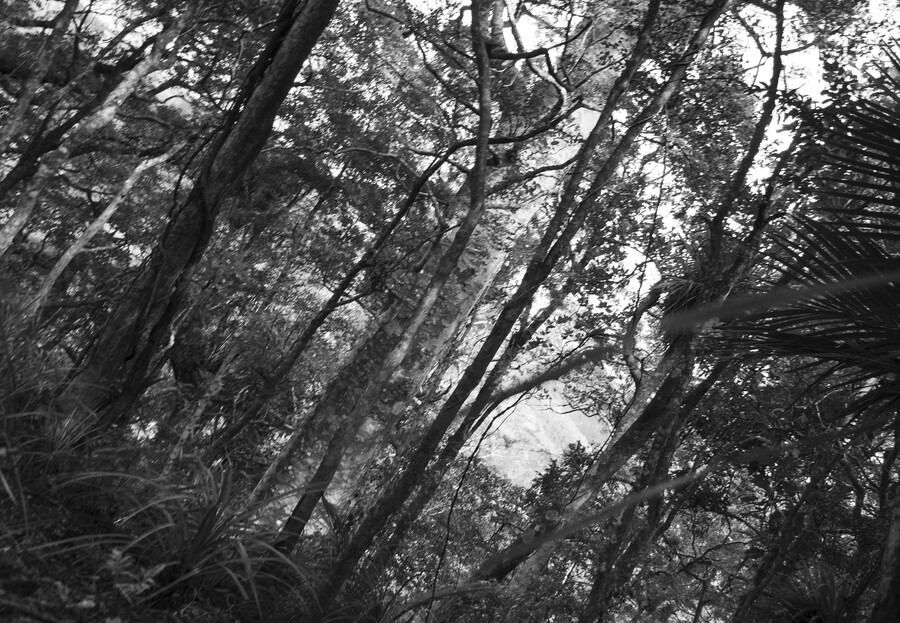
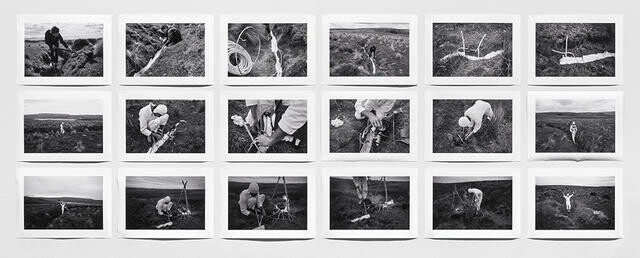
Ana Iti, research image 2025
10 December
5.45am. Two starlings in Stacey’s unblooming pōhutukawa. A tūī guns past the window in the direction of the sea. Wednesday’s freight train rumbles north leaving a tail of sound. Dear Ana. The building inspector came on Monday. We should know by tomorrow or Friday at the latest. If my house goes unconditional I’ll finally be able to breathe again and eat. I’m sorry I haven’t been able to focus on the kauri yet.
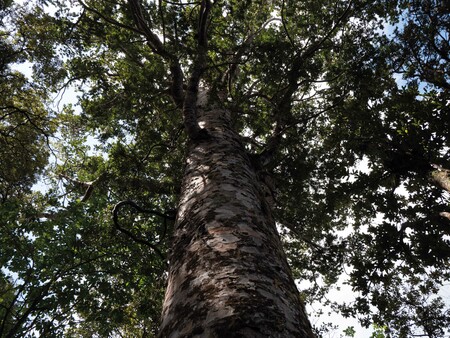
Ana Iti, research image 2025
12 December
7.13am. Too hot to sit in the conservatory. Three days of Korekore moons and now here comes Tangaroa. Dear Ana. The wood stacked on Stacey’s deck won’t be needed for months. The ocean on Tuesday was like a bath. Inside my fortress with the green roof I sit at the kitchen table and wait. Suspended between land and sea, tree and sky, holding everything.
Still no news.
25 December
5.42am. Tamatea. Fierce the wind. The birds in the cul-de-sac have evacuated. Dear Ana. The house has sold but the stress of the past few weeks has ruined Christmas. Mum and Bobbie have just tried to keep out of my way. I finally read your email about the kauri and was struck by the image of the three women on the raft. You said it’s been hanging out in the back of your mind, now it’s hanging out in mine.
26 December
6.25am. The wind has blown the pōhutukawa needles to the south and I was woken by a chair on the balcony trying to follow. Dear Ana. Yesterday Bobbie completed nineteen turns around the sun. I heard her footsteps on the stairs, the kitchen door as it cracked open, her wordless smile as she stepped into my arms for our ritual Christmas morning hug, taller than me now, life’s that quick.
In your email you said that you nearly lost your mind at the sight of the saw’s teeth at the Kauri Museum in Matakohe. How those teeth could be mountains. Or abstract waves. Yes, I have been there. We had just come back from Dubai and my brain kept wanting to compare the Burj Khalifa to Tāne Mahuta. The stats are enough to stress anyone out. It took the calloused hands of more than 12,000 men, mostly from India, Pakistan and Bangladesh, six years to construct the 800 metre, 150-storey building. They worked in shifts around the clock in temperatures exceeding forty-five degrees for a total of something like twenty-two million hours. The same unfathomable intensity of human labour is what the Burj Khalifa has in common with our absent kauri forests.
Construction. Destruction. Human labour is capable of either. At the museum, I read that a 1,200-year-old kauri – living descendant of its Jurassic ancestors – could be felled with the blade of a saw in a matter of days. Once the teeth succeeded, the kauri were hauled out by bullocks yoked together with rope and chains. I counted thirty-two bullocks in one photo. They were loved and respected by men because their strength and acceptance of hard work matched theirs.
When skidded roads could not be constructed, men made floods and floated the kauri to waiting ships. Those that didn’t sink on the way to the port became bridges and boardwalks and railway sleepers in Sydney and San Francisco and who knows where else, while the gum was bled for varnish, sealing wax, torches and pigment.
The audacity of the wants of men is both breathtaking and revolt-ing. My body revolts. I was married when I visited the Matakohe museum and the kids were small and my husband was pissed off that I spent so much time reading every single panel, letting the remorse sink all-the-way-in.
Or maybe I just wanted out. Ngahere behind a pile of metal.
28 December
5.55am. I sit now in the conservatory overlooking the grass where I once watched Piiata running around digging holes (killing the grass with her piss); where my boy once sat and drank alone and left behind his broken empties for me to clean up; where Haimana dug out the fence posts in the rain and mud, the orange clay, the muscle of his regret and my love for him all mixed up with it, the same back yard that Darren walked across to fix the gate, the sight of his tears shaking loose and hitting the grass, the trembling drill in his hands, how angry he was, how human, how alive. The same green gate he was carried back through in a goddam fucking box just a few weeks later, the gate already broken again, and broken still. It thuds intermittently like an arrhythmia reminding me something’s not right.
If divorce is like being thrown into the ocean, this house was our raft. The land doesn’t belong to me but as soon as the title was in my name I couldn’t imagine being anywhere else. I felt lucky all the time. Lucky to be breathing. Lucky to’ve survived. My kids and me. My neighbours and me. My birds and me. The proprietary-ness of that preposition “my”. Driving home to the Bay always felt like a miracle. Just like the kauri that were too young to be harvested on your whenua back in the heyday, I appreciated every sunrise. Came to know the cautious pōhutukawa and the bolshy starlings and the approach of Wednesday’s freight train, though I have never been able to dig out the heart of the colonising fennel that spreads its fragrant seed all throughout the cul-de-sac, much less slow-roast it with pine nuts and caraway seeds.
Dear Ana. A few weeks ago, not long after the for sale sign went up, a paint pail under the house split open and started flowing under the fence towards Chung’s garden. I was bailing all through the night, soaked through and freezing, worried for Chung’s kai. The soil we share.
3 January
5.10am Atua Whakahaehae. Pōhutukawa in full radiance. Brown bird drops down into Chung’s garden for a seed then returns to Stacey’s. Tūī chases off a starling. Gull glides overhead. Black bird with the orange beak (dishevelled) preens for a second on the fence then disappears too.
Dear Ana. After Darren died, I became attached to my guilt. I thought by staying I was demonstrating my remorse and accepting my responsibility wholly and unreservedly. Staying was the least I could do. The view of the sun rising from the hills (here it comes now) would always tether me to the knowledge that what was done could not be undone. I remember the wish to stop the sun like Māui so visceral I tasted metal in my mouth (lesson: force won’t work). The regret I feel, the things I got wrong, are tied to this physical place. I became attached even to the broken gate and its refusal to stay mended. One repair effort didn’t last twenty-four hours. When I saw the brand-new bolts spat out on the grass the next morning I laughed.
Most of all, I became attached to the kōwhai tree where Chung heard me crying from her side of the fence after the tangi. She marched around and practically lifted me off my feet with her tiny arms. “It’s ok,” she said, like she was the boss of me. “It’s ok.”
It wasn’t ok, but nothing about the colony is. Sometimes choice is an illusion. Sometimes all we are doing, even your great, great, great grandfather, is the next thing in front of us. This is how I choose to think about the men whose labour has been extracted from them against their will, and the exploitation of their bodies turned against the land, women and children that love them in mental, physical and spiritual ways, for the obscene profit and material gain of masters whose hands are never calloused, and whose fortunes are hidden by the mirrored-glass of skyscrapers in deserts, or by the shadow of pine tree assets. Men who have no wish to sit with remorse, the permanence of loss, much less fuck with responsibility.
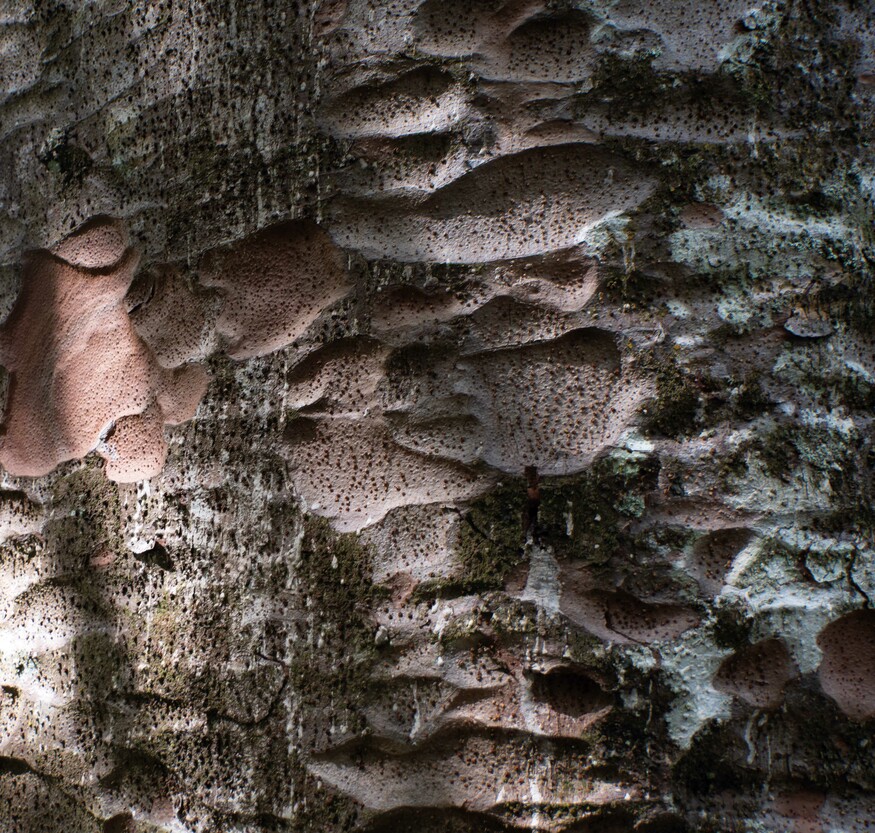
Ana Iti, research image 2025
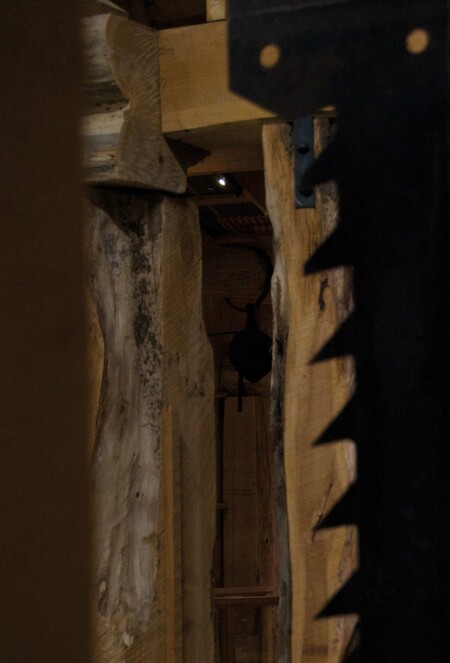
Ana Iti, research image 2025
4 January
6.19am. Ōturu / Rākaunui. The pōhutukawa are almost all out of cash for another season. The retirement home across the water looks like it is dangling from a crane, half in the world, half out. One thing I keep reminding myself is that when you put something down you free-up your hands to take hold of something else. Dear Ana. Just before I started writing my book, Slowing the Sun, I met Ella Henry and she told me that there are more words in te reo Māori for love than there are for war.
I wrote it down so I wouldn’t forget. Ella said that a scar can heal beautifully if you resist the temptation to pick at a scab. Sometimes I worry that by focusing on loss I am interfering with healing, but then again, absence, like you said, can also accentuate the positive.
10 January
5.45am. Dear Ana. My friend Rosie sent me an incredible piece of writing about kauri. She was reflecting on the pathogen Phytophthora agathidicida, or kauri dieback. She talked about the rāhui during which elevated walkways were constructed so human feet can no longer make contact with the soil. “The pathogen takes years to show itself,” Rosie said, but once infected, a tree is almost certainly terminal.” To protect the vulnerable survivors, humans are now prohibited from touching them at all. Rosie said this only illuminates how strong the human desire to touch a tree. “I am interested in the idea of loving something by leaving it alone,” she writes.1
In your email, you said that drawing is a way of thinking for you. For me, that’s poetry. Only poetry – which works in the same way as tohu (not by force) – can place apparently disparate things in the same sentence and make the link seem obvious. For example, suicide, patriarchy and kauri dieback all destroy from the inside. In even plainer words: harm to the land is harm enacted upon ourselves.
12 January
6.12am. Back into Tangaroa. The wind last night felt apocalyptic. The windows were rattling in their frames like loose teeth. I got up and went outside. I was worried about the kōwhai. The kōwhai was fine. It was rolling with the punches. I went and stood under it and was overcome by a desire to put my arms around it. The bark was rough against my cheek like an unshaven beard. I thought I could feel its heart beating, but it was just my own, steady and regular. The air was warm, the ground dry and prickly against the soles of my feet. I closed my eyes and thought back to that night in the garage, when I had the chance to say some things but didn’t. Sometimes you think you can defy tohu by ignoring them.
I told the kōwhai I loved it. I thanked it for staying. Then I went back inside to sleep.
14 January
5.37am. A confederation of birds has gathered in front of the conservatory. Two more sleeps to go. One way I have learned to make big decisions feel insignificant is to remind myself how close we are to death all the time. It helps that the conservatory looks across the water to the retirement home, lol. This thought is always followed by a wish to live long enough to tell everyone I love them, and to apologise for any hurt I’ve caused.
Dear Ana. I was woken this morning by RNZ playing Anthem by Leonard Cohen. I had to laugh. Sometimes signs can be so ridiculously audacious.
“The birds they sang, at the break of day, start again, I heard them say, don’t dwell on what has passed away, or what’s yet to be… Ring the bells that still can ring… You can add up the parts, but you won’t have the sum… forget your perfect offering… there is a crack in everything, that’s how the light gets in.”2
15 January
6.10am. Ōrongonui. Moving day tomorrow. Last night Bobbie and I went down to Cam’s Takeaways to get fried rice for tea. As soon as we walked in, Chung stopped wrapping whatever she was wrapping and came bursting out from behind the counter to give me a hug.
“Don’t worry!” she said to my puffy face. “It’s ok! There are neighbours everywhere in New Zealand!”
Related reading: Enviromentalism
Exhibition
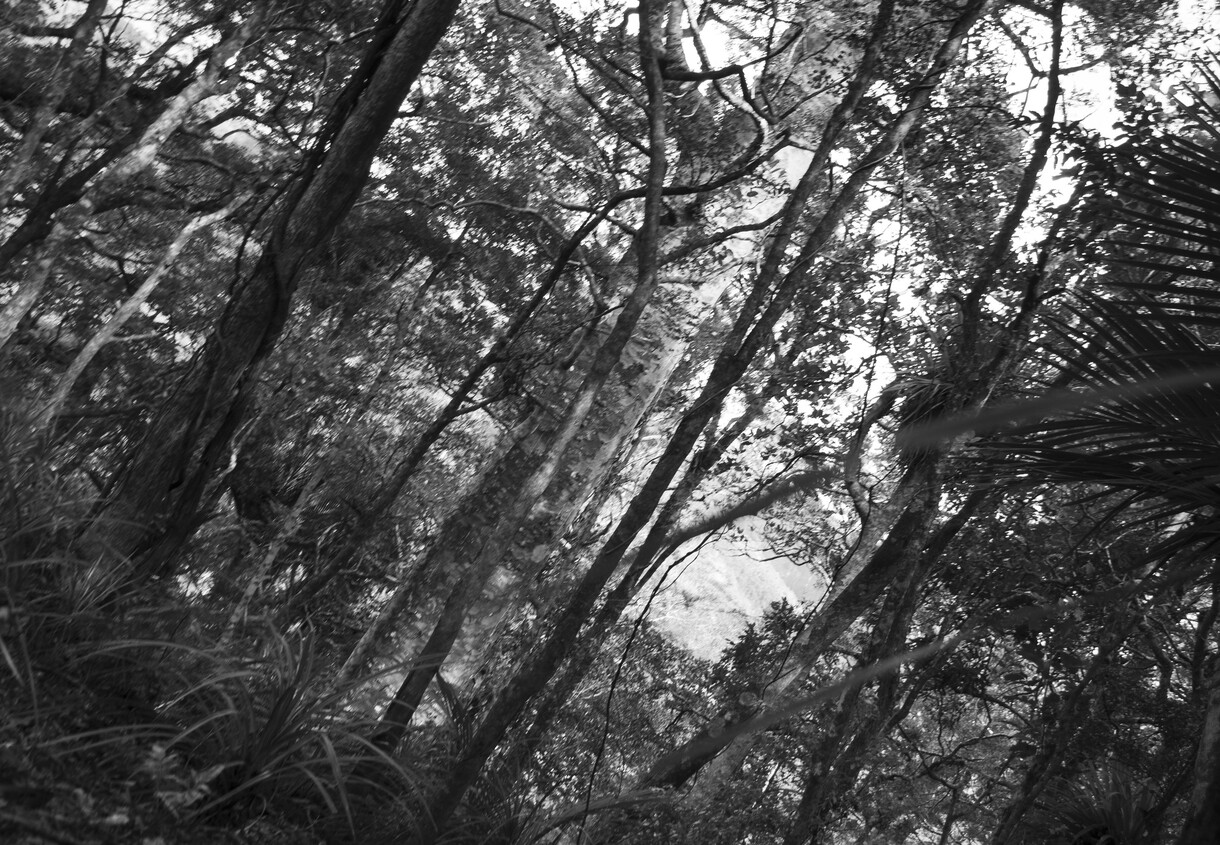
Ana Iti: Ngahere Behind a Pile of Metal
7 March – 26 July 2026
An immersive installation considering the legacies of deforestation and significance of kauri trees.
Commentary
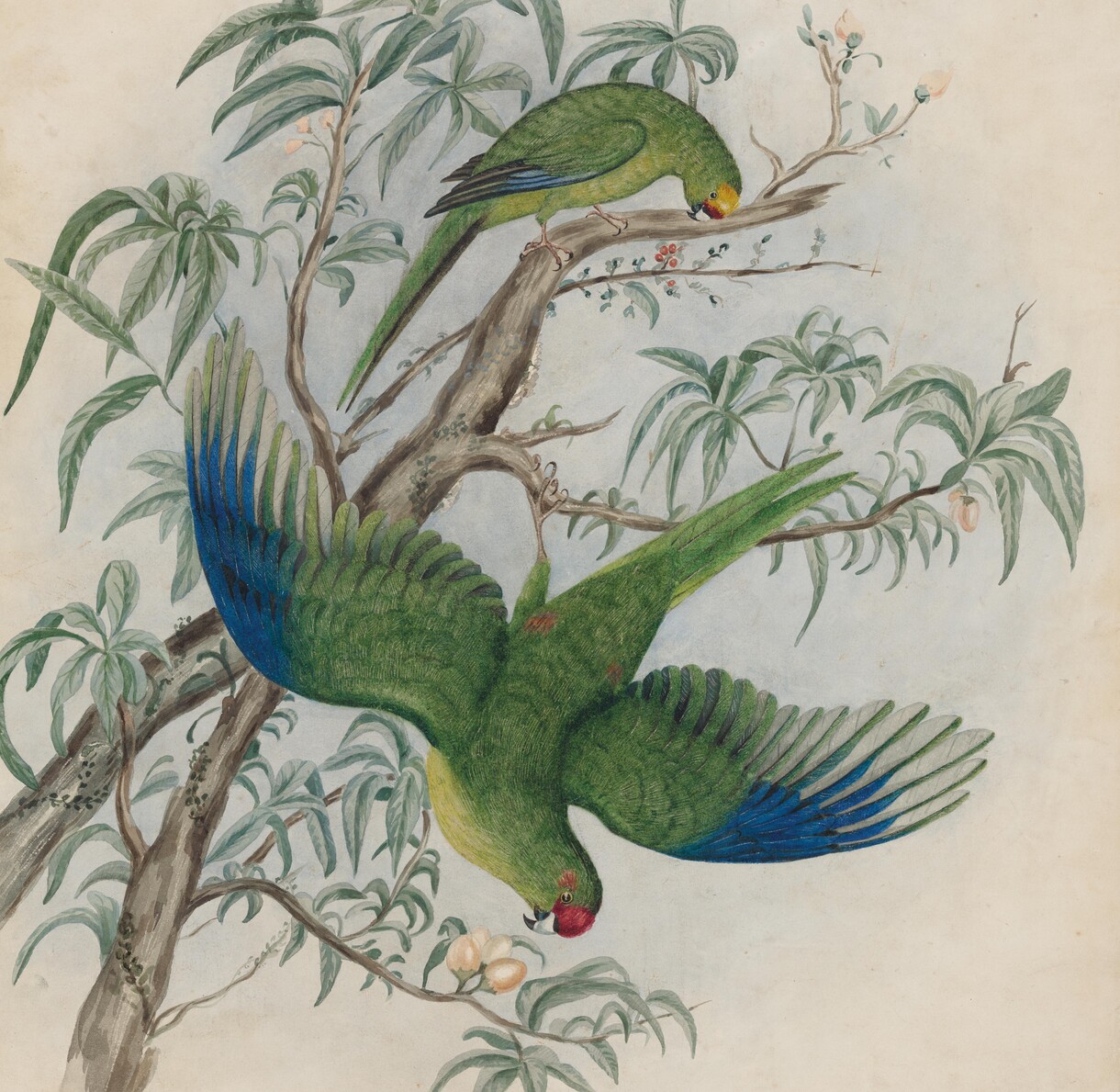
If You Build It, They Will Come
Greater Christchurch has had more bird species recorded than any other part of Aotearoa New Zealand. Here, we’re blessed with three large coastal wetlands of international significance for both resident and migratory birds. Within the Ōtautahi Christchurch district we have around 320 kilometres of rocky shoreline and coastal cliffs, almost twenty kilometres of sandy shoreline and dunes, dryland environments, tussock grasslands, podocarp forests and shrublands. There are whole other worlds beneath the tides that – as terrestrial species – most of us seldom think about. And did you know we also have around fifty islands, islets and rock stacks across the Te Pātaka o Rākaihautū Banks Peninsula coastline?
Commentary
Unutai e! Unutai e!
Unutai e! Unutai e!
Ko te wai anake, te au e riporipo ana ki mea roto, ki mea awa, ki te nuku o te whenua?
Aue taukuri e!
Pupū ake a Muriwai Ōwhata i a roimata He manawa piako te Papa ā-Kura o Takaroa
Waimate haere ana te waiora Kai hea rā taku ika e?
Kai hea rā te oraka mō taku iwi e!
What has transpired?
Only the rippling waters of this lake and of that river can be heard flowing across the land
Muriwai Ōwhata is over-flowing with tears
The great hīnaki of Māui, Te Papa ā-Kura o Takaroa, is like a hollow and empty heart
The life-giving waters are turning brackish and undrinkable
Where have our fresh water fish species gone?
Where are our people able to thrive?
Commentary
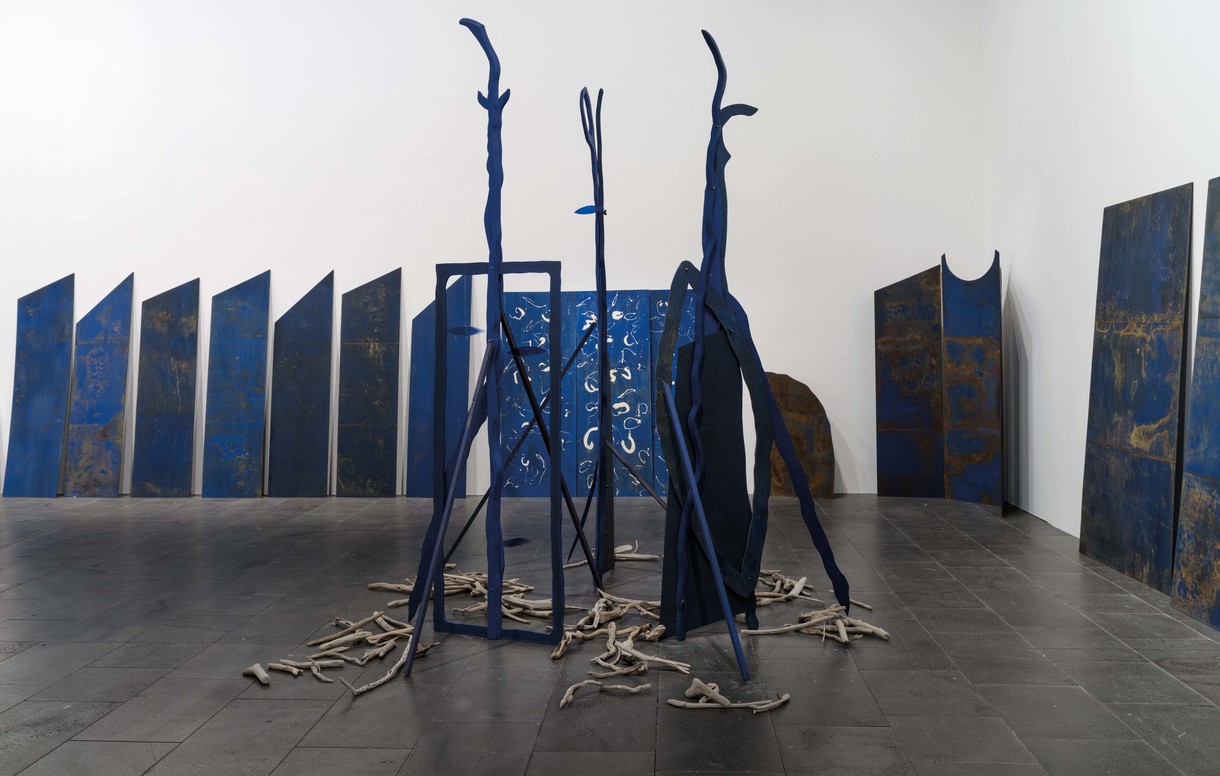
Pauline Rhodes: Blue Mind
Painted blue and patterned with rust, the thin plywood panels and screens lean nonchalantly around the walls of the gallery and form a skyline of sorts. Across the floor sculptures intersect the space, with groupings of tall rods, waist-high enclosures, clusters of plywood shapes and a small kayak frame on salvaged seaweed and driftwood. Islands for the audience to navigate. The forms are roughly human in scale and relative to the body, generating an intensity and making this an immersive installation to wade through.
Commentary
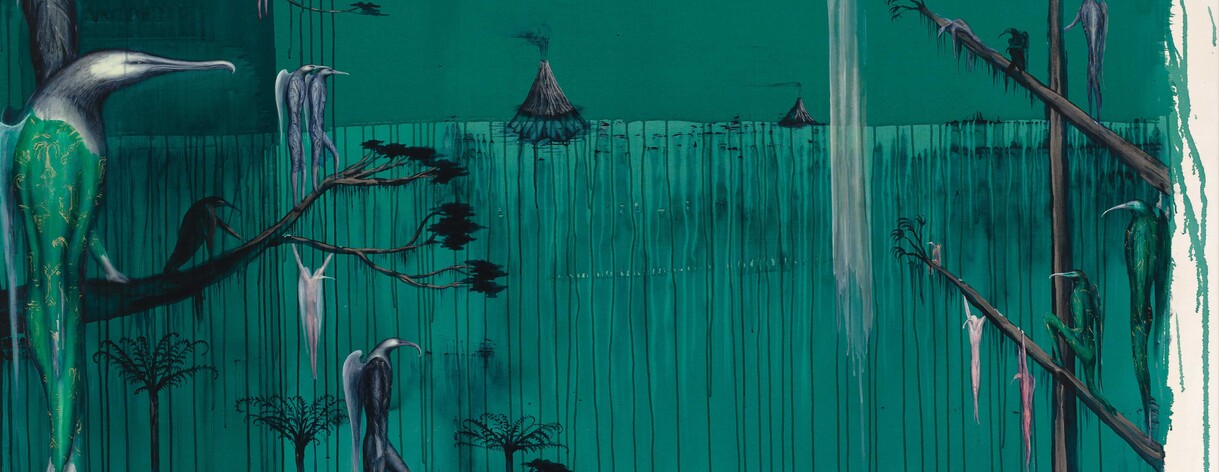
The Edge of the Sea
A vision of New Zealand’s past from 1995:
Europeans first imagined New Zealand as “a garden and a pasture in which the best elements of British society might grow into an ideal nation”... When the smoke of the colonists’ fires cleared at the end of the 19th century, New Zealand had become a different country. Māori had lost their most precious life-support system. Only in the hilliest places did the forest still come down to the sea. Huge slices of the ancient ecosystem were missing, evicted and extinguished. Our histories, however, have had neither the sense of place nor ecological consciousness to explain what has happened.
Interview
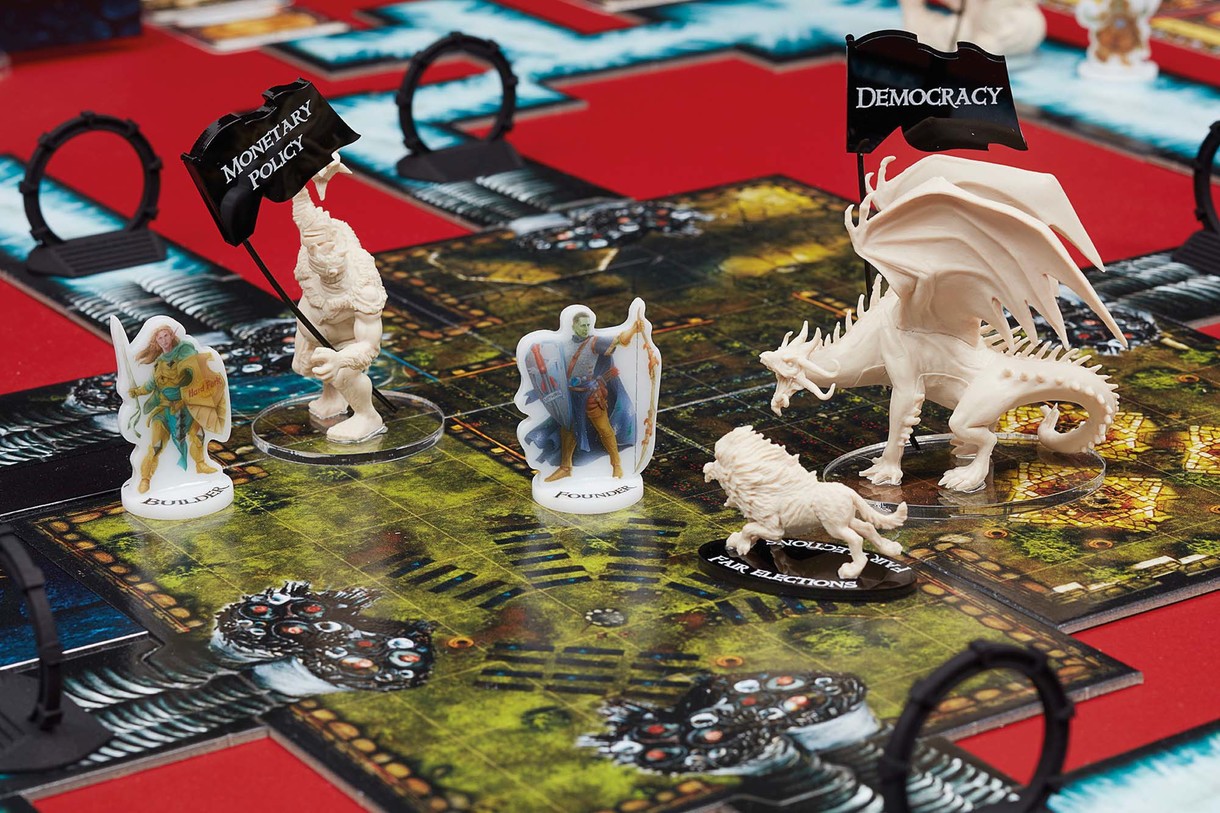
Power Play
In November 2017, Simon Denny’s The Founder’s Paradox opened at Michael Lett Gallery in Auckland, the first solo exhibition Denny had made specifically for New Zealand audiences in several years. His starting point for the project was local: the news, broken by New Zealand Herald journalist Matt Nippert in early 2017, that the billionaire tech investor and Donald Trump supporter Peter Thiel was in fact a New Zealand citizen.
Commentary
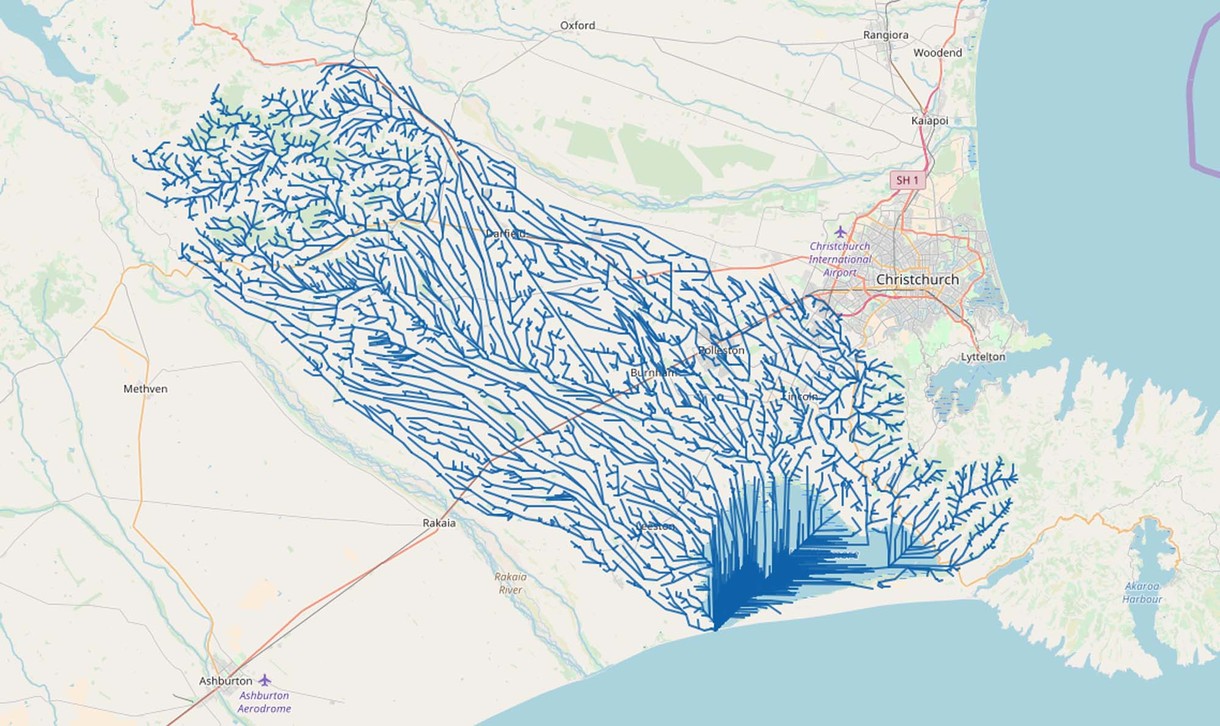
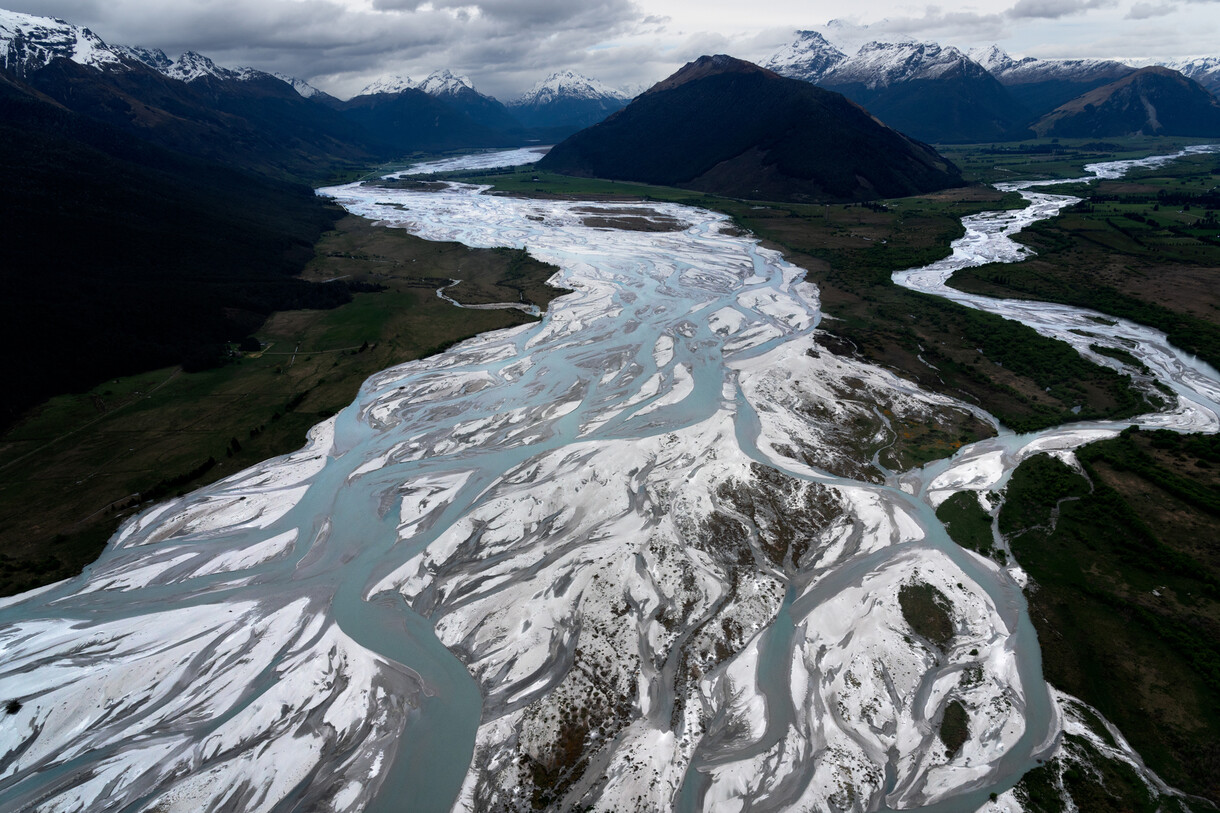
Of Braided Rivers and Hydro-Traders
“With 14,000km of coastline, over 180,000km of rivers, and 3,820 lakes, there’s more to the land of the long white cloud than land…” So began an advertisement in a recent Sunday Star Times. It might have been the opening gambit for a campaign devoted to water conservation but was, in fact, a promotion for the latest model jet ski: “And all you need to unlock it is the all-new Yamaha Waverunner FX HO… SAME PLANET, DIFFERENT WORLD. Yamaha-motor.co.nz.”
Commentary
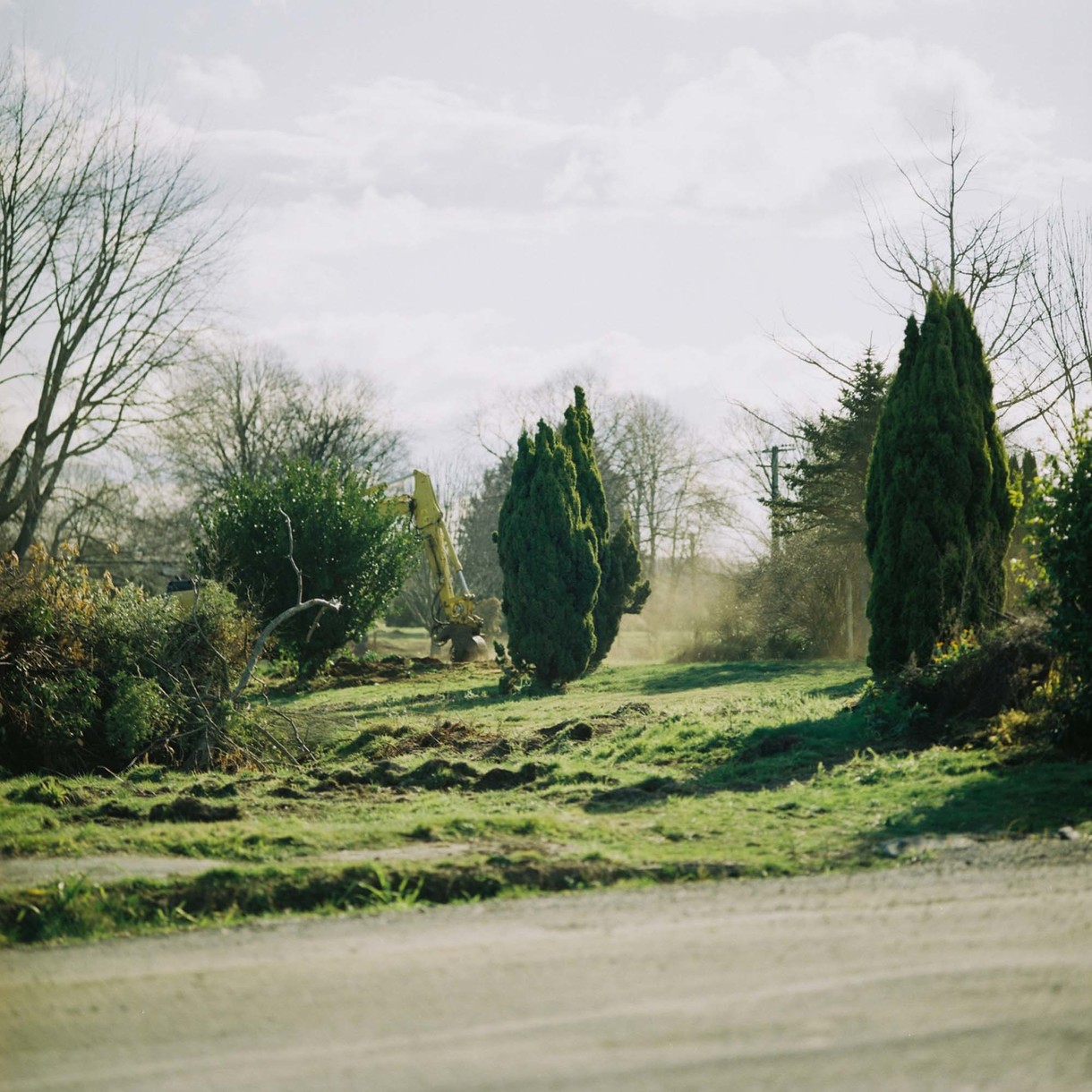
The Lines That Are Left
Of landscape itself as artefact and artifice; as the ground for the inscribing hand of culture and technology; as no clean slate.
— Joanna Paul
The residential Red Zone is mostly green. After each house is demolished, contractors sweep up what is left, cover the section with a layer of soil and plant grass seed. Almost overnight, driveway, yard, porch, garage, shed and house become a little paddock; the border of plants and trees outlining it the only remaining sign that there was once a house there.
Collection
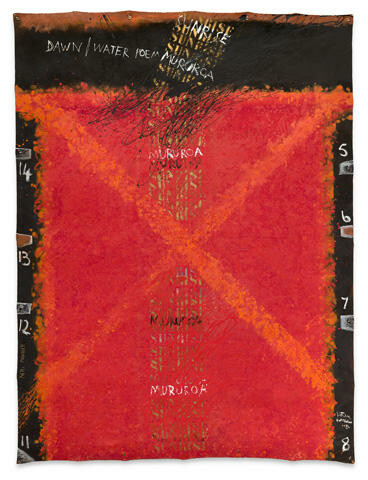
Ralph Hotere Dawn/Water Poem
For the exhibition Untitled #1050 (25 November 2017 – 14 October 2018) this work was displayed with the following label:
“There are very few things I can say about my work, that are better than saying nothing.”
—Ralph Hotere, undated