On the World Stage
Christchurch Art Gallery Te Puna o Waiwhetū at the Venice Biennale
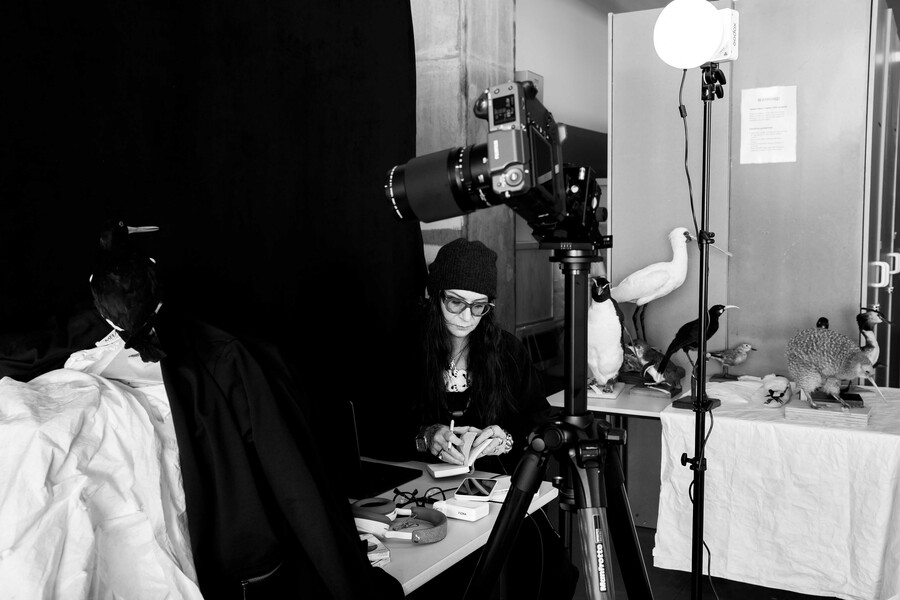
Fiona Pardington in the manu collection store at Te Papa Tongarewa. Photo: Maarten Holl. Image courtesy of Te Papa Tongarewa
When Fiona Pardington’s remarkable presentation Taharaki Skyside opens this May at the 2026 Venice Biennale, it will be the result of months of work by the artist and many others, including the team here at the Gallery. In January 2025 the Gallery was announced by Creative New Zealand as the exhibition delivery partner for the project, with curators Felicity Milburn and Chloe Cull at the centre of a team that would work with Pardington to develop the exhibition and accompanying publication. Bulletin asked Chloe and Felicity about the project.
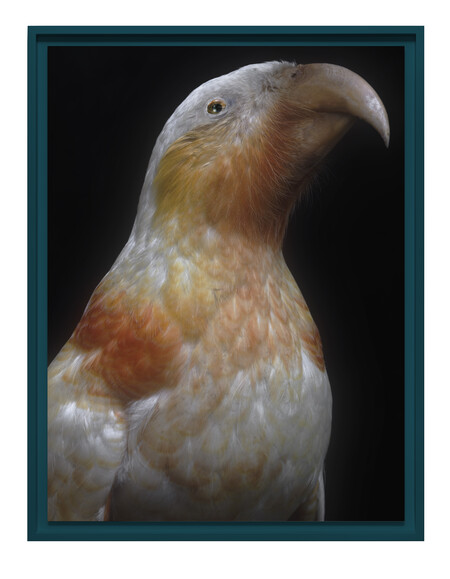
Fiona Pardington Kākā kura, Nestor meridionalis septentrionalis, colour morph, Rangataua, Tongariro; collection of the Museum of New Zealand Te Papa Tongarewa (OR. 001127), Te Whanganui-a-Tara Wellington, Aotearoa New Zealand 2025. Pigment inks on Ilford Galerie Smooth Cotton Rag. Reproduced courtesy of the artist and Starkwhite, Tāmaki Makaurau Auckland
Can you introduce the exhibition for us? How does it relate to Pardington’s recent work and does the focus on Aotearoa New Zealand’s endemic species shift or require reframing for an international audience?
Taharaki Skyside presents a series of large-scale photographs that build on the content of Pardington’s 2024 exhibition Te taha o te rangi. It was while developing that body of work that she first visited the South Canterbury Museum and photographed their collection of taxidermied native birds. These remarkable portraits engage with the tradition of memento mori, while bringing these dead manu – some of which have long been extinct as species – vividly to life. She resurrects their dignity and wildness, but also draws out a sense of their charisma and unique personalities. The works are a reminder of the integral significance of manu within te ao Māori, as sources of kai and materials as well as being intermediaries between human and divine worlds. For Pardington, birds hold a range of meanings – they can symbolise familial love and romantic attachment, foreshadow death or offer ecological warnings, and represent individual people in her life.
For Taharaki Skyside, Pardington has worked with museum collections again, this time from throughout Aotearoa and in Australia. While her work is deeply rooted in this country’s environment, culture and history, it also speaks to a much larger global conversation about loss. Her images underscore the devastating ecological costs of human impact, and draw attention to the role colonisation has played in the suppression of Indigenous knowledge systems. These are the experiences of cultures and ecosystems around the world, and Pardington’s work will no doubt resonate with many.
Some of the bird species explored in this body of work will be recognisable to international audiences, though they might be presented in unexpected or unfamiliar ways. Even bird-savvy people from Aotearoa might be surprised!
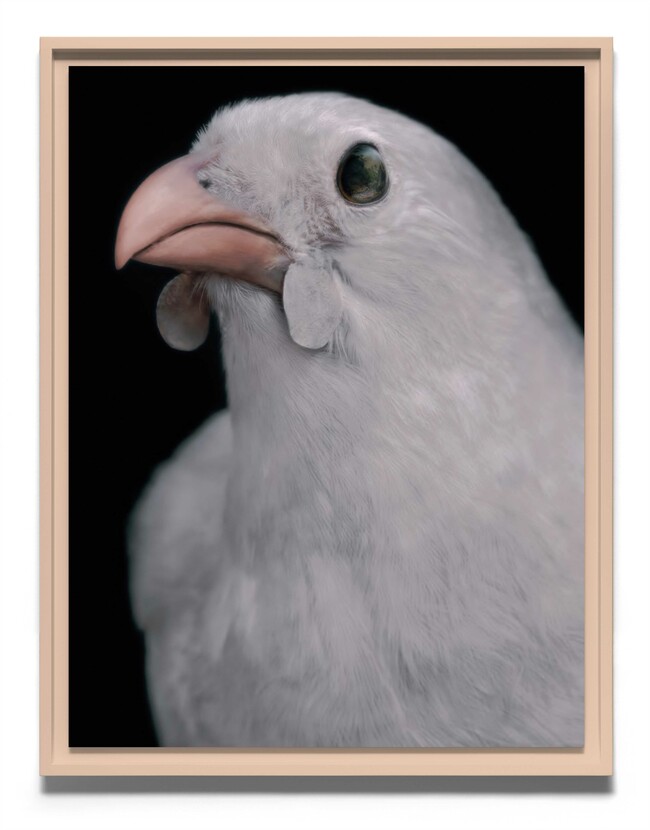
Fiona Pardington North Island kōkako, Callaeas wilsoni, albino, Remutaka Range, 30 June 1883; collection of the Museum of New Zealand Te Papa Tongarewa (OR. 000167), Te Whanganui-a-Tara Wellington, Aotearoa New Zealand 2025. Pigment inks on Ilford Galerie Smooth Cotton Rag. Reproduced courtesy of the artist and Starkwhite, Tāmaki Makaurau Auckland
“These remarkable portraits engage with the tradition of memento mori, while bringing these dead manu – some of which have long been extinct as species – vividly to life.”
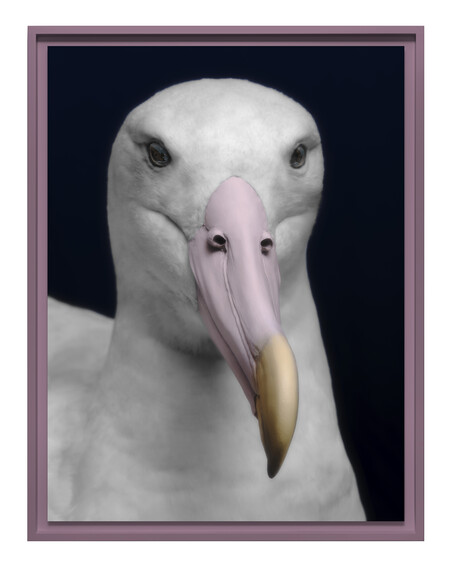
Fiona Pardington Toroa, Southern royal albatross, Diomedea epomophora; collection of South Canterbury Museum (2025/078.1), Timaru, Aotearoa New Zealand 2024. Pigment inks on Ilford Galerie Smooth Cotton Rag. Reproduced courtesy of the artist and Starkwhite, Tāmaki Makaurau Auckland
This isn’t the first time Christchurch Art Gallery Te Puna o Waiwhetū has been affiliated with the Biennale. Can you tell us a little about that history?
We’ve had a range of connections with the Biennale and Aotearoa New Zealand’s presence there over a number of years. Former director Jenny Harper was the commissioner in 2009, 2011 and 2013, overseeing the national pavilion and liaising with the Biennale. In those years the Gallery was a supporting partner, assisting with the development of the exhibition and publication, and on the ground in Venice.
One of the Gallery’s most recognisable works, Chapman’s Homer, was part of Michael Parekōwhai’s Biennale exhibition in 2011. Afterwards, we arranged for it to travel to the Musée du quai Branly in Paris, and then brought it back to Ōtautahi. Many will remember it being installed just outside the earthquake cordon as part of our Outer Spaces programme, before an epic crowdfunding exercise secured it for the Gallery’s collection, and it took up its current position on the Gallery forecourt.
Aotearoa New Zealand’s exhibition for the 2013 Biennale, Front Door Out Back, was curated by our then senior curator Justin Paton. It included Bill Culbert’s Bebop, which now hangs over the Gallery staircase.
This time, as part of a new approach to Aotearoa New Zealand’s participation, the Gallery was selected by Creative New Zealand as their delivery partner. This means we have been involved from the very beginning, selecting the artist and working on every aspect of the project, including the installation in Venice and the accompanying publication. Our decision to work with Fiona Pardington was endorsed by the Arts Council of New Zealand Toi Aotearoa and she was formally invited by the commissioner, Kent Gardner. Kent is supported by Puamiria Parata-Goodall (Ngāi Tahu, Kāti Māmoe, Waitaha and Ngāti Kahungunu), Toi Aotearoa, co-chair committee Māori.
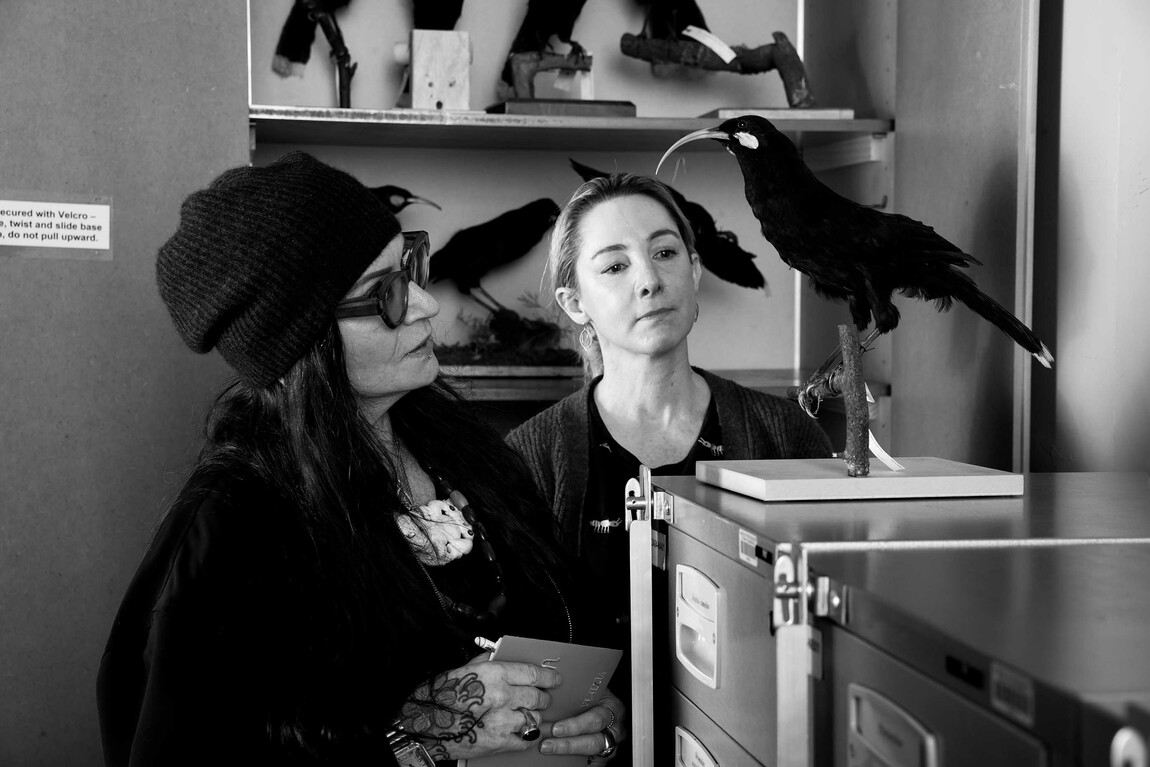
Fiona Pardington in the manu collection store at Te Papa Tongarewa. Photo: Maarten Holl. Image courtesy of Te Papa Tongarewa
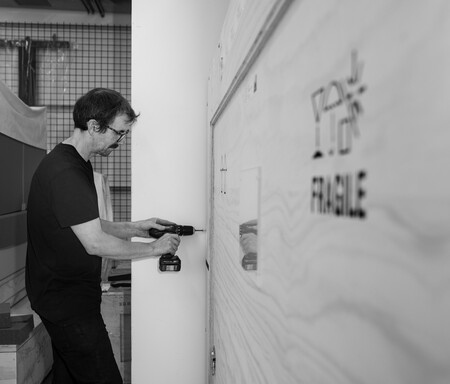
Jamie Richardson at work in the Gallery, 2026. Photo: John Collie
What does our involvement look like this year? How many staff are involved and what are they working on?
There is a big team working with Pardington on bringing Taharaki Skyside to fruition. Alongside Creative New Zealand we have been working closely with the artist’s brother Neil Pardington, who is creative director of the project and designer of the beautiful publication accompanying the exhibition.
From Te Puna o Waiwhetū, we have Jamie Richardson who has been working with Neil on the exhibition design and making plans for how we will install the work in Venice. He visited Venice in October to meet with our Venice-based exhibition manager, Diego Carpentiero. There is a lot he needs to take into consideration when installing an exhibition in a heritage building, in a city with very different environmental conditions to Ōtautahi.
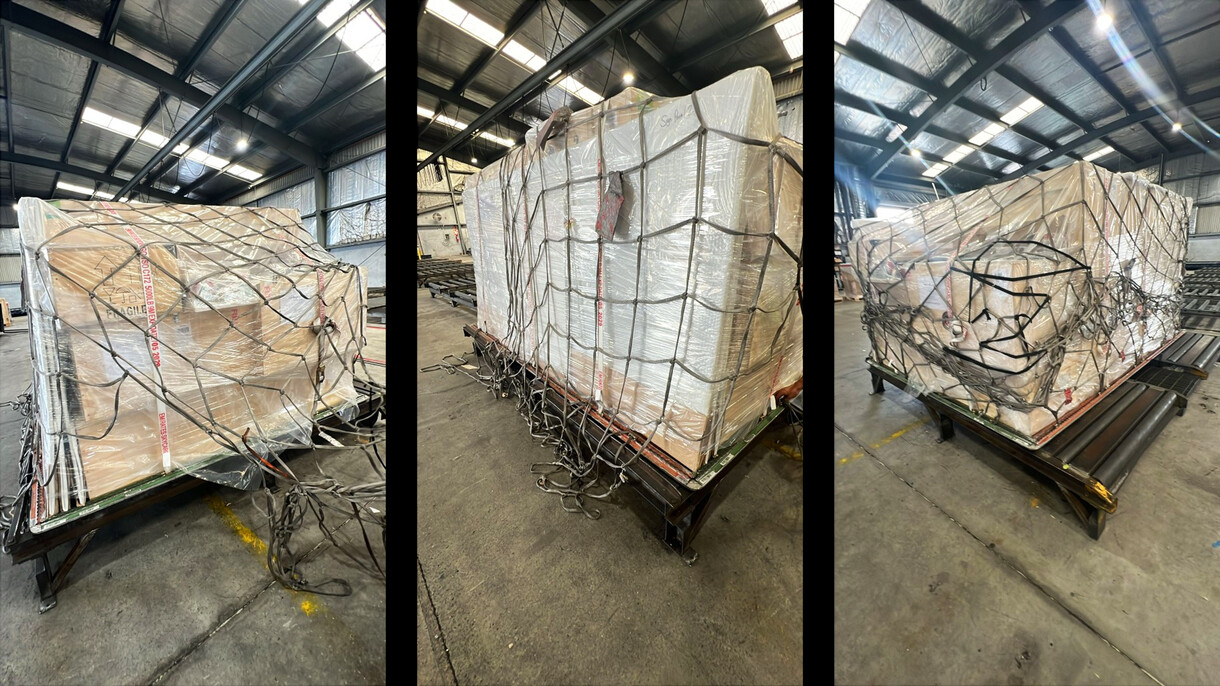
Rebekkah Pickrill is our registrar. She has the difficult job of getting all the artworks to Venice, on time and undamaged. Everything we need to take with us – the artworks, tools, signage and furniture – needs to fit on one pallet.
Sarah Pepperle is our publications coordinator, and has been working on the book with Neil Pardington and the authors. To get it delivered to Venice on time, it had to be conceived, written, edited, designed and sent to print before Christmas. Production began early in 2025, before Fiona had even finished making the work. It’s being printed now, and we can’t wait to see it.
Neil Semple, Chris Pole and Holly Gemmell are our project team who oversee everything. Holly has been booking everyone’s flights, trains and accommodation and getting exhibition texts translated into Māori and Italian. She keeps us all to our deadlines!
Once Taharaki Skyside is open in Venice, it needs to be cared for in the same way our exhibitions are here at the Gallery. Over the course of the Biennale, ten gallery attendants from around Aotearoa (appointed by Creative New Zealand) will host visitors to the exhibition, ensuring that it looks as stunning for the duration of its run as it does on opening day. It will be their role to be ambassadors for Fiona Pardington’s work and Aotearoa New Zealand on the world stage.
In some ways this is like any other project for our team but in others it’s completely different. The logistics of getting an entire exhibition to the other side of the world and working in an environment many of us are unfamiliar with (not to mention the language barrier!) is certainly challenging. But we always work to produce high-quality exhibitions for our audiences – that much doesn’t change. We’re lucky to be working with such fantastic colleagues every step of the way.
Related
Exhibition
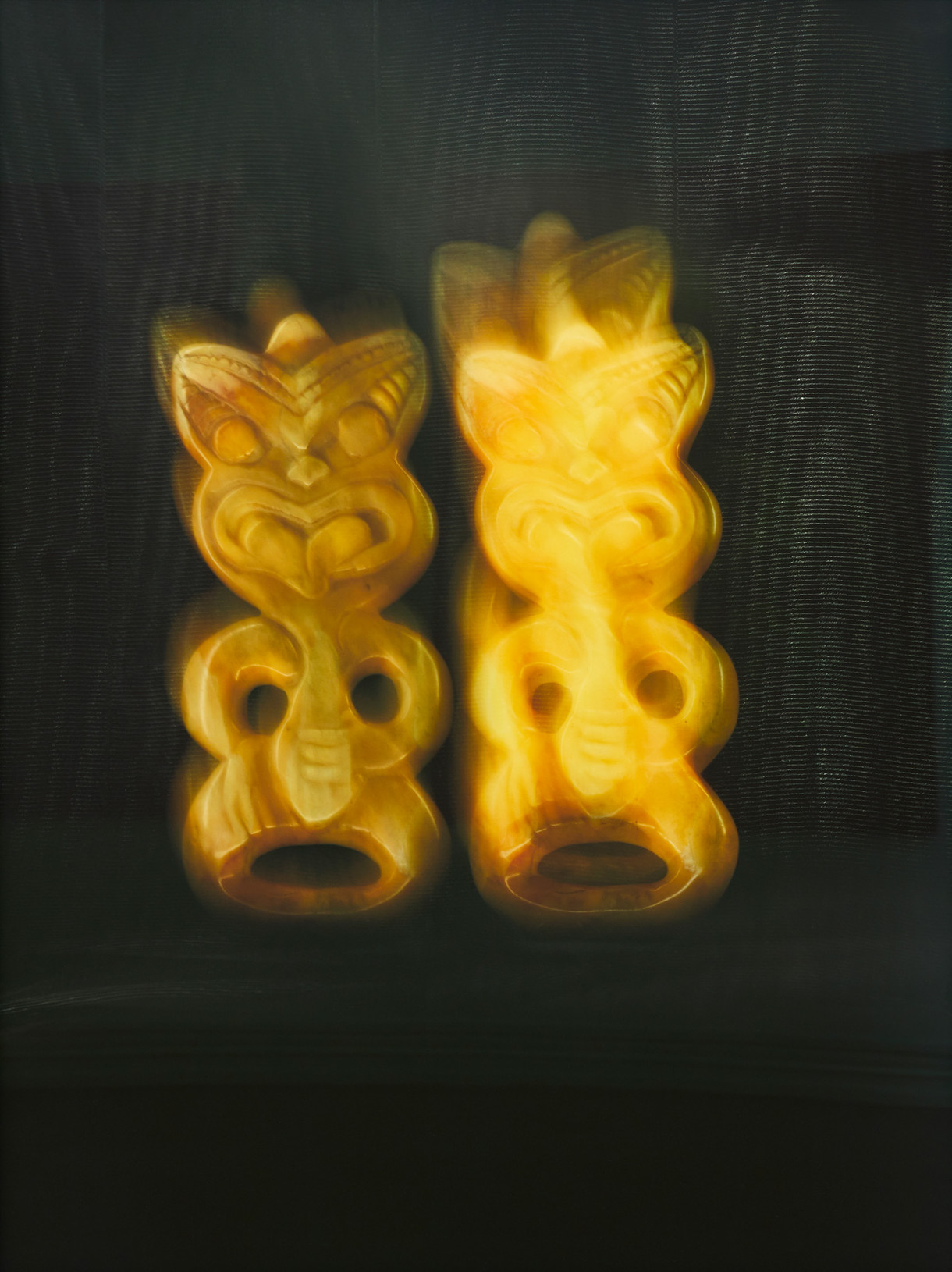
Tiki: Orphans of Māoriland
31 January – 12 July 2020
Orphaned faux hei tiki and a complex story of interaction, exchange and exploitation.
Exhibition
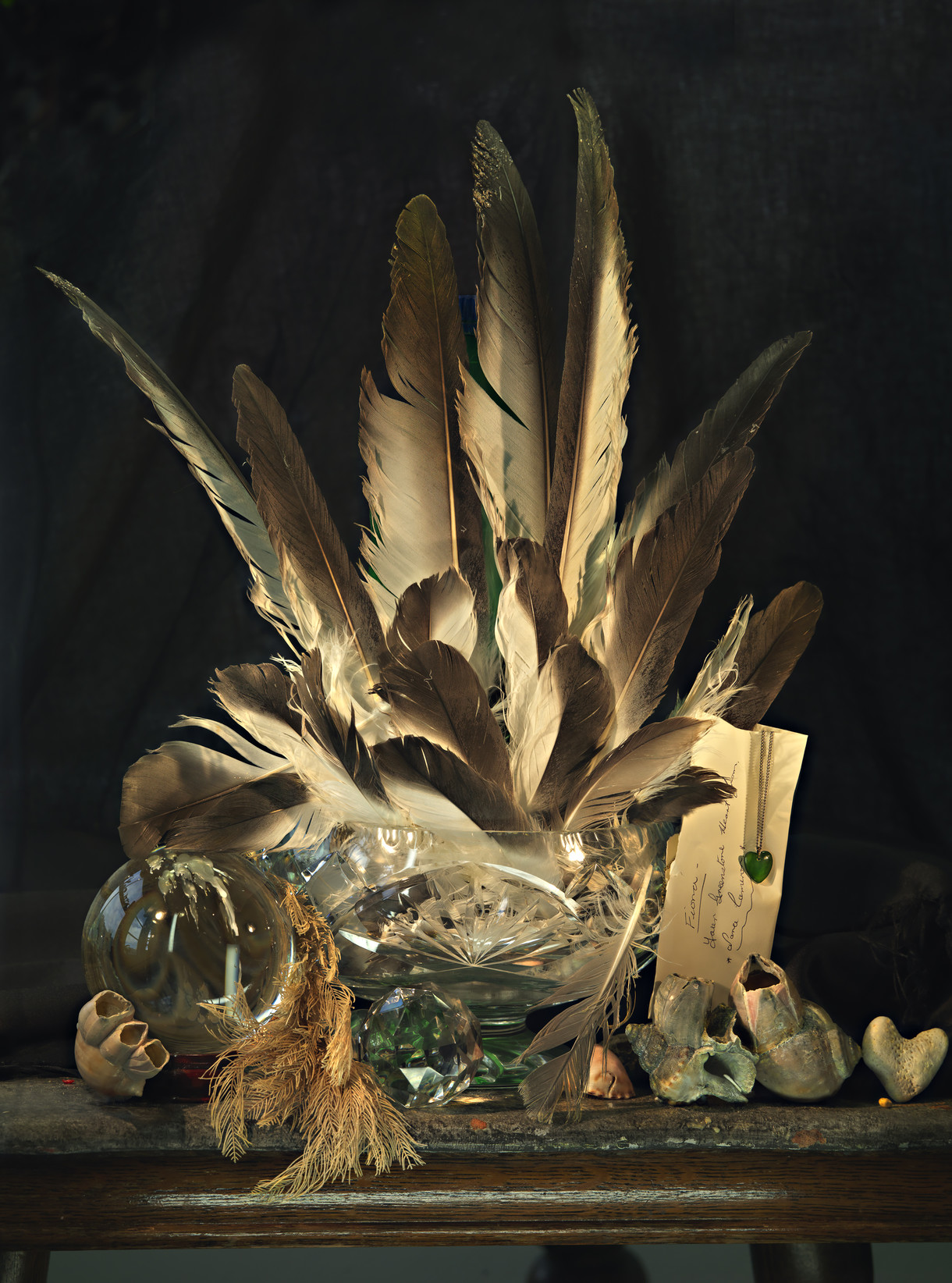
Fiona Pardington: A Beautiful Hesitation
9 July – 6 November 2016
A survey exhibition by a leading New Zealand photographer explores sex, death and the female gaze.
Commentary
Wellcome to Māoriland
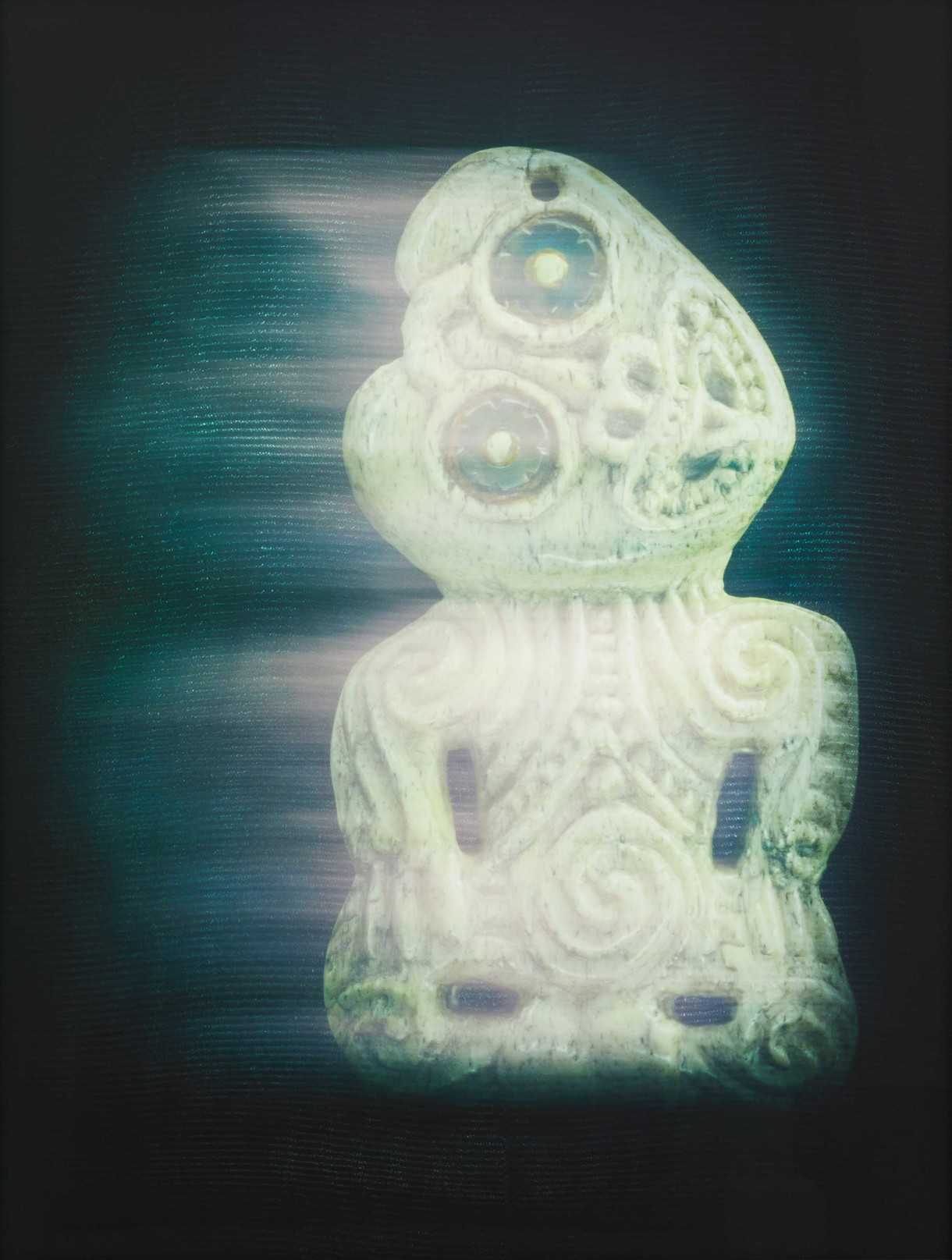
London’s Wellcome Collection was founded by Sir Henry Solomon Wellcome (1853–1936) in the year he died. An incredibly successful US-born, British pharmaceutical entrepreneur, Wellcome had a penchant for collecting medical and health-related artefacts, which formed the basis of the Collection. He didn’t restrict himself to the more obvious examples of early medical technology, however, but also collected in the area of folk remedies and indigenous cultural objects, which were largely acquired through London auction houses. Browsing the Wellcome Collection’s online catalogue, Aotearoa New Zealand photographer Fiona Pardington (Kāi Tahu, Kāti Mamoe, Ngāti Kahungunu, Clan Cameron) encountered what at first glance looked to be a number of heitiki; however, on closer inspection they did not seem quite right.
Notes
Taharaki Skyside in Venice
We’re incredibly proud of the role Christchurch Art Gallery Te Puna o Waiwhetū has played as delivery partner for Aotearoa New Zealand’s participation in the 61st Biennale di Venezia. From the moment the Gallery’s selection of Fiona Pardington as artist was confirmed by Creative New Zealand, Taharaki Skyside has required a huge effort and commitment from right across the Gallery team. It was amazing to see that expertise, care and professionalism represented in Venice when the exhibition opened last month.