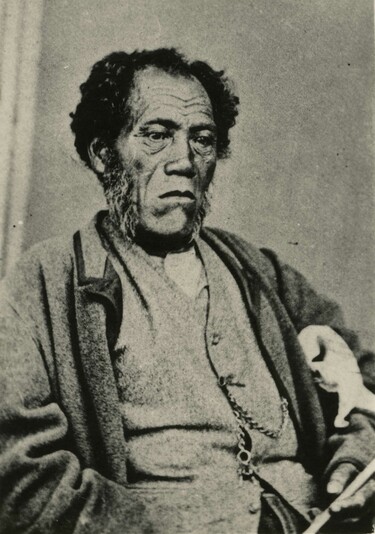
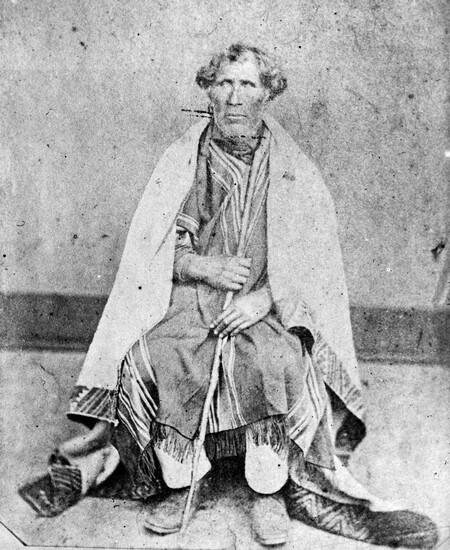
Matiaha Tiramorehu c. 1960s. W. A. Taylor Collection, Canterbury Museum, 1968.213.136
‘For us and our children after us’
The Promise of Kemp’s Deed
“… the relative poverty in which many Canterbury Kāi Tahu were then living was directly attributable to their loss of land in the nineteenth century.”
In 1952, the historian and friend of Kāi Tahu Harry Evison (1924–2014) completed his Master’s thesis, ‘A history of the Canterbury Maoris (Ngaitahu) with special reference to the land question’. He concluded that the relative poverty in which many Canterbury Kāi Tahu were then living was directly attributable to their loss of land in the nineteenth century. His argument reflected the intergenerational, lived experience of Kāi Tahu communities but was dismissed in the academic circles of the 1950s where the inherently racist Pitt-Rivers theory of ‘culture clash’ prevailed – according to this theory the negative impact of the colonial encounter on Māori was attributed to ‘psychological collapse’ rather than the economic hardship enforced by the loss of land and resources.
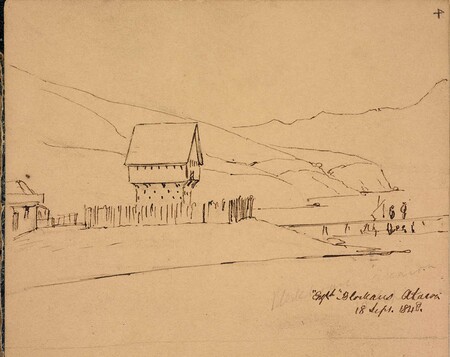
Walter Mantell Sketch of the Akaroa Blockhouse 1848. Ink on paper. Alexander Turnbull Library, E-333-004-1
Harry Evison’s argument was unpopular, and his thesis languished on the shelf for thirty-five years, unread. But Evison went on to play a pivotal role in presenting evidence that supported Te Kērēme (the Kāi Tahu Claim) to the Waitangi Tribunal in the 1980s. At the heart of Te Kerēme were Kāi Tahu claims against the Crown for breaches of contract regarding the land purchases of the nineteenth century. Evison later published a detailed study of the Kāi Tahu land sale purchase deeds which recently provided the groundwork for Kā Whakatauraki: The Promises – an exhibition curated by the Ngāi Tahu Archive featuring these tribally (and nationally) significant documents.
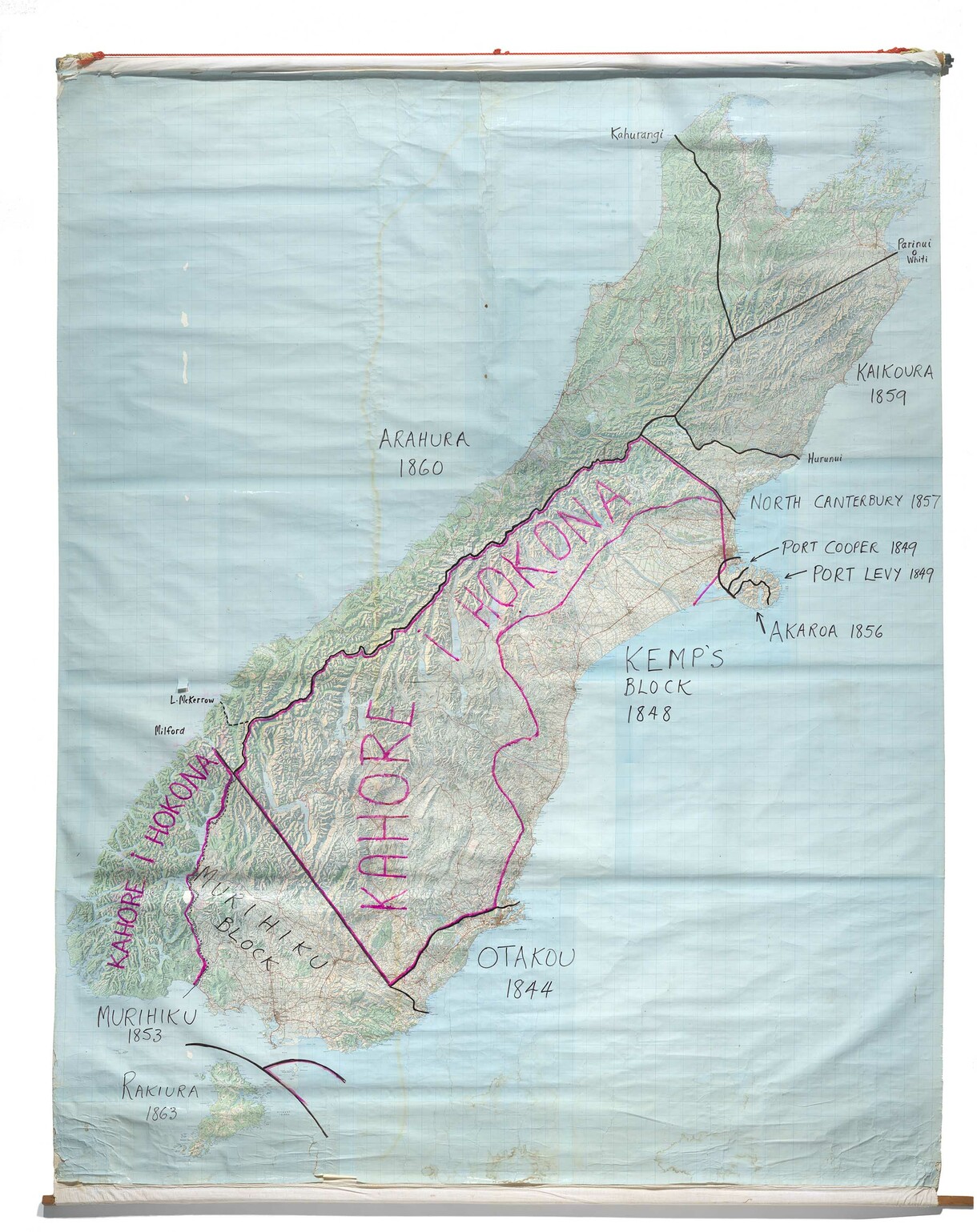
While Te Tiriti o Waitangi, signed by seven Kāi Tahu rakatira, technically provided the basis for a working relationship between Kāi Tahu and the British Crown from 1840, in practice the Kāi Tahu experience of the Crown-iwi relationship was dictated by the terms of the ‘Kāi Tahu deeds’ that followed in its wake. Crucially, te Tiriti gave the Crown the exclusive right to purchase Māori land. Between 1844 and 1864, in a series of ten large-scale land purchases, the majority of Te Waipounamu – 34. 5 million acres – was ‘sold’ by Kāi Tahu to the Crown in exchange for what Kāi Tahu rakatira later described as the “crumbs that fell from the white man’s table.” In negotiating these purchases Crown officials offered miserly sums in payment, applied time pressure, described land boundaries with ambiguity, and threatened to purchase Kāi Tahu territory from other iwi who were not the rightful owners.
The largest and most haphazard of these transactions was the 1848 Canterbury Purchase which comprised nearly one-third of the entire country. The Canterbury Deed, also known as the Ngaitahu Deed, is commonly referred to as Kemp’s Deed after the land agent Henry Tacy Kemp who negotiated the land purchase over three days at Akaroa in the early winter of 1848.
Discussions commenced on 10 June when five hundred Kāi Tahu assembled at the English blockhouse on the Akaroa foreshore to hear what Kemp had to offer. Rakatira from the various branches of the iwi took turns formally reciting the names of their lands along the eastern seaboard that they were willing to sell. However, negotiations quickly soured when Kemp refused to address Kāi Tahu concerns about their land north of Kaiapoi which had the previous year been illegally purchased by the Crown from Ngāti Toa, who were not the rightful owners. Piuraki Tikao, who had signed te Tiriti at nearby Ōnuku eight years earlier, insisted that the purchase price of £2,000 offered by Kemp was inadequate. He would settle for no less than £5 million. Matiaha Tiramōrehu demanded that given the small price, Kāi Tahu would only consider the sale if they retained all their mahika kai, kāika nohoaka, fisheries and ample land. After a day of arguing, there was no deal. Kemp delivered an ultimatum – Kāi Tahu had two days to decide whether to accept the £2,000 on offer. There would be no further negotiation.
On 12 June a group of senior Kāi Tahu rakatira boarded the warship HMS Fly anchored in Akaroa Harbour, intending to sign Kemp’s Deed. Kemp had agreed to ensure Kāi Tahu retention of their mahika kai and kāika nohoaka “for them and their children after them”, swaying the thinking of some of the vendors who had previously opposed his offer. However, when he announced that payment would be in instalments and that Kāi Tahu would only receive £500 that day, Tikao was incensed and promptly left the ship, telling him he could keep his money. According to Kāi Tahu witnesses, Kemp then threatened that if Kāi Tahu did not accept, he would offer the payment to Ngāti Toa, and soldiers would be sent to forcibly take possession of the land. With that, Kemp rolled out the deed he had prepared overnight on a parchment, and amidst ongoing argument and confusion, those rakatira who were willing to sign did so. Among them was Tikao, who had been convinced to return to the ship. Both he and Te Matenga Taiaroa received the £500 payment which was made up of crowns, half-crowns and shillings in canvas bags. Kemp promised to return and mark out the promised reserves, and HMS Fly weighed anchor and sailed for Wellington.
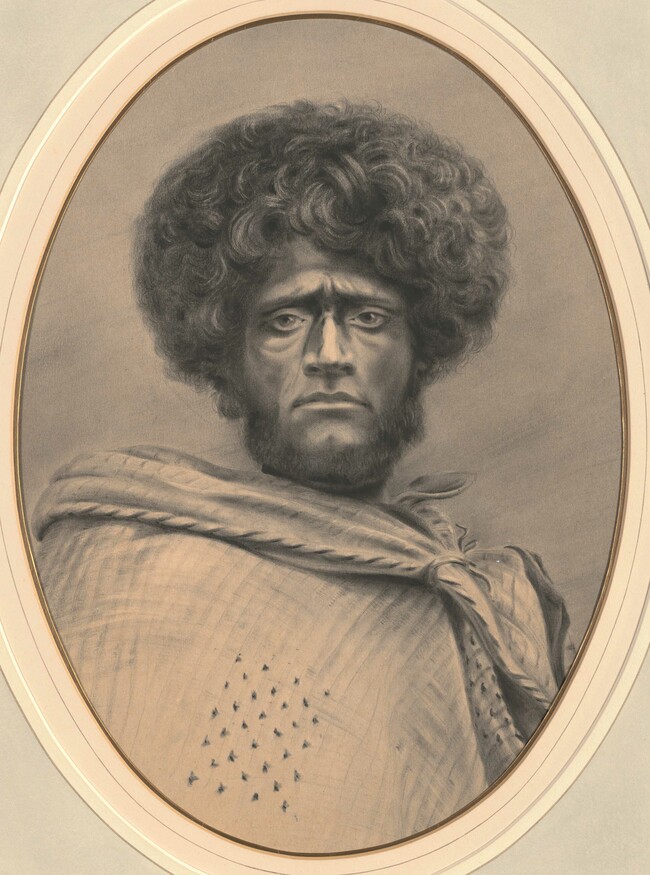
Charles Meryon Piuraki Tikao 1846. Charcoal on paper. National Library of Australia, Canberra, Rex Nan Kivell Collection (NK127)
“While Kemp’s Deed states that a map of the purchase area would be produced by surveyors, this sketch plan did not fulfil that purpose.”
The Crown had purchased what it understood to be twenty million acres of land for just £2,000. However, the boundaries were not well defined at the time, and the exact area purchased has always been a contentious issue for Kāi Tahu, who were not given copies of the documents. A decade would pass before a transcript of Kemp’s Deed was published, and even then, it was only an English translation that did not accurately represent the reo Māori version Kāi Tahu had signed. Indeed, Kāi Tahu were not fully cognisant of the contents of the official documents until thirty-one years later when Kemp’s Deed itself was brought back to Canterbury at their insistence, during an official inquiry into the land sales.
A sketch plan of the Canterbury Purchase area was prepared by Charles Kettle, the New Zealand Company’s chief surveyor, who accompanied Kemp during the purchase negotiations. While Kemp’s Deed states that a map of the purchase area would be produced by surveyors, this sketch plan did not fulfil that purpose. Made before surveyors had even been on the land, it includes numerous errors such as incorrect place names, incorrect placement of names, a distorted depiction of the coastline, and boundaries that do not match those described in the text of the deed. This plan was not shown to the Kāi Tahu vendors at the time of the sale. Indeed, Kāi Tahu witnesses later testified they understood that the purchase area extended along the eastern seaboard from Maungatere Mount Grey to Maunga-atua in the south, and inland to the foothills. Kettle’s plan, however, shows boundaries extending from coast to coast across the entire island of Te Waipounamu.
By 1860, the Crown conceded that their inclusion of Te Tai Poutini West Coast in Kemp’s Deed was an overstep. The Crown’s subsequent purchase of the West Coast from Poutini Kāi Tahu effectively reduced the acreage of Kemp’s purchase to around 13. 5 million acres – still a massive area. Of that, the Crown ultimately set aside a meagre 6,359 acres in small reserves for Kāi Tahu, which were dotted throughout the purchase area at Tuahiwi, Kāikanui, Taumutu, Arowhenua, Te Upoko-o-Rākaitauheke, Tauhinu, Te Puna-a-Maru, Kākaunui, Moeraki, Waikouaiti, and Pūrākaunui. This was despite a directive from the Crown to Kemp to “reserve to the Natives ample portions of land for their present and prospective wants”. Kemp himself did not return as he had promised. The reserves were instead surveyed by Walter Mantell whose ruthless interactions with Kāi Tahu are infamous.
Under the terms of the deed of sale, the Crown promised to provide schools and hospitals, and to set aside all the Kāi Tahu mahika kai sites and kāika nohoaka. Not only did the Crown fail to set aside adequate reserves for Kāi Tahu, but it determined that mahika kai sites were restricted to those areas currently under cultivation as gardens, or the places where there were fixed structures such as eel weirs. As a result, Kāi Tahu lost ownership of, and access to, most of their traditional mahika kai including the weka hunting grounds, kāuru groves, forests and fisheries which they required to prosper.
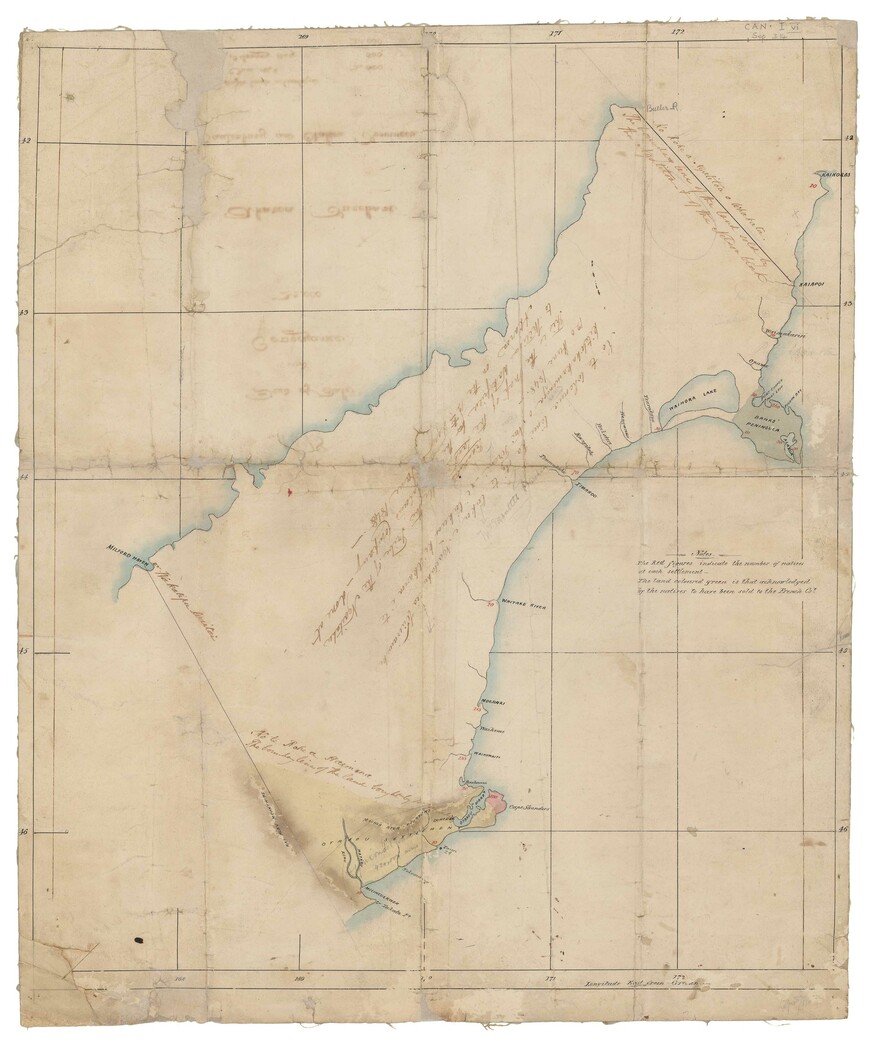
Kemp’s Deed Plan 1848. Archives New Zealand, R12153209
Te Matenga Taiaroa c.1860. Alexander Turnbull Library, 1/2-076006-F
Official translations of Kemp’s Deed, beginning with Kemp’s own translation, all skew the crucial promises to Kāi Tahu in favour of the government. The term ‘whakarite’ in the deed denotes an obligation on the governor to provide additional reserves. But Kemp translated it as giving the government the power and discretion regarding reserve allocations. Indeed, when Mantell travelled through Kāi Tahu territory in 1848–9 surveying the Native Reserves in the Canterbury block he told the Kāi Tahu chiefs that by taking money from Kemp they had forfeited their right to any land except for what he decided to reserve for them.
Kāi Tahu formally challenged the state for its active neglect of the iwi as early as 1849, when Matiaha Tiramōrehu appealed to the governor to honour the terms of Kemp’s Deed. This grew into an intergenerational tribal campaign for justice known as Te Kerēme. While Te Kerēme dealt with all ten of the Kāi Tahu land purchases, the failure of the Crown to fulfil its contractual obligations under Kemp’s Deed, had such widespread and devastating consequences for Kāi Tahu that for more than half of the twentieth century (1909–66) it was the sole focus.
Settlement of the grievances arising from the Kāi Tahu land purchases was eventually reached with the passing of the Ngai Tahu Claims Settlement Act 1998. In the lead up to the settlement the now well-known Kāi Tahu tribal whakataukī ‘Mō tātou, ā, mō kā uri a muri ake nei’ was penned. Based on the motto ‘for us and our children after us’, first adopted by the Ngaitahu Maori Trust Board in the mid-twentieth century, it is a beautiful expression of the iwi’s collective aspirations for future generations, made even more profound by its etymological roots as a direct quote from Kemp’s Deed.
Related reading: Kai Tahu
Exhibition
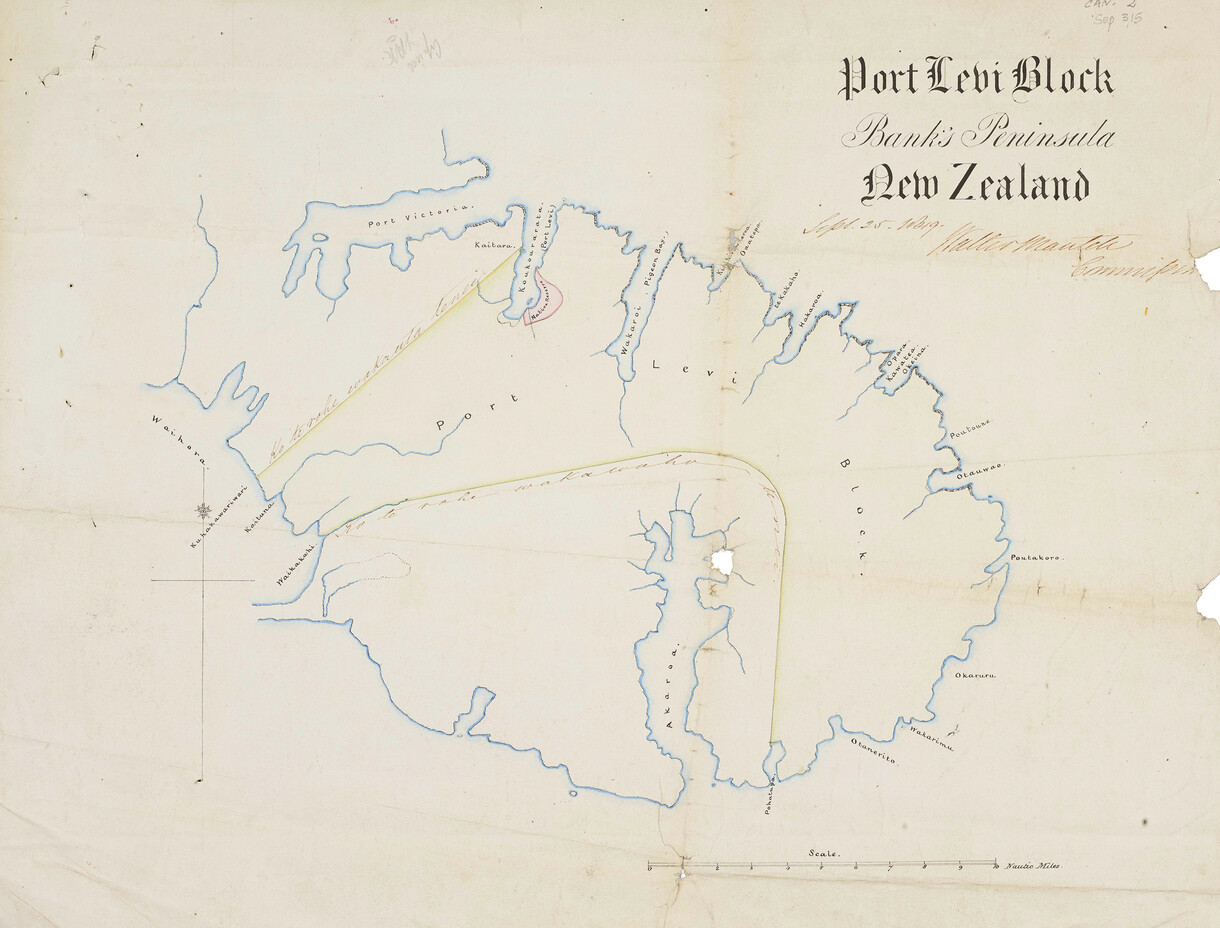
Kā Whakatauraki: The Promises
15 November 2025 – 7 March 2027
A landmark exhibition bringing together the ten Ngāi Tahu land sale purchase deeds.

Exhibition

Te Tihi o Kahukura: The Citadel of Kahukura
Selected works by Bill Sutton considered from a Kāi Tahu perspective.
Exhibition

The Devil's Blind Spot: Recent Strategies in New Zealand Photography
Recent photography by an emerging generation of New Zealand artists.