Frances Hodgkins
Aotearoa New Zealand, b.1869, d.1947
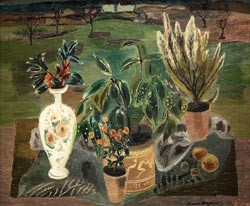
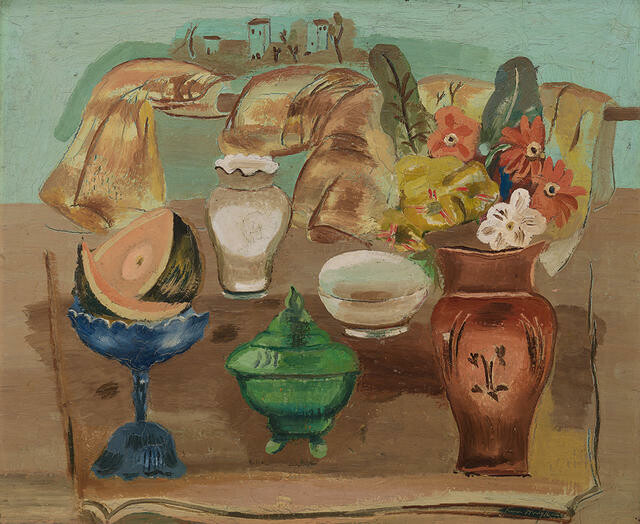
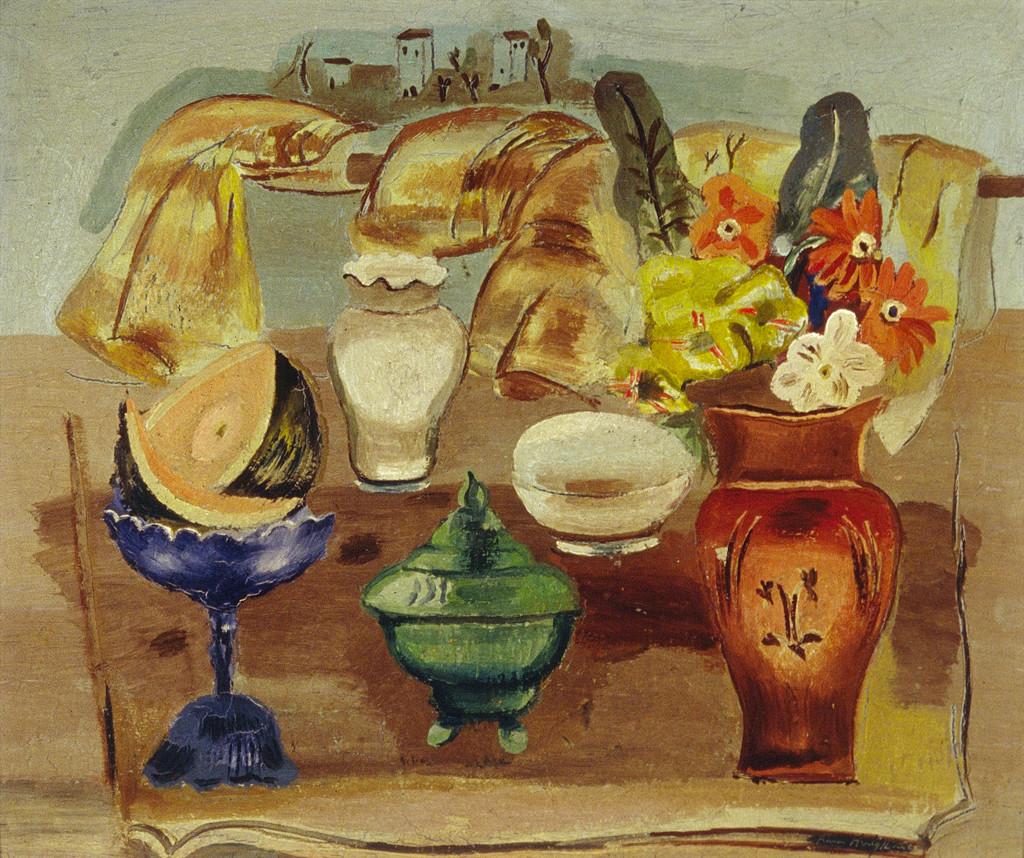
Still Life
- c. 1932
- Oil on wood panel
- Purchased 1979
- 730 x 845mm
- 79/425
Location: Ravenscar Gallery
Tags: bowls (vessels), buildings (structures), flowers (plants), fruit, landscapes (representations), still lifes, vases
Frances Hodgkins was one of Aotearoa New Zealand’s most successful expatriate painters, working as a professional artist in England. Throughout the 1920s and 1930s she developed a reputation for her semi-abstract landscapes and still-life paintings, subjects she sometimes combined. Hodgkins was close friends with some of the leading British artists of her day including Cedric Morris and John Piper. Driven and hard working, she continued to push herself as an artist, and her work became ever more abstract in her later years. In 1942 she stated that her “… aim [is] being able to do higher things as time goes on – and as time goes on I compete against myself more and more.” Her belief in herself and her art was recognised, shortly after her death, when she was selected alongside other leading British artists of the day including Henry Moore, John Piper, Paul Nash and Ben Nicholson for the Penguin Modern Painters series of monographs in 1948. She was the only woman artist to be included in the series.
(Timeless: Treasures from the Historical Collection 19 September 2026 – 30 May 2027)
Exhibition History
New Dawn Fades, 10 November 2018 – 23 February 2020
The well-known New Zealand expatriate artist Frances Hodgkins travelled to Ibiza in October 1932, remaining on the island until July 1933. These were high times for the artist, who relished living and painting in the island’s sharp light immensely. Hodgkins kept company with fellow New Zealand painters Maude Burge, Gwen Knight and May Smith, whom she fondly referred to as “my three friends”. At this time Hodgkins painted still-life subjects out in the landscape as opposed to indoors. Everyday objects were often arranged on a table, or sometimes directly on the ground, with the Ibiza landscape extending into the distance beyond. She commented at the time, “In this clear ivory light every common object looks important and significant … things appear in stark simplicity minus all detail – nothing corked up … or hidden as in the grey, or brown, light of the north.”
Related reading: A Room of One’s Own
Notes
Dr T.L. Rodney Wilson 1945-2013
We learned of the death of Rodney Wilson yesterday and our thoughts are with his family and friends.
Notes
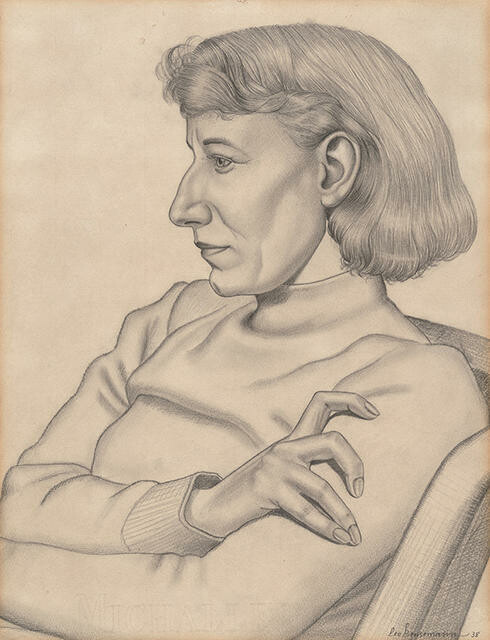
Rita Angus by Leo Bensemann
This article first appeared in The Press as 'Viewing Rita Angus with Leo's eyes' on 26 May 2015
Notes
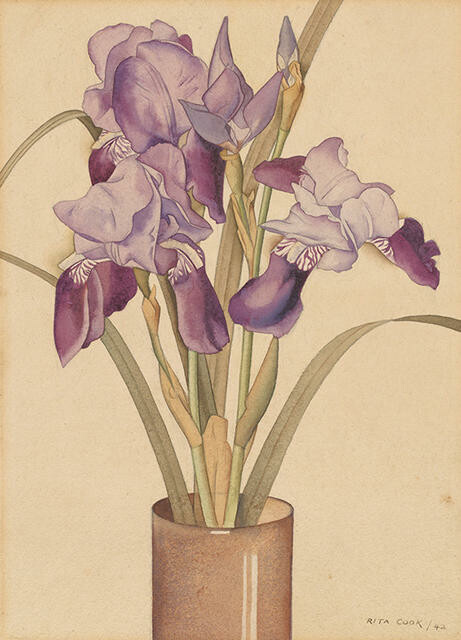
Irises by Rita Angus
This article first appeared as 'The meticulous small world of Rita Angus' in The Press on 9 December 2014.
Notes
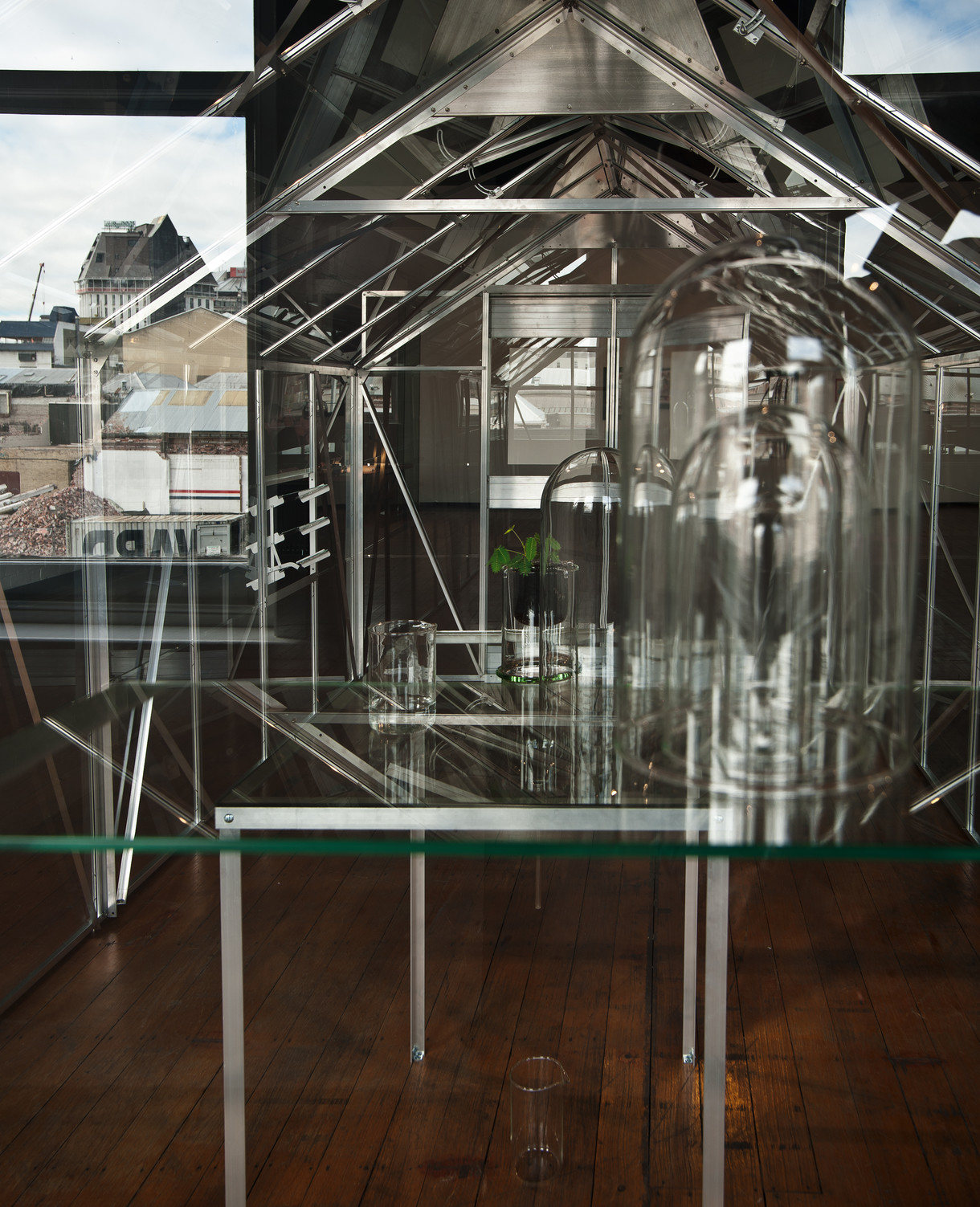
Raise your glass (house)
Huge congratulations to Zina Swanson who has just been announced as the Francis Hodgkins Fellow for 2013.
Notes
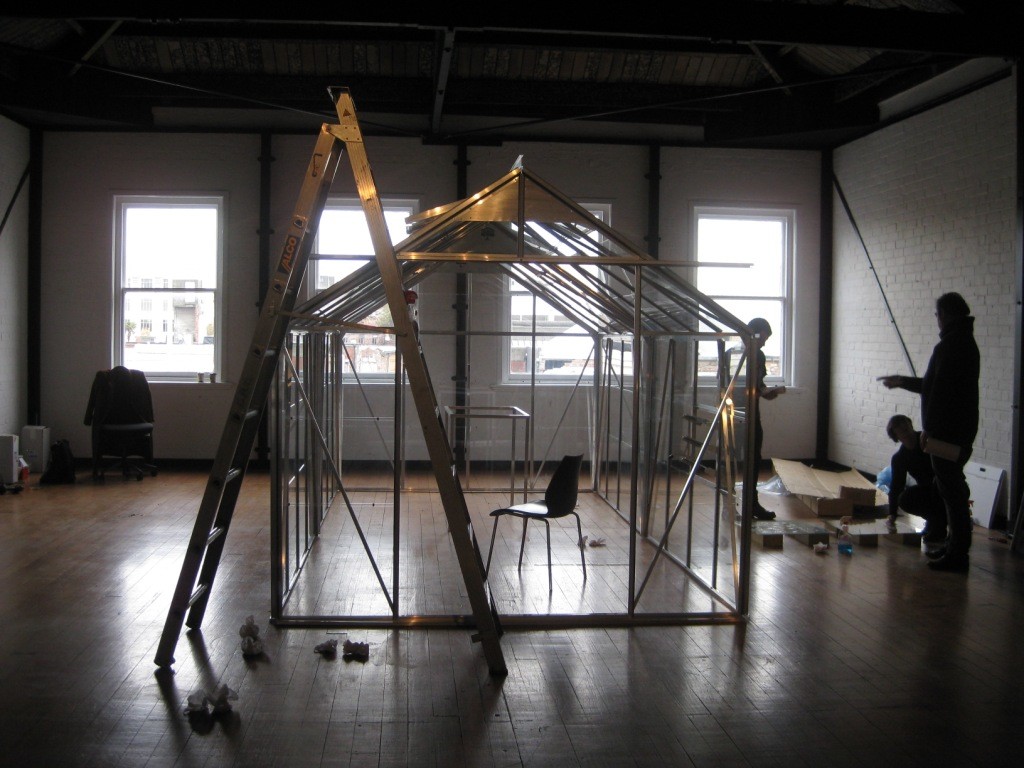
People in glasshouses
A few days ago, there were lots of little bits of glass and metal strewn (in a highly systematic way) across the floor of our NG gallery space.
Notes
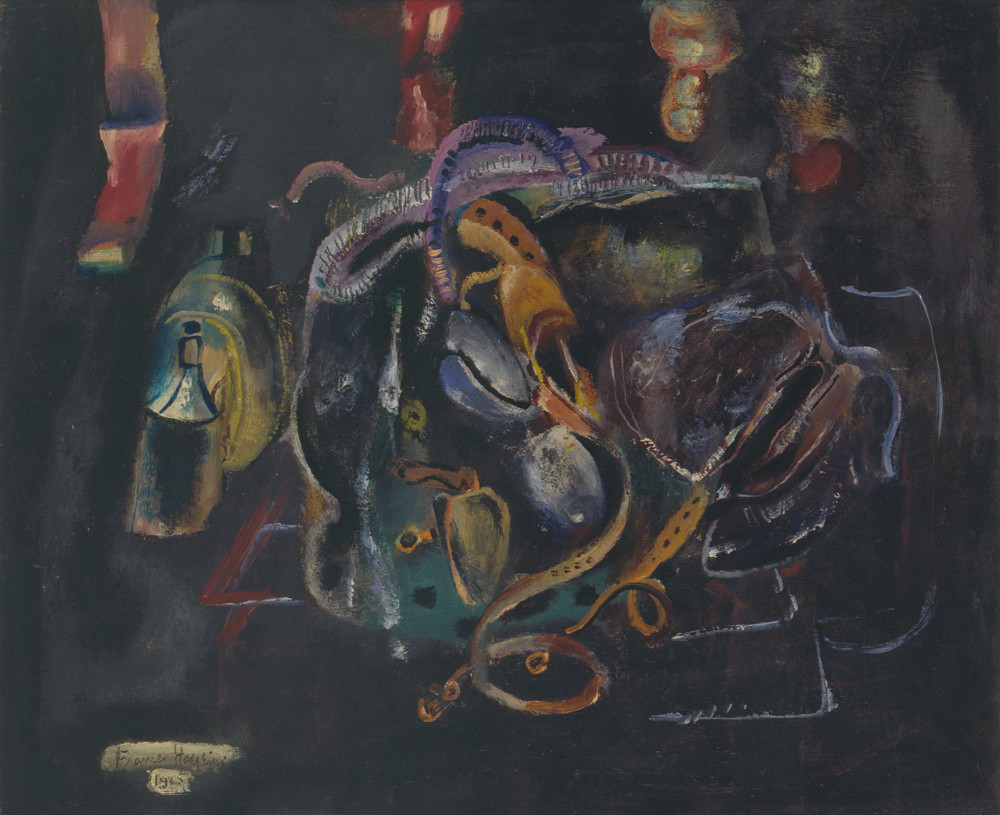
Zipp by Frances Hodgkins
‘I can't tell you the horror of the Blackout and the effects on your nerves - the want of ventilation at night is very tiring - perhaps the nastiest part of it all.' - Frances Hodgkins in a letter to her brother, William.
Collection
Leo Bensemann Rita Angus
Leo Bensemann made this portrait when he and Rita Angus were neighbours. The friends occupied adjacent studio flats in a Cambridge Terrace house here in Ōtautahi Christchurch owned by the painter Sydney Lough Thompson, Bensemann sharing his with Lawrence Baigent. They all used the same kitchen and bathroom, and often entertained together. As artists, it was a creative and stimulating environment. “Both our studio doors were thrown open”, Baigent recalled. “Doors were never locked or shut.” Bensemann and Angus frequently made portraits of each other – some flamboyant, others more introspective, like this one. They are fascinating records of two strong personalities and their complex friendship.
(Dear Shurrie: Francis Shurrock and his contemporaries, 8 March – 13 July 2025)
Collection
Zina Swanson Untitled
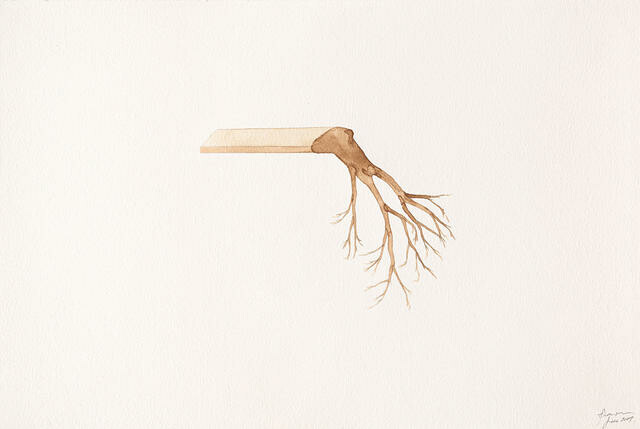
Zina Swanson’s precise, yet poetic painted drawings call attention to the delicacy and vulnerability of nature. Plant matter, insects and other tiny objects she collected over several years take fresh life in brushstrokes that range from feathery to forensically precise. Zina’s interest in her personal – and our human – relationship with the natural world led her to imagine a strange form of cross-species rehabilitation, where wilting forms are supported, a cutting grows the feet of a bird and processed timber receives new prosthetic roots.
(Perilous: Unheard Stories from the Collection, 6 August 2022- 21 July 2024)
Collection
Zina Swanson Untitled
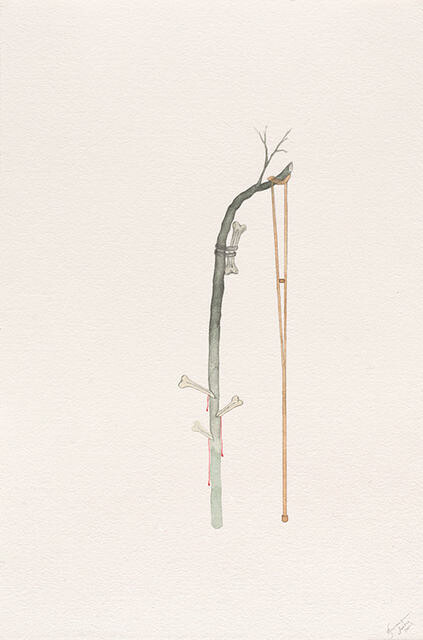
Zina Swanson’s precise, yet poetic painted drawings call attention to the delicacy and vulnerability of nature. Plant matter, insects and other tiny objects she collected over several years take fresh life in brushstrokes that range from feathery to forensically precise. Zina’s interest in her personal – and our human – relationship with the natural world led her to imagine a strange form of cross-species rehabilitation, where wilting forms are supported, a cutting grows the feet of a bird and processed timber receives new prosthetic roots.
Collection
Zina Swanson Untitled
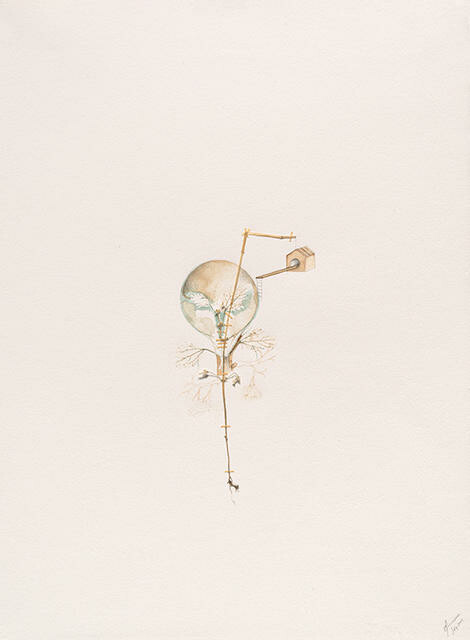
Zina Swanson’s precise, yet poetic painted drawings call attention to the delicacy and vulnerability of nature. Plant matter, insects and other tiny objects she collected over several years take fresh life in brushstrokes that range from feathery to forensically precise. Zina’s interest in her personal – and our human – relationship with the natural world led her to imagine a strange form of cross-species rehabilitation, where wilting forms are supported, a cutting grows the feet of a bird and processed timber receives new prosthetic roots.
Collection
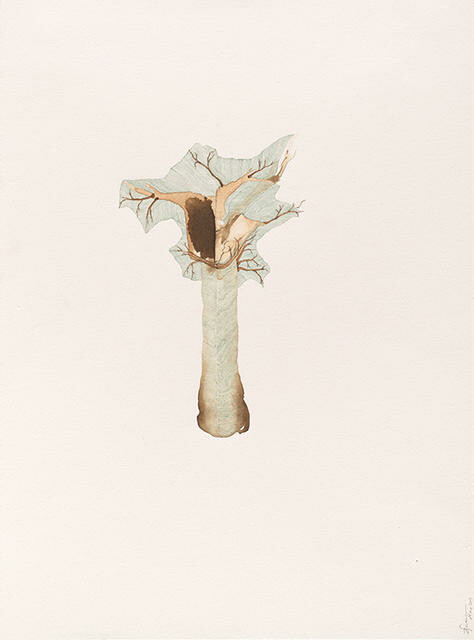
Zina Swanson Untitled
Zina Swanson’s precise, yet poetic painted drawings call attention to the delicacy and vulnerability of nature. Plant matter, insects and other tiny objects she collected over several years take fresh life in brushstrokes that range from feathery to forensically precise. Zina’s interest in her personal – and our human – relationship with the natural world led her to imagine a strange form of cross-species rehabilitation, where wilting forms are supported, a cutting grows the feet of a bird and processed timber receives new prosthetic roots.