Director’s Foreword
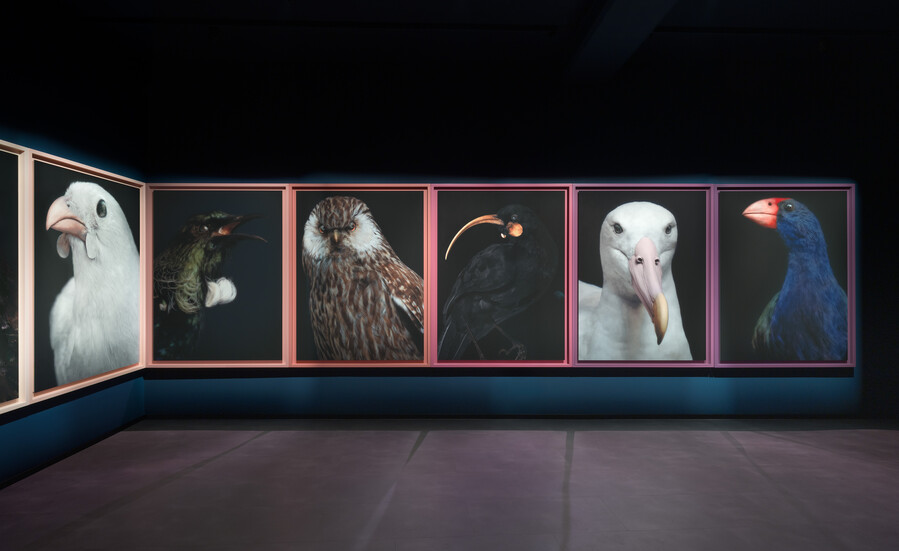
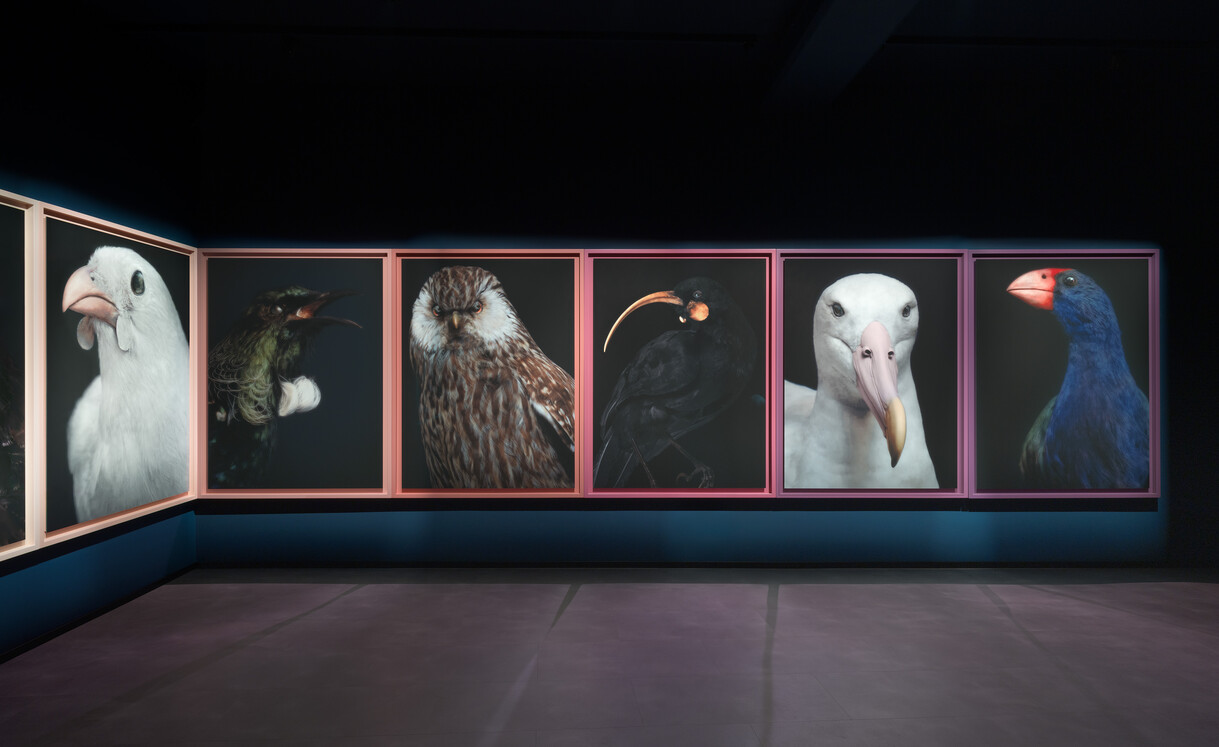
Fiona Pardington Taharaki Skyside (detail of installation) 2026. Photo: Neil Pardington
In late 2024, the Gallery received the great honour of being chosen by Creative New Zealand as their delivery partner for the national pavilion at this year’s Venice Biennale. That was the first step in a long process, and as I write this I am preparing to attend the opening of Fiona Pardington’s spectacular exhibition Taharaki Skyside. Our decision to propose Fiona for this occasion was based in our deep respect for her body of practice, and our belief that her current works – profoundly moving photographic portraits of taxidermied native manu in museum collections – were a perfect fit for this moment on the global stage.
We are delighted with the new series she has produced and proud of all those in the Gallery who have worked so hard to achieve an outstanding result in challenging conditions. I would like to acknowledge everyone here who had a part in the project, and also thank Fiona Pardington, her brother Neil Pardington, our partners Creative New Zealand, the NZ at Venice patrons and the Christchurch Art Gallery Te Puna o Waiwhetū Foundation. Your enthusiastic commitment to this project has been integral to its success. Taharaki Skyside is accompanied by a stunning publication, published by the Gallery, and this will soon be on sale in our design store. Following its return from Venice, Fiona’s exhibition will be displayed at Christchurch Art Gallery Te Puna o Waiwhetū so that all those who have followed the project can have the opportunity to see it firsthand.
In this issue of Bulletin we are delighted to have an article by archaeologist and cultural heritage specialist Gerard O’Regan (Kāi Tahu), who focuses on the images in Mark Adams’s Land of Memories series. Gerard considers the impact these works have had on his own memories of tribal place and on his ongoing research into Māori rock art sites throughout the country.
In Ahead of Her Time, curator Jennifer Taylor from Te Whare o Rehua Sarjeant Gallery provides an introduction to one of the earliest pioneers of modernism in Aotearoa New Zealand, Whanganui born artist Edith Collier. During her time in England in the early twentieth century, Collier was heralded as a promising painter, destined for success. On her return to a more conservative New Zealand, however, her work was met with antipathy and hostility.
As our collection exhibition He Kapuka Oneone – A Handful of Soil continues to evolve, we’re taking time to explore some of the artists and works it features in more detail. Grant Banbury examines Ōtautahi Christchurch artist Doris Lusk’s relationship with the Banks Peninsula, in particular her connections to Takamatua and the Akaroa area. And lead curator Felicity Milburn talks with printmaker Denise Copland, digging into her ongoing fascination with kahere, and in particular human impact on indigenous forests.
Staying with forestry and our extractive relationship with trees, curator Melanie Oliver talks to Ana Iti (Te Rarawa, Ngāi Tūpoto, Ngāti Here, Pākehā) about her recent project Ngahere Behind a Pile of Metal, which is on display in our downstairs galleries until the end of July. My Favourite is supplied by Kaye Woodward of the Bats, who selects a dynamic piece of modernist printmaking. And Pagework is by Ōtepoti Dunedin-based artist Georgina May Young.
Over the last quarter, two senior artists with strong and lasting connections to this institution passed away. As director of the Robert McDougall Art Gallery, John Coley was involved in the acquisition of some of our most treasured works. He was a vocal advocate for the construction of a new gallery building, and remained a strong supporter of the Gallery’s activities all his life. And Philip Trusttum will be remembered as one of our finest painters, a passionate supporter of art and artists and a great friend to the Gallery. His paintings embrace life at full throttle, just as he did. Bursting with colour, movement, energy and humour, they reflect his insatiable fascination with the world.
Finally I wanted to acknowledge the untimely death of designer Matt Arnold. We first met Matt in 2010 when he and his design partner Tim Kelleher pitched their proposal for a redesign of the Gallery’s ageing website. They blew all the competition out of the water that day, and the work they went on to do with us was transformative. That continuing project has been recognised with multiple awards over the years, and we are hugely grateful for Matt’s thoughtful work, dry wit and gentle optimism throughout. He will be greatly missed by those who knew him, and I offer the condolences of the full Gallery team to his family.
Related reading: Venice Biennale
Exhibition
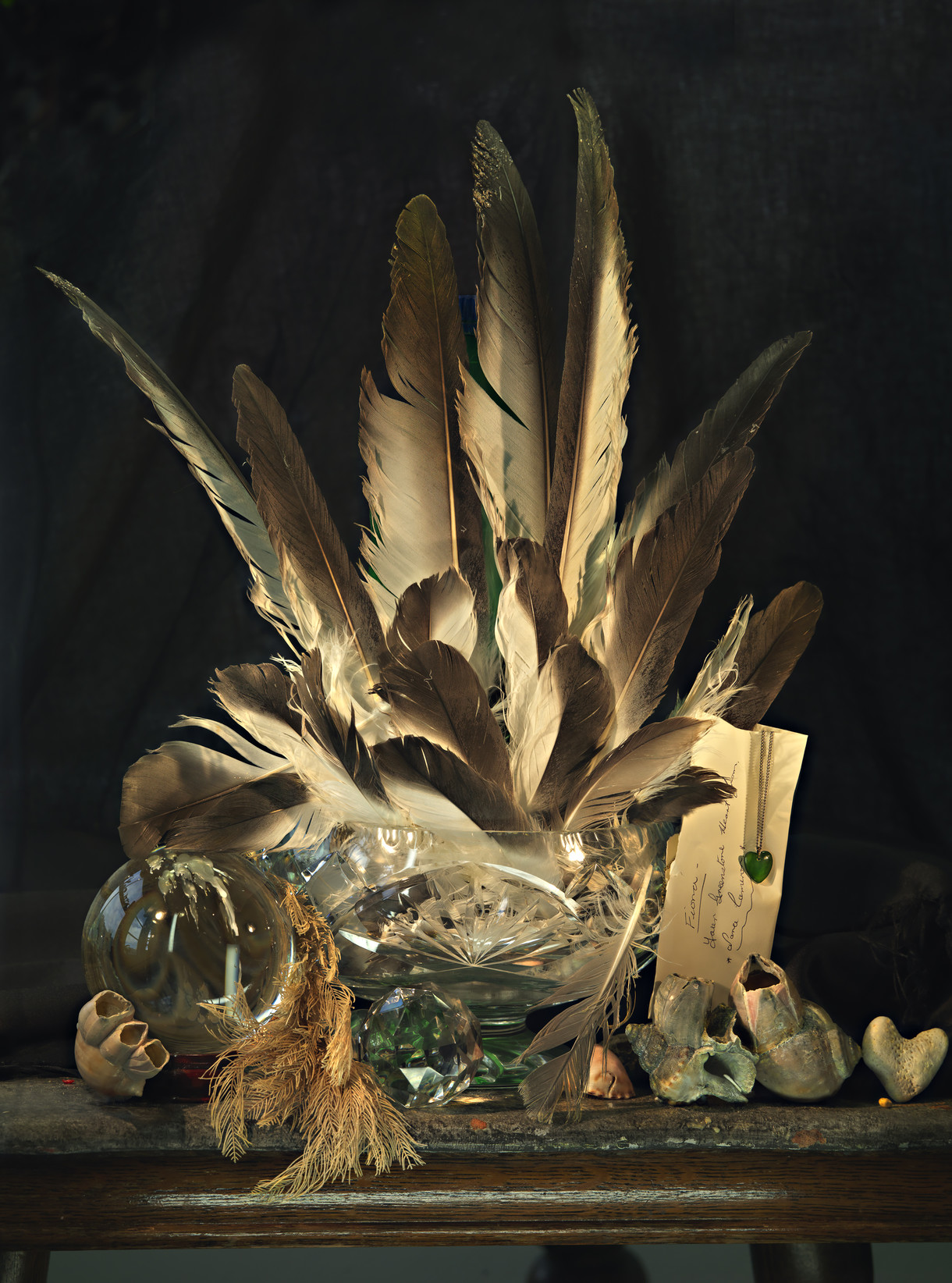
Fiona Pardington: A Beautiful Hesitation
9 July – 6 November 2016
A survey exhibition by a leading New Zealand photographer explores sex, death and the female gaze.
Commentary
On the World Stage
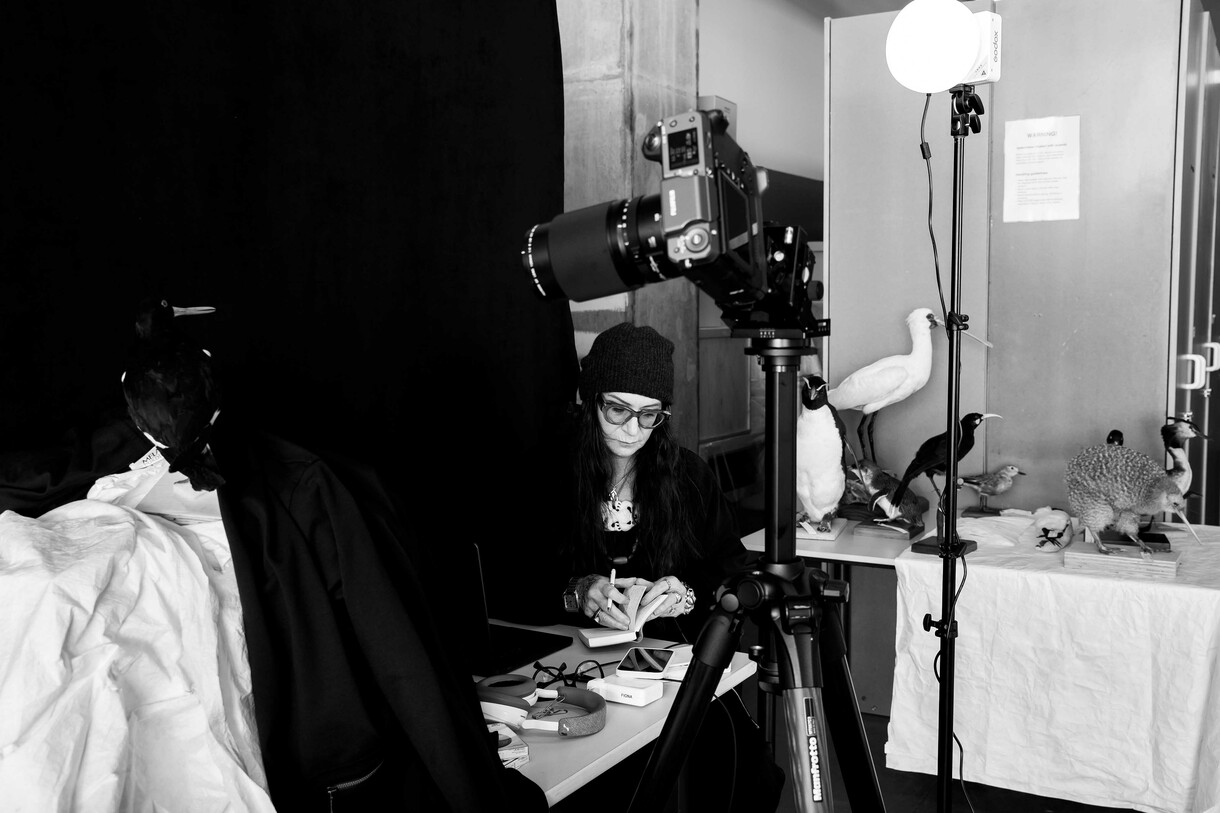
When Fiona Pardington’s remarkable presentation Taharaki Skyside opens this May at the 2026 Venice Biennale, it will be the result of months of work by the artist and many others, including the team here at the Gallery. In January 2025 the Gallery was announced by Creative New Zealand as the exhibition delivery partner for the project, with curators Felicity Milburn and Chloe Cull at the centre of a team that would work with Pardington to develop the exhibition and accompanying publication. Bulletin asked Chloe and Felicity about the project.
Notes
Taharaki Skyside in Venice
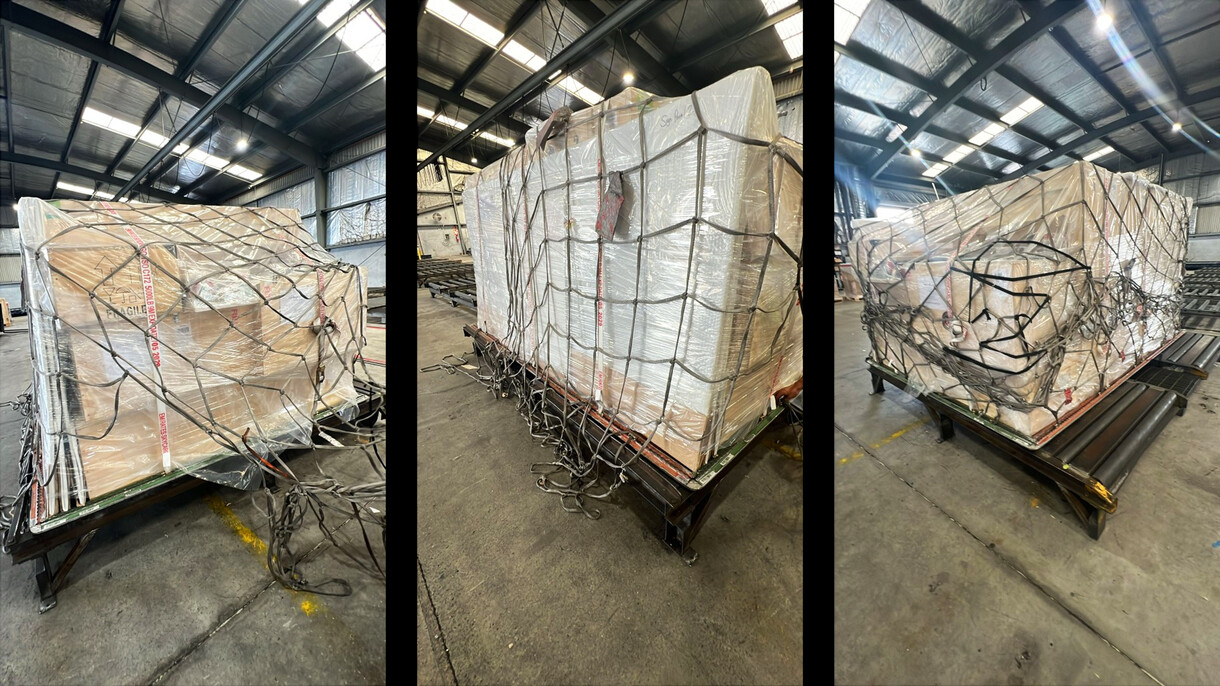
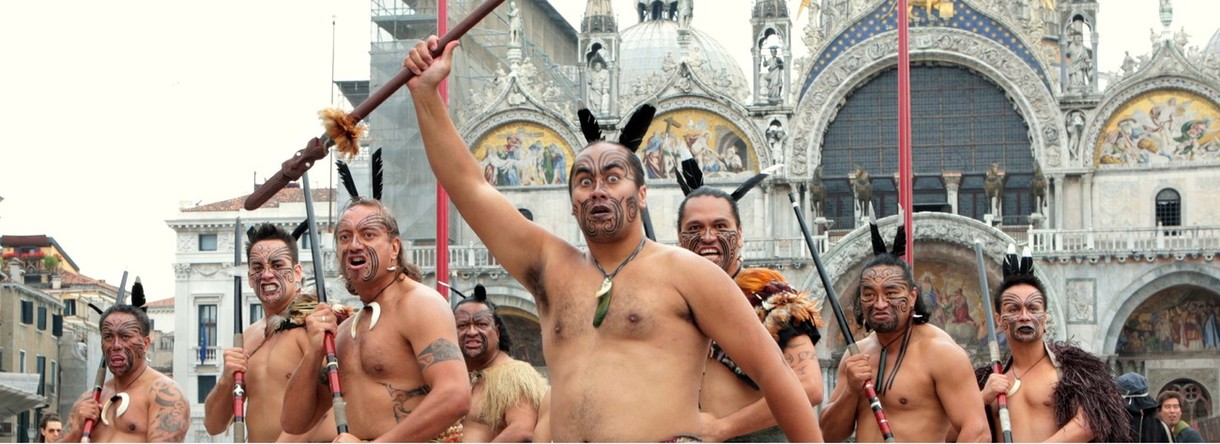
We’re incredibly proud of the role Christchurch Art Gallery Te Puna o Waiwhetū has played as delivery partner for Aotearoa New Zealand’s participation in the 61st Biennale di Venezia. From the moment the Gallery’s selection of Fiona Pardington as artist was confirmed by Creative New Zealand, Taharaki Skyside has required a huge effort and commitment from right across the Gallery team. It was amazing to see that expertise, care and professionalism represented in Venice when the exhibition opened last month.
Exhibition
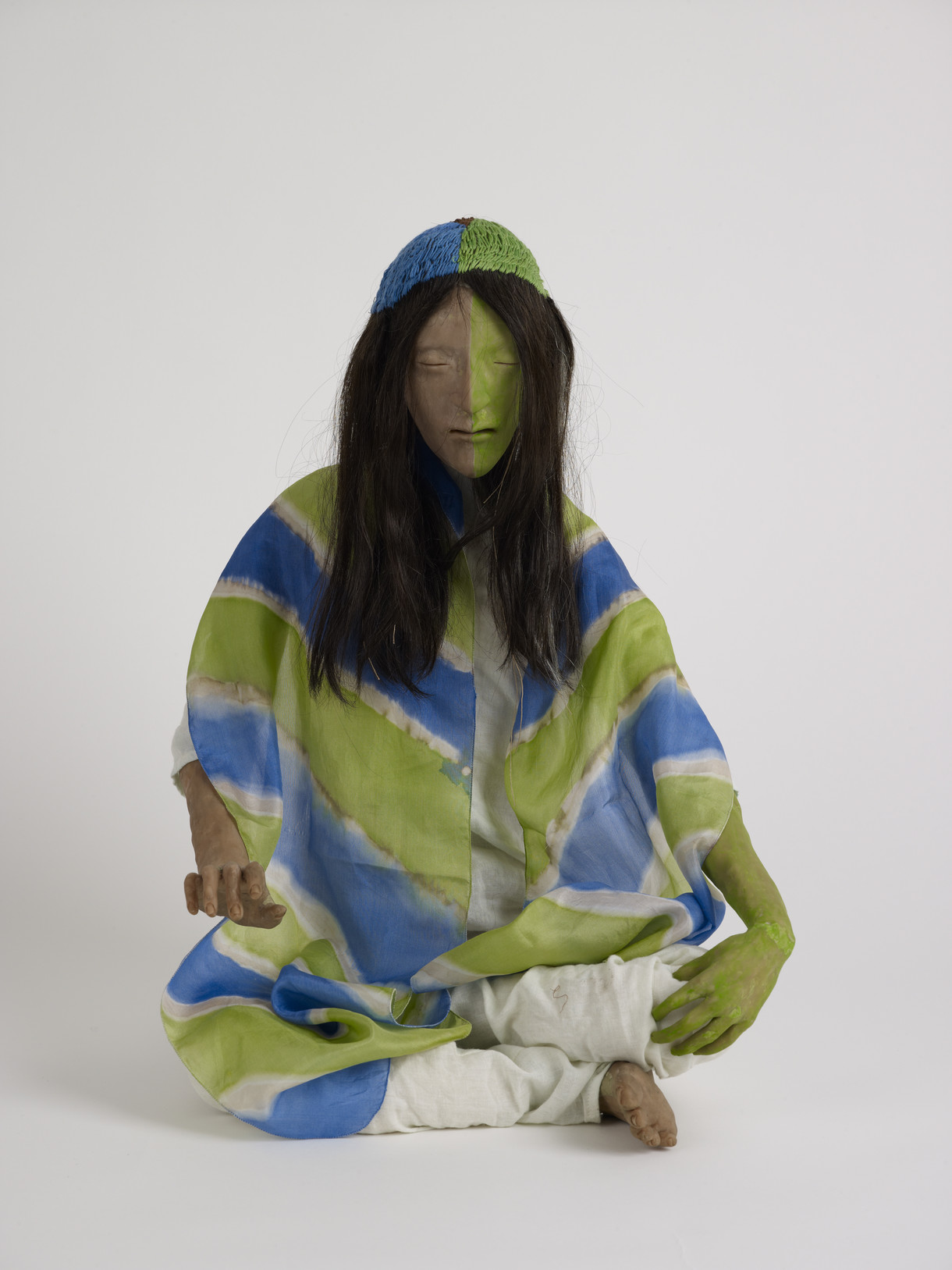
Francis Upritchard: Jealous Saboteurs
Exquisitely imagined, startlingly strange works by an internationally acclaimed New Zealand artist.