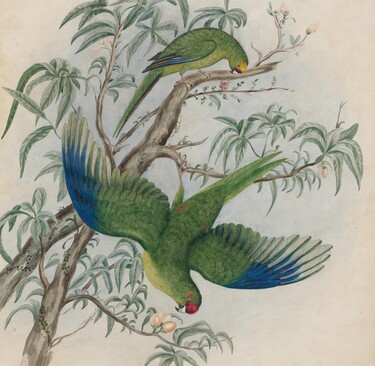
Charles Heaphy Kakariki, from Ship Cove and Teawaiti, August 1839 (detail) 1839. Watercolour. Collection of the Alexander Turnbull Library, Te Whanganui-a-Tara Wellington
If You Build It, They Will Come
The Return of Native Birds to Ōtautahi Christchurch
Greater Christchurch has had more bird species recorded than any other part of Aotearoa New Zealand. Here, we’re blessed with three large coastal wetlands of international significance for both resident and migratory birds. Within the Ōtautahi Christchurch district we have around 320 kilometres of rocky shoreline and coastal cliffs, almost twenty kilometres of sandy shoreline and dunes, dryland environments, tussock grasslands, podocarp forests and shrublands. There are whole other worlds beneath the tides that – as terrestrial species – most of us seldom think about. And did you know we also have around fifty islands, islets and rock stacks across the Te Pātaka o Rākaihautū Banks Peninsula coastline?
Ōtautahi has over 400 kilometres of open waterway too. Not so long ago, these waterways provided a bounty of mahika kai – including waterbirds – for the Waitaha people, and later Kāti Māmoe and Kāi Tahu. Much of this changed fairly abruptly in the 1870s when the Christchurch Drainage Board accelerated draining our wetlands. Waterways were straightened, channelised and even sealed into pipes so the newly arrived Europeans could grow crops, rear livestock, build houses and raise families in a city that was relatively free from waterborne disease – and didn’t flood quite so regularly.
Ōtautahi quickly became something of an ecological desert, and so it remained for quite some time. The native birds that thrived in bush departed and were replaced by imported exotics like sparrows, blackbirds and starlings. Mallard ducks dominated waterways that we mowed to the water’s edge. Everything was kept neat and tidy – no piece of hand-fed bread was lost in long grass, and the ducks and sparrows loved it.
In the early 1990s though, things changed. Local government reform (yes, it’s happened before), council amalgamations (that too), and the introduction of the Resource Management Act meant that – for one – Councils now had to rethink how they managed their waterways. No longer could they simply be treated as drains.
Instead of our rivers and streams being managed for just a single value – drainage – the Council’s newly formed Waterways and Wetlands Team developed what became known as the ‘six-values approach to waterway asset management’. Under this new model, waterways began to be managed for ecological, landscape, recreation, cultural and heritage values as well as drainage. But what did this mean for birds?
In short, good things – particularly if you were a native waterbird as opposed to a mallard.
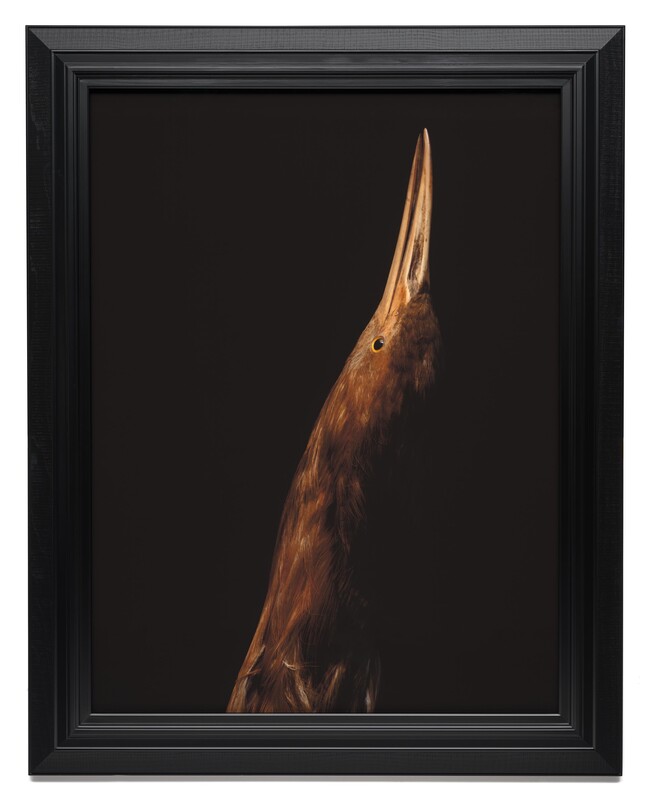
Fiona Pardington Bittern, South Canterbury Museum 2024. Inkjet print on Hahnemühle paper. Collection of Christchurch Art Gallery Te Puna o Waiwhetū, purchased 2024. Courtesy of the artist and Stark White
The six-values approach was the start of returning our highly modified and degraded waterways to something closer to what they would have originally been – and what they had always deserved to be. This involved reinstating natural stream profiles, extensive riparian planting, or even ‘daylighting’ waterways that had previously been piped. Sometimes it was as simple as just no longer mowing grass down to the water’s edge.
Within just a few short years, the pāpango New Zealand scaup – the small brown diving duck we see everywhere now – went from around 400 birds on the Bromley oxidation ponds, to more than 7,500 individuals on naturalised waterways throughout the city. Those 7,500 birds represented around a quarter of the entire global population for that species. And all because we stopped mowing the grass and planted a few natives.
Nowadays, native waterbirds outnumber exotic species on many of our waterways and wetlands. When I was young, the only time I’d see a pūtakitaki paradise shelduck would be if I’d taken the train to Arthurs Pass and walked up a braided riverbed. But in 1993, a pair raised the first clutch of young at the Beckenham Ponds next to the Ōpāwaho Heathcote River. Now we see them everywhere in the city: along riverbanks; in our parks; on street corners; on top of lamp posts; even in Cathedral Square.
The once critically endangered pūteketeke Australasian crested grebe now happily raises young and paddles around the Roto Kohatu recreational lakes near the airport, carefully swimming clear of fast-moving jet skis. The lakes at Styx Mill Conservation Reserve are the Canterbury stronghold for the self-introduced Australian coot, with sometimes more than 130 birds in residence. Native birds can habituate well to our urban environments.
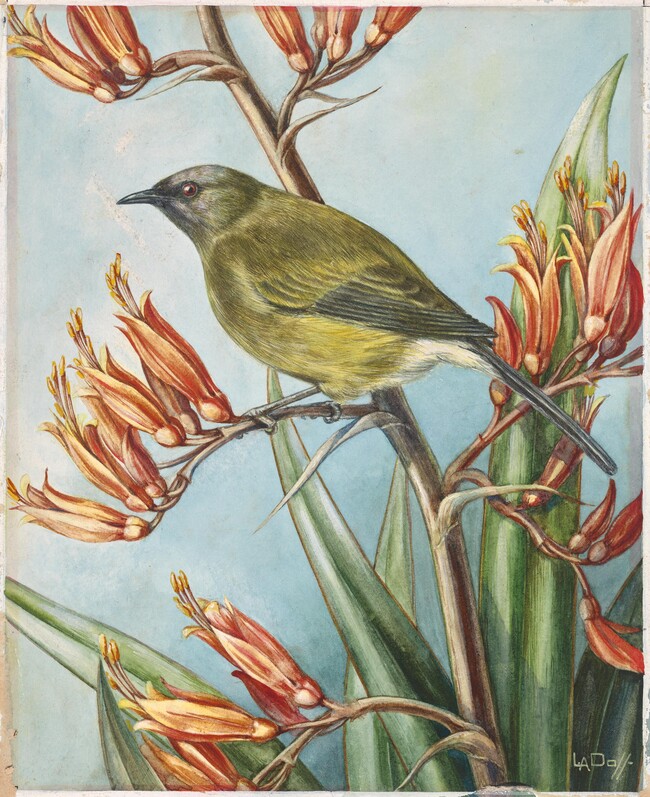
Lily Daff Phormium tenax with Bellbird c. 1933. Watercolour on paper. Hocken Collections Uare Taoka o Hākena, University of Otago Ōtākou Whakaihu Waka, A849, bequeathed by H. S. Tily, Ōtepoti Dunedin, 1971
‘Build it and they will come’ is a philosophy that seems to play out for our native birds in Ōtautahi, and the same goes for even the most cryptic of our wetland species: kotoreke marsh crakes and matuku-hūrepo Australasian bitterns for example. In recent years these critters have turned up in our constructed stormwater wetland facilities – something that might not have happened had we not held fast to the six-values approach in their design.
Our native bush birds have taken a little longer to re-colonise the city though – or so it might seem. In reality, it may be that we just haven’t noticed their return.
As I’m writing this, out my window I can see a korimako bellbird, a flock of tauhou silvereyes, and three pīwakawaka fantails flitting around. I’m not a touch typist, so I don’t look up much from my keyboard, but when I do, I may be lucky enough to see three or four kererū – wood pigeons – looking in at me from the cabbage trees less than five metres from my desk. Because I live halfway between the Botanic Gardens and Pūtaringamotu Riccarton Bush, I’m on one of their regular commuter routes. I guess I take them for granted, but I’m always surprised that people don’t know that there is a good population of kererū in the city; they have been recorded as far out as Brooklands, and nest in old pine trees out at South New Brighton and even in the centre of the city. As for korimako, the last time I was in Tāmaki Makaurau Auckland, these could only be seen in an aviary at the zoo, but here they are now thriving in our city landscape. Like frogs in slowly boiling water, we may not have noticed their arrival, and as with pūtakitaki, nowadays they seem to be everywhere.
Of course, we once had many more native bush birds than we have now. Reading through the old records from Riccarton and Papanui Bush we see kākā, tūī, kakaruai South Island robin, kōmiromiro tomtit, tīeke saddleback, pīpipi brown creeper and mātātā fernbird. In the 1890s, kākāriki red- and yellow-crowned parakeets were here in such enormous numbers that they devastated orchards and were shot in their hundreds.
Kākāriki and kākā both disappeared from Banks Peninsula sometime between 1912 and 1915. This would have likely ended their presence in and around our city, and tūī had already disappeared by around 1900.
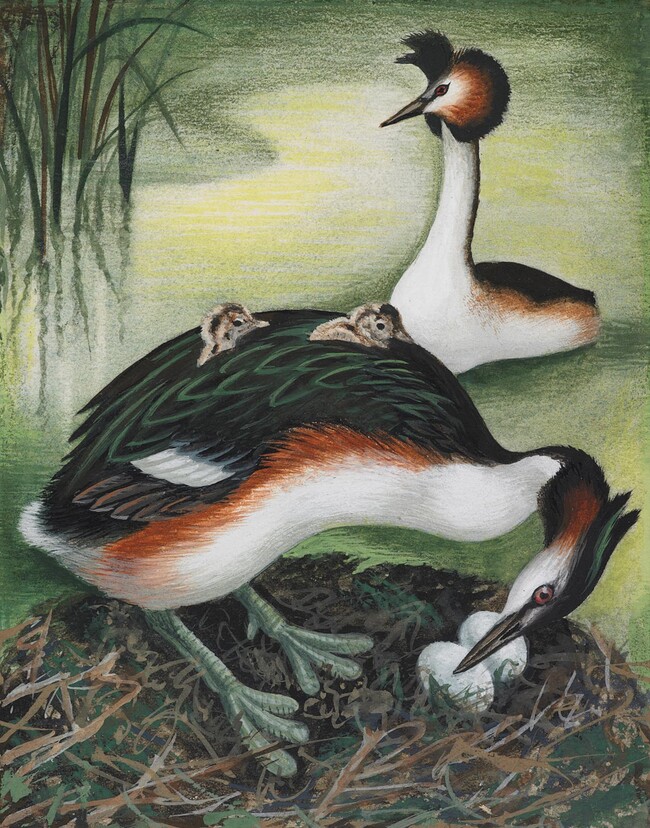
Eileen Mayo Pūteketeke / Southern Crested Grebe 1976. Gouache and coloured pencil on card. Collection of the Museum of New Zealand Te Papa Tongarewa, Te Whanganui-a-Tara Wellington
My own family played a significant role in this loss. After spending time on Norfolk Island, and then in another penal colony in Tasmania, Benjamin Shadbolt established the first sawmill in the Akaroa Harbour basin. Anecdotes include his new business venture felling all the trees from the Akaroa shoreline up to the skyline, and down to the sea on the other side. With the profits, he sent for his brother – and my direct ancestor – Peter Shadbolt from England to set up a second mill in French Farm, and the destruction snowballed.
Banks Peninsula reached its lowest ebb in native forest cover by 1920, going from near total coverage to just one per cent. It’s therefore not surprising that many birds – including kōkako and tīeke – disappeared with the burning and felling of those forests. But the forests are gradually returning, and in recent years there have been two recorded sightings of kākā on the Port Hills (wouldn’t it be nice if they hung around a bit longer), and tūī are slowly spreading out from Hinewai Reserve near Akaroa where they were reintroduced in 2007.
Down on the low Canterbury Plains it is a different story. It is one of the most modified ecosystems on the planet, and less than 0.5 per cent of the original pre-European indigenous vegetation remains. The other 99.5 per cent is exotic grasses, trees, crops, roofs, roads and concrete.
When Europeans arrived in the mid-1800s, there were just two patches of native forest left in the Ōtautahi Christchurch area: twenty-two hectares at Pūtaringamotu Riccarton Bush and thirty hectares at Papanui Bush. Papanui Bush was completely felled within five years for timber to build the city, and Riccarton Bush was reduced to its current size – around seven hectares – within a similar period. The remainder was only preserved thanks to the foresight and visionary thinking of the Deans family.
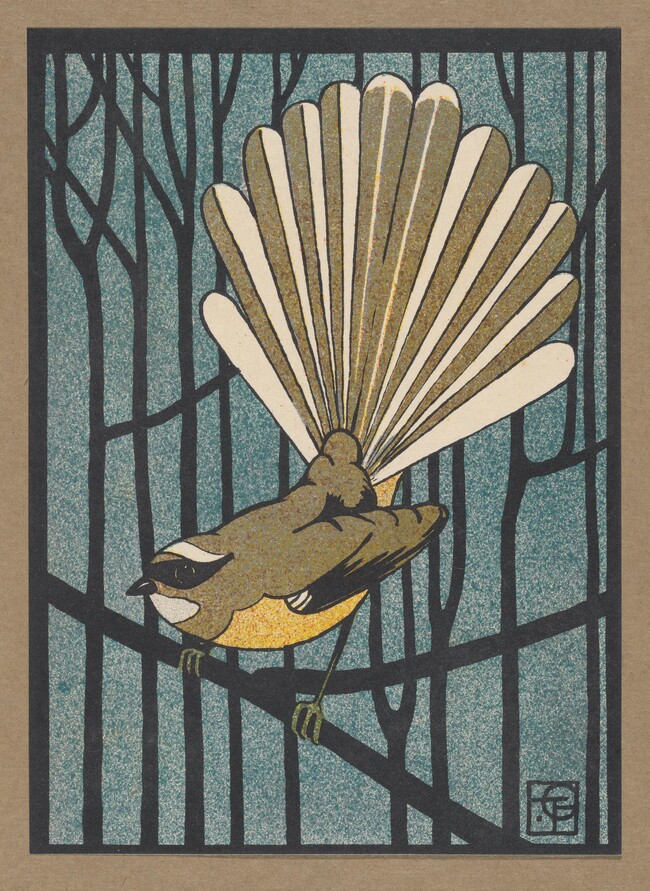
Thomas Gulliver Pied Fantail 1919. Colour lithograph. Collection of Auckland Art Gallery Toi o Tāmaki, transferred from the Auckland Public Library, 1932
Today, however, foresight and visionary thinking is back – and perhaps stronger than it has ever been. People like Dr Colin Meurk, Di Lucas, Robert Watts, Andrew Crossland, the late Christine Heremaia and an unbelievable number of passionate advocates, volunteer organisations, communities, individuals and the Council are out there ‘building it so they can come’.
We already have more than 6,000 hectares of tree canopy cover in Ōtautahi. While most of this is exotic trees it is still almost 1,000 times larger than Riccarton Bush. And at least it’s tree cover. The good news is that native planting within the city has had a renaissance over the last ten-to-twenty years too. Places like the Pūharakekenui Styx catchment now have twice the area of native forest that there was in the whole Ōtautahi area when Europeans first arrived, and indigenous vegetation covers more than seven per cent of the catchment.
As this trend of indigenous ecosystem restoration spreads across Ōtautahi – in step with people’s growing understanding of the importance of having those ecosystems in the city instead of two hours’ drive away – so too will our extirpated avifauna once again spread across the city.
So maybe we shouldn’t get too uptight about not having tūī in the city yet. They’ll get here. In the meantime, let’s celebrate having korimako in town, and – even more importantly – kotoreke marsh crake and matuku-hūrepo bittern.
Related reading: Enviromentalism
Exhibition
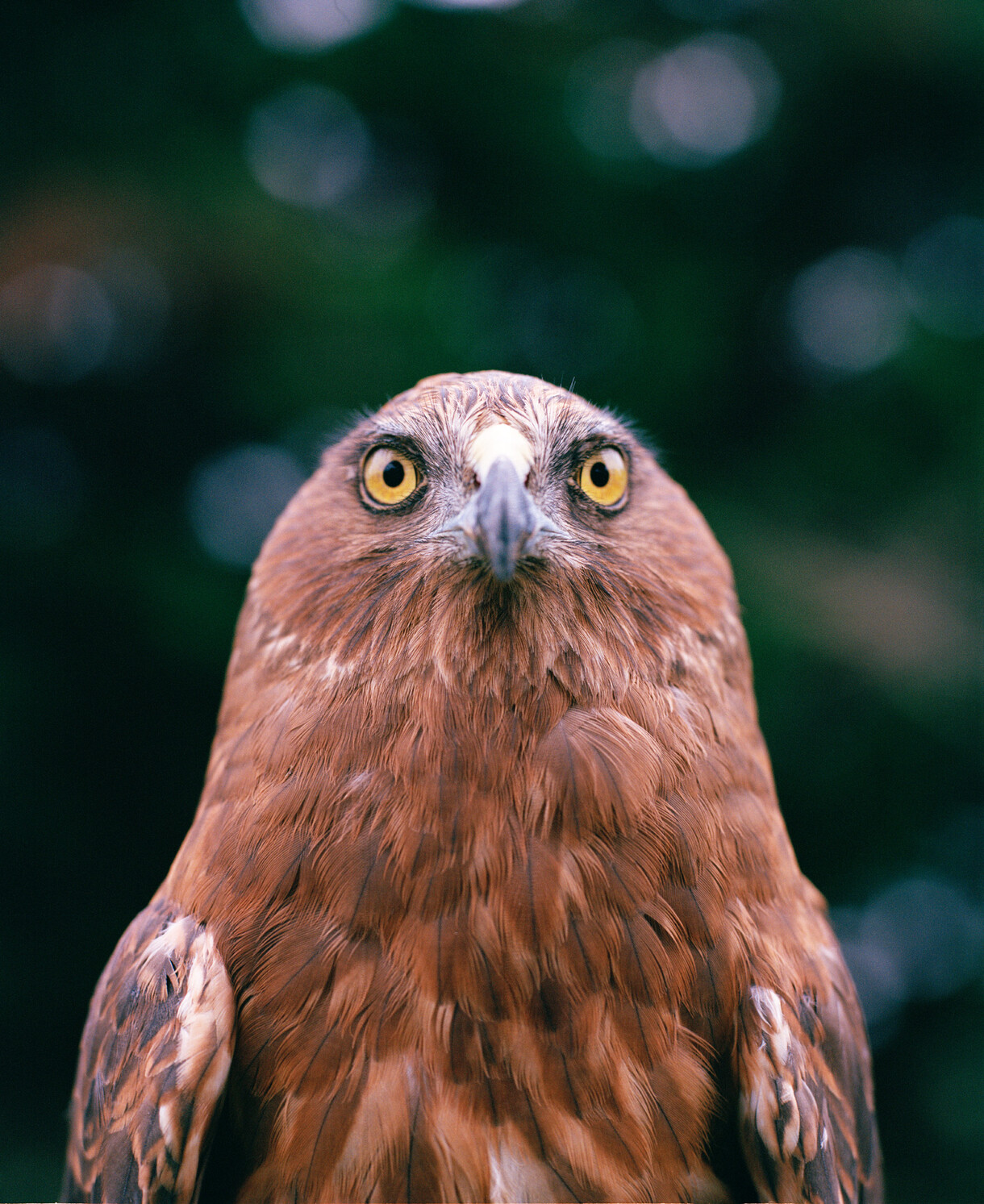
Bird Land: Te Kāhui Manu
15 August 2026 – 8 February 2027
From taoka tuku iho to contemporary moving image, Aotearoa’s birds take centre stage.
Commentary
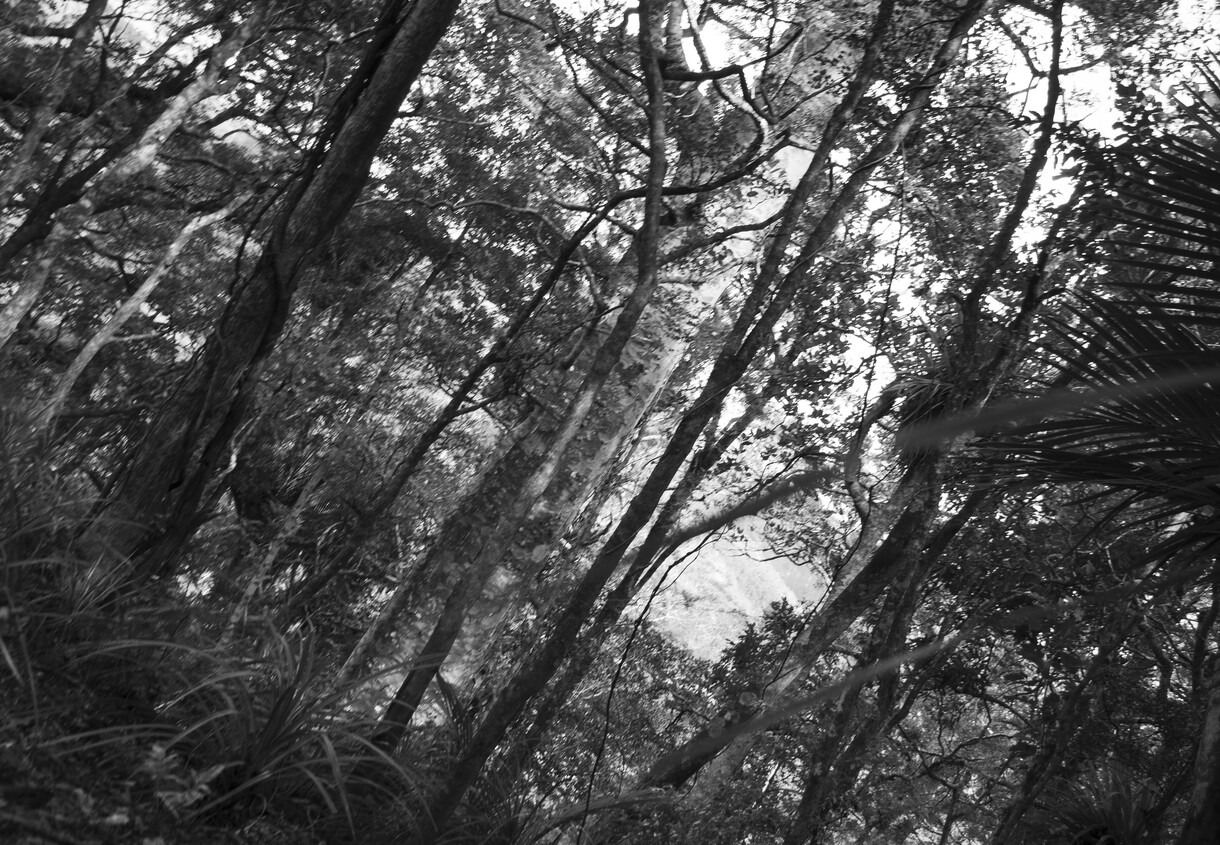
Ōmutu
10 December
5.45am. Two starlings in Stacey’s unblooming pōhutukawa. A tūī guns past the window in the direction of the sea. Wednesday’s freight train rumbles north leaving a tail of sound. Dear Ana. The building inspector came on Monday. We should know by tomorrow or Friday at the latest. If my house goes unconditional I’ll finally be able to breathe again and eat. I’m sorry I haven’t been able to focus on the kauri yet.
Commentary
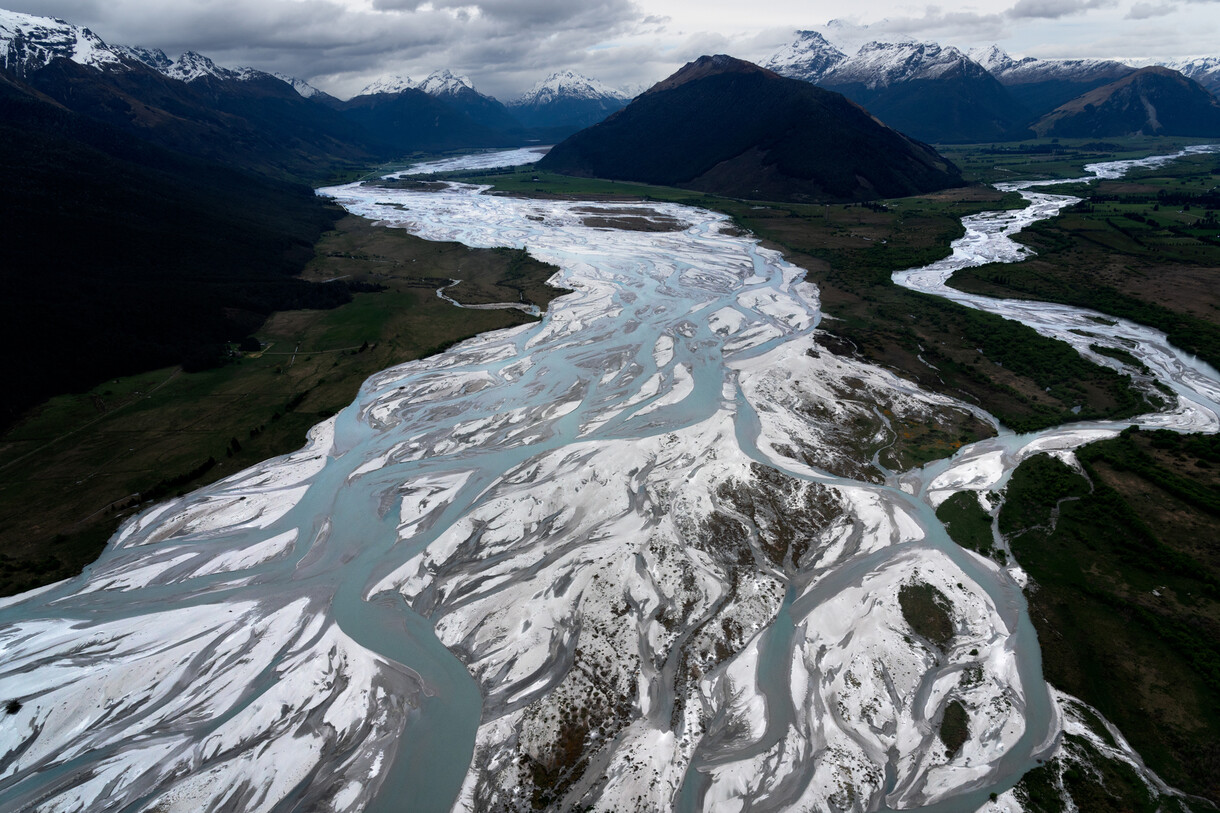
Unutai e! Unutai e!
Unutai e! Unutai e!
Ko te wai anake, te au e riporipo ana ki mea roto, ki mea awa, ki te nuku o te whenua?
Aue taukuri e!
Pupū ake a Muriwai Ōwhata i a roimata He manawa piako te Papa ā-Kura o Takaroa
Waimate haere ana te waiora Kai hea rā taku ika e?
Kai hea rā te oraka mō taku iwi e!
What has transpired?
Only the rippling waters of this lake and of that river can be heard flowing across the land
Muriwai Ōwhata is over-flowing with tears
The great hīnaki of Māui, Te Papa ā-Kura o Takaroa, is like a hollow and empty heart
The life-giving waters are turning brackish and undrinkable
Where have our fresh water fish species gone?
Where are our people able to thrive?
Commentary
Pauline Rhodes: Blue Mind
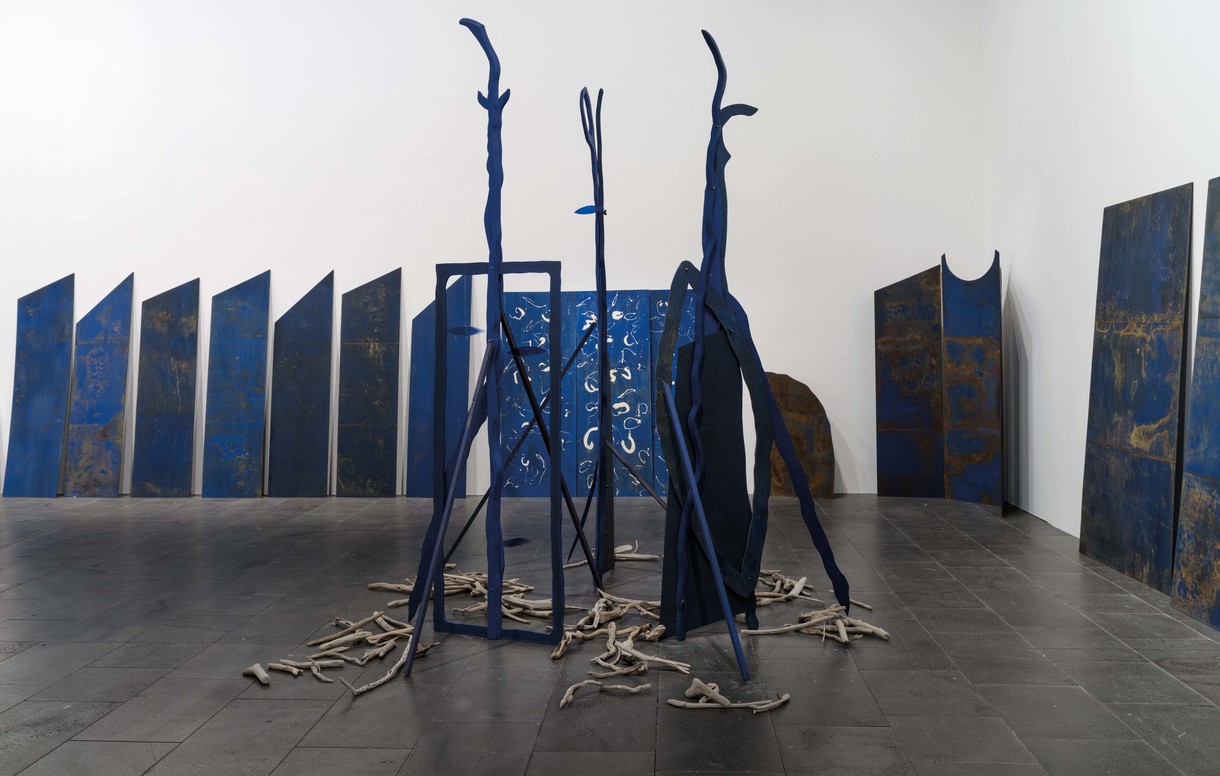
Painted blue and patterned with rust, the thin plywood panels and screens lean nonchalantly around the walls of the gallery and form a skyline of sorts. Across the floor sculptures intersect the space, with groupings of tall rods, waist-high enclosures, clusters of plywood shapes and a small kayak frame on salvaged seaweed and driftwood. Islands for the audience to navigate. The forms are roughly human in scale and relative to the body, generating an intensity and making this an immersive installation to wade through.
Commentary
The Edge of the Sea
A vision of New Zealand’s past from 1995:
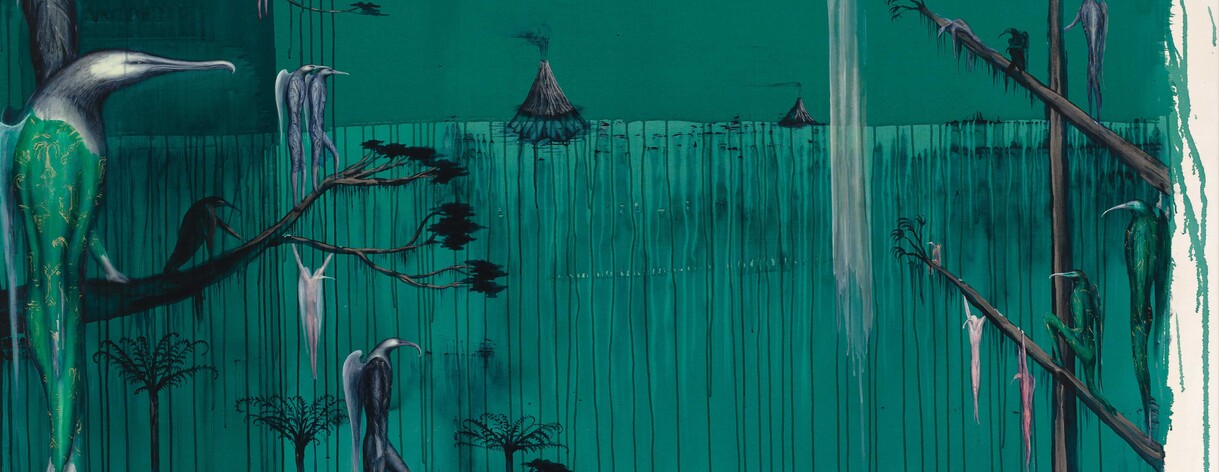
Europeans first imagined New Zealand as “a garden and a pasture in which the best elements of British society might grow into an ideal nation”... When the smoke of the colonists’ fires cleared at the end of the 19th century, New Zealand had become a different country. Māori had lost their most precious life-support system. Only in the hilliest places did the forest still come down to the sea. Huge slices of the ancient ecosystem were missing, evicted and extinguished. Our histories, however, have had neither the sense of place nor ecological consciousness to explain what has happened.
Interview
Power Play
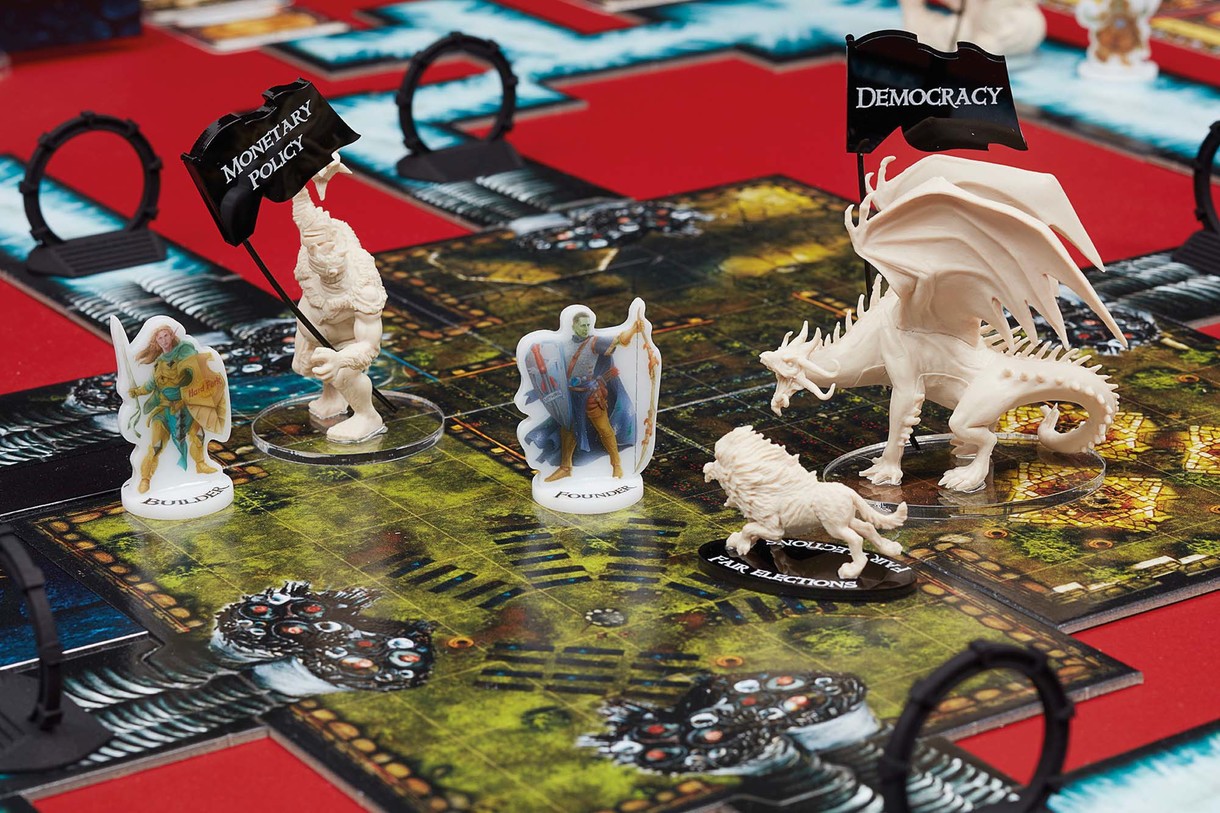
In November 2017, Simon Denny’s The Founder’s Paradox opened at Michael Lett Gallery in Auckland, the first solo exhibition Denny had made specifically for New Zealand audiences in several years. His starting point for the project was local: the news, broken by New Zealand Herald journalist Matt Nippert in early 2017, that the billionaire tech investor and Donald Trump supporter Peter Thiel was in fact a New Zealand citizen.
Commentary
Of Braided Rivers and Hydro-Traders
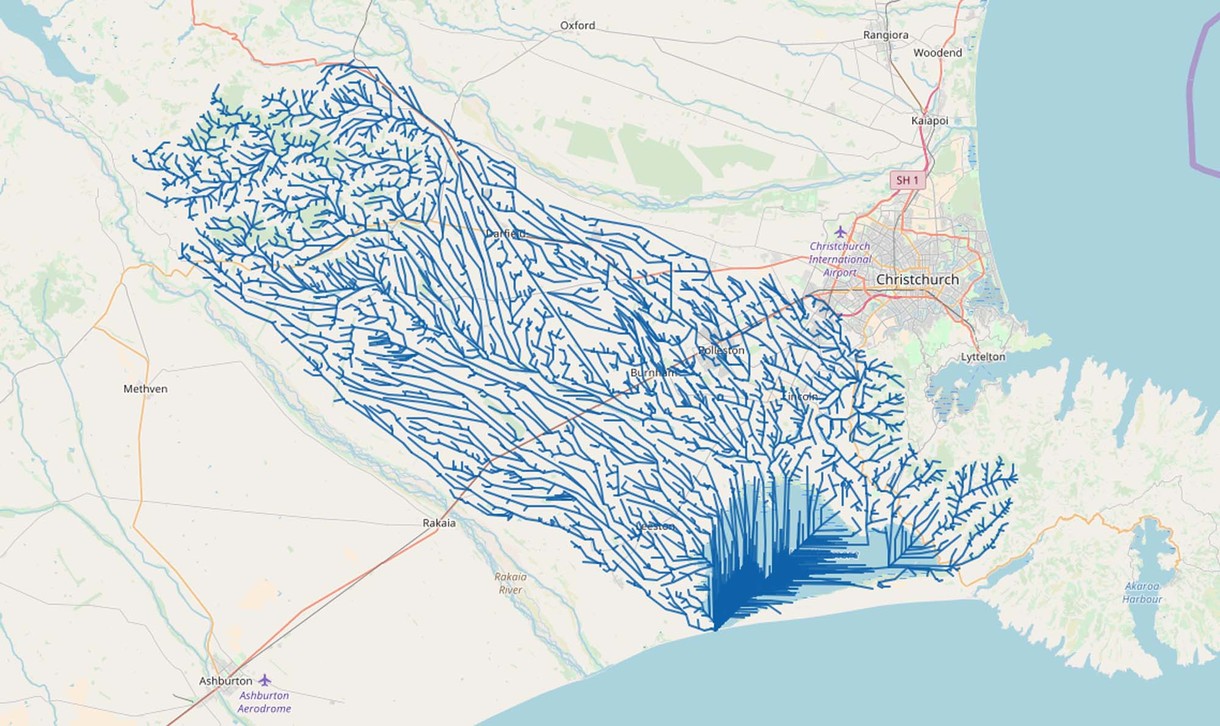
“With 14,000km of coastline, over 180,000km of rivers, and 3,820 lakes, there’s more to the land of the long white cloud than land…” So began an advertisement in a recent Sunday Star Times. It might have been the opening gambit for a campaign devoted to water conservation but was, in fact, a promotion for the latest model jet ski: “And all you need to unlock it is the all-new Yamaha Waverunner FX HO… SAME PLANET, DIFFERENT WORLD. Yamaha-motor.co.nz.”
Commentary
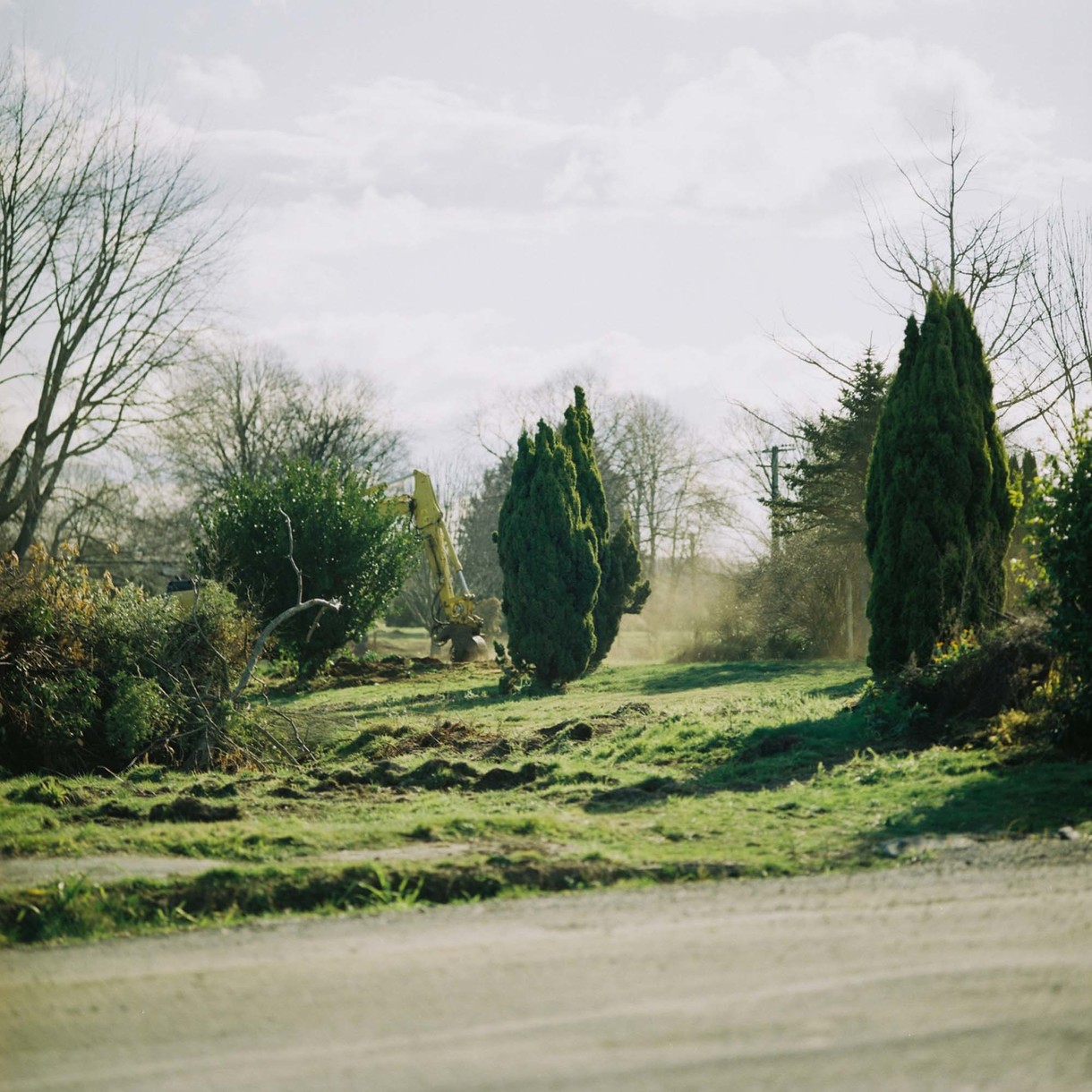
The Lines That Are Left
Of landscape itself as artefact and artifice; as the ground for the inscribing hand of culture and technology; as no clean slate.
— Joanna Paul
The residential Red Zone is mostly green. After each house is demolished, contractors sweep up what is left, cover the section with a layer of soil and plant grass seed. Almost overnight, driveway, yard, porch, garage, shed and house become a little paddock; the border of plants and trees outlining it the only remaining sign that there was once a house there.
Collection
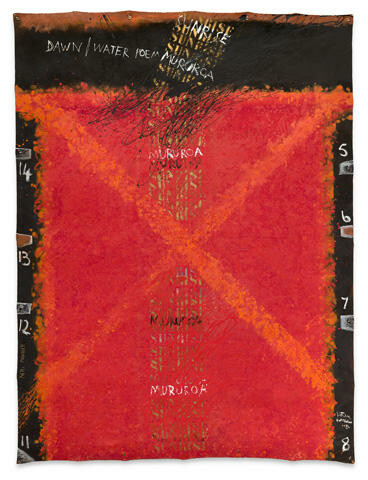
Ralph Hotere Dawn/Water Poem
For the exhibition Untitled #1050 (25 November 2017 – 14 October 2018) this work was displayed with the following label:
“There are very few things I can say about my work, that are better than saying nothing.”
—Ralph Hotere, undated