Notes
Untitled (Taylors Mistake) by William Sutton

Untitled (Taylors Mistake) by William Sutton

This article first appeared on Stuff as 'Modernism by motorbike' on 28 June 2016 and as 'Artist stumbled upon striking scenery on morning motorbike rides' in The Press on 30 June 2016.

Notes
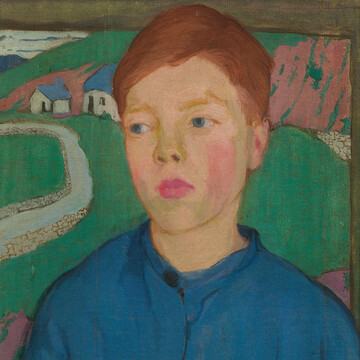
Innocence by Evelyn Haig

Innocence by Evelyn Haig

This article first appeared as 'Sweet portrait belies tough protestor's tragic tale' in The Press on 24 May 2016.

Notes
On the level

On the level

A chilly trip to the mountains to identify Ivy Fife's level crossing

Collection
An orbital thought

Jason Greig An orbital thought

Back in the 1990s, Jason Greig famously said that heavy metal band Black Sabbath was the thing that got him up and going and wanting to draw. It’s a line that’s often been quoted in relation to his work, probably because it seems to be at odds with the refinement and virtuosity of his printmaking technique, or the venerable tradition of artists in which he works—Redon, Goya, Piranesi. Greig said that Black Sabbath’s music was fuel: “the imagery and the weight of it […] I do heavy, laden drawings, dense. When I hear some really loud guitars it gives me the same sort of feeling.”

The images collected here span nearly two decades and reveal a remarkably consistent imagination, forged in Greig’s reading of nineteenth-century gothic novelists such as Mary Shelley and Edgar Allan Poe, and what he describes as the “battle of good and evil” in mid-twentieth century movies. Light falls across blasted volcanic landscapes; isolated figures clutch books or brandish scythes; sinister deals of one sort or another appear to be in the process of playing out. The corners of most of the images are dark, vignetted like an early photograph. For Greig, the past is full of unfinished business. “I guess it’s about wearing your lineage on your sleeve. I reckon that images of last century are catching up with this.”

Greig’s figures are versions of himself, “but I try to disguise it a bit”. They evoke psychological states of alienation and estrangement, and depict life as a long strange journey into the unknown. “My art is about love, lost and found. It’s about dark lonely places, imagined and real. And it’s about the constant naggin’ thought that the end is always nearer. I have dealt with my demons, in life and on pieces of pummelled paper. The road I have travelled has been paved with gold that shines, and with bile that fumes.”

(Your Hotel Brain 13 May 2017 - 8 July 2018)

Collection
Volcano Flag

Bill Hammond Volcano Flag

Many locals fondly remember this painting hanging on the wall of the Lava Bar in the port town of Lyttelton throughout the 1990s and 2000s. The Lava Bar was one of Bill’s favourite haunts – he very occasionally played there in a band with no name. He swapped this painting to cover costs for a bar tab, and it quickly became part of the fabric of the place. Sadly, the Lava Bar was damaged in the earthquakes of 2010/11 and demolished shortly afterwards. Defiantly lowbrow in the Christchurch gothic tradition, Volcano Flag incorporates tattoo designs, a dancing skeleton playing a guitar, a mountain blowing smoke rings and a bird with a human skull for a head. It’s a painting that references the history of the local landscape: Whakaraupō (Lyttelton harbour), where the artist has lived and worked since the early 1970s, is the caldera of an ancient extinct volcano. Bill Hammond: Playing the Drums (3 August 2019 – 19 January 2020)

Load more