Christchurch Art Gallery Te Puna o Waiwhetū
  • Kā Whakaaturaka me kā Taiopeka
    Exhibitions and Events
  • Te Whai Wāhi mai
    Get Involved
  • Kohika
    Collection
  • Toa
    Shop
  • Facebook Instagram Youtube Xiaohongshu
  • Toro mai
    Visit
  • Mātauraka
    Education
  • Te Rīhi Wāhi
    Venue Hire
  • Mō Mātou
    About Us
  • Taku Wharetoi
    My Gallery
  • Kiriata me kā Hopukaka Oro
    Film and Audio
  • B.

    Bulletin
    New Zealand's leading 
    gallery magazine

    Notes Commentary Artist Profile Article Director's Foreword My Favourite Interview

    Director’s Foreword

    Director's Foreword

    On the World Stage
    Christchurch Art Gallery Te Puna o Waiwhetū at the Venice Biennale

    Commentary

    ‘For us and our children after us’
    The Promise of Kemp’s Deed

    Commentary

    Ōmutu

    Commentary

    HomeCollectionTurkish Bath
    Tūhono mai ki tā mātou Pānui
    Subscribe to our Newsletter

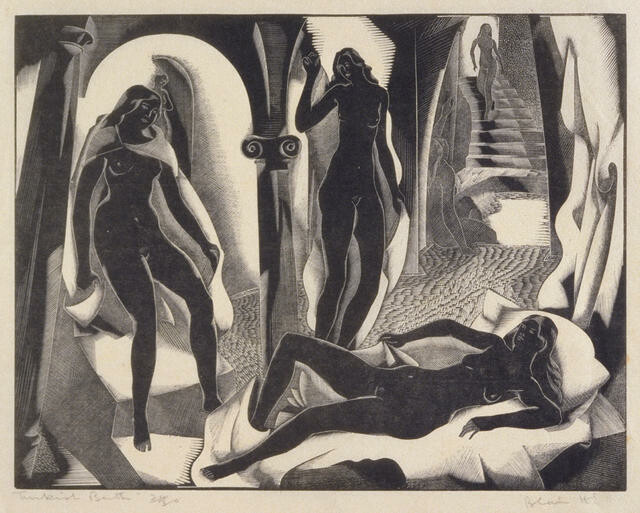
    Blair Rowlands Hughes-Stanton

    British, b.1902, d.1981

    Turkish Bath

    • c. 1931
    • Wood engraving
    • Presented by Rex Nan Kivell, 1953
    • 250 x 307mm
    • 94/84

    Tags: beds (furniture), cloaks, columns (architectural elements), interior, monochrome, nudes (representations), people (agents), pillows, steps (stair units), women (female humans)

    Save to My Gallery

    Exhibition History

    Image: uploads/2019_10/CAG_Exh_986_0005.jpg
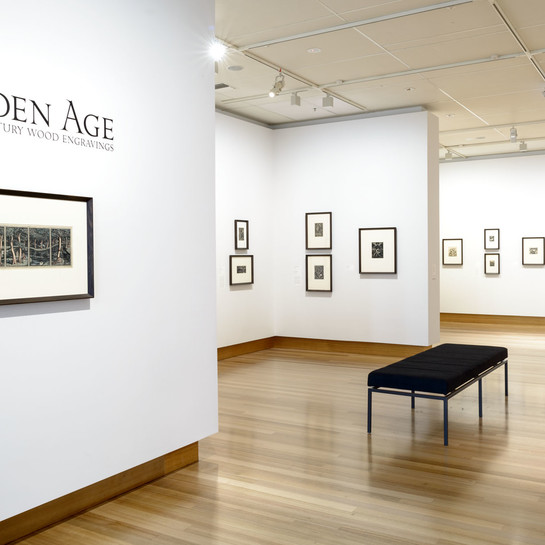
    The Golden Age
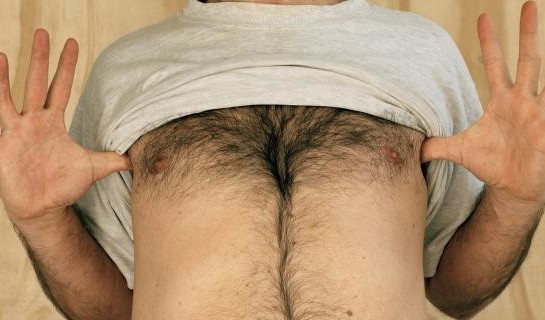
    Steve Carr A Shot in the Dark (The Bachelor) (detail) 2008. C-type print mounted on dibond. Collection of Christchurch Art Gallery Te Puna o Waiwhetū, purchased 2008. Image courtesy of the artist and Michael Lett, Auckland
    The Naked and the Nude
    Image: uploads/2025_07/94_84.jpg

    Related reading: The Golden Age

    Notes
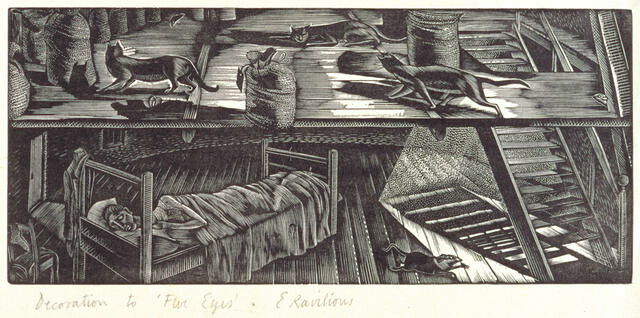
    Five eyes by Eric Ravilious

    Five eyes by Eric Ravilious

    This article first appeared as 'Artist captured poetry in wood carving' in The Press on 11 November 2014.

    Notes
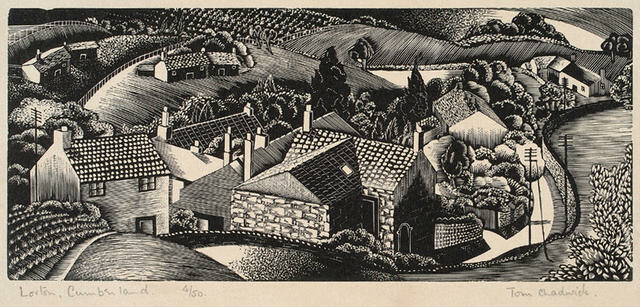
    Lorton, Cumberland by Tom Chadwick

    Lorton, Cumberland by Tom Chadwick

    This article first appeared as 'Wood engraving artist finally won recognition' in The Press on 27 June 2014.

    Notes
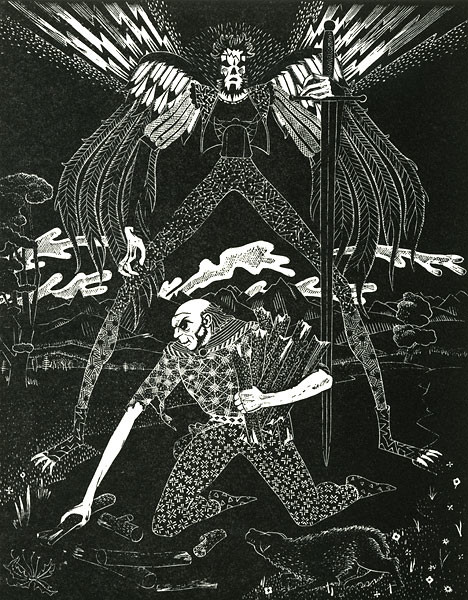
    Death and the woodcutter by Leo Bensemann

    Death and the woodcutter by Leo Bensemann

    This article first appeared as 'Death mastered' in The Press on 28 March 2013.

    Notes
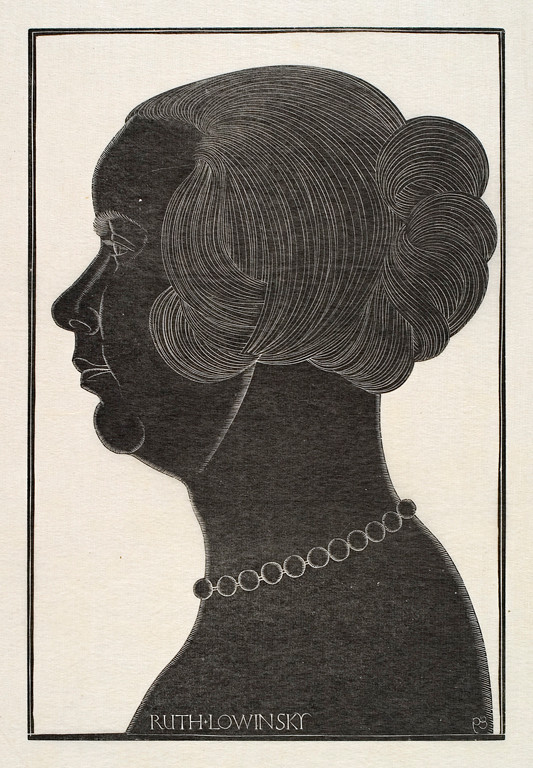
    Ruth Lowinsky by Eric Gill

    Ruth Lowinsky by Eric Gill

    This article first appeared as 'An oblique profile' in The Press on 12 July 2013.

    Notes
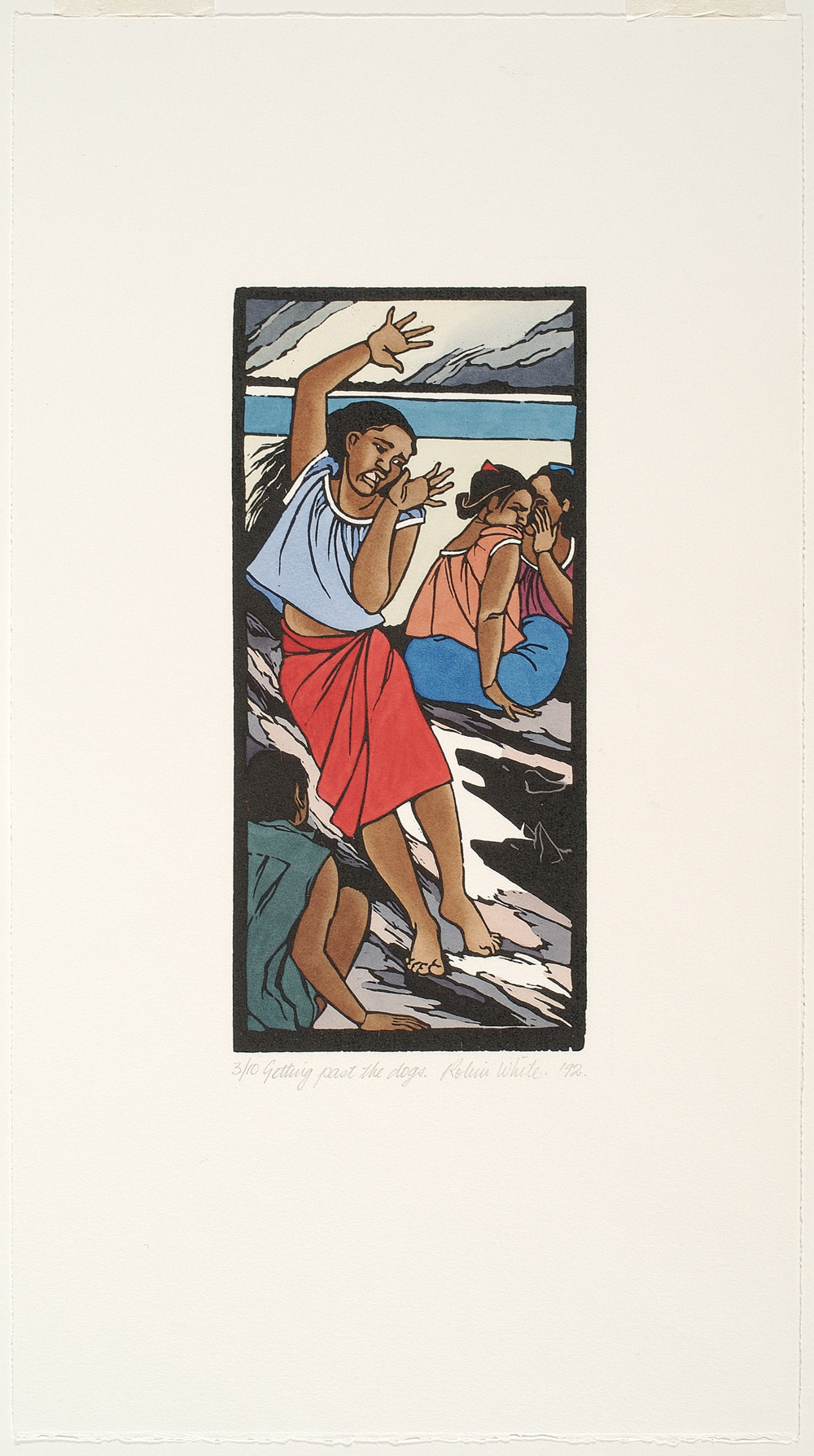
    The Print Collection

    The Print Collection

    If the question "what is the largest individual collection area numerically held by the Gallery?" was to be asked, the answer would have to be the Works on Paper collection, within which are 2145 original contemporary and historical prints, the earliest dating from the second half of the fifteenth century.

    Notes
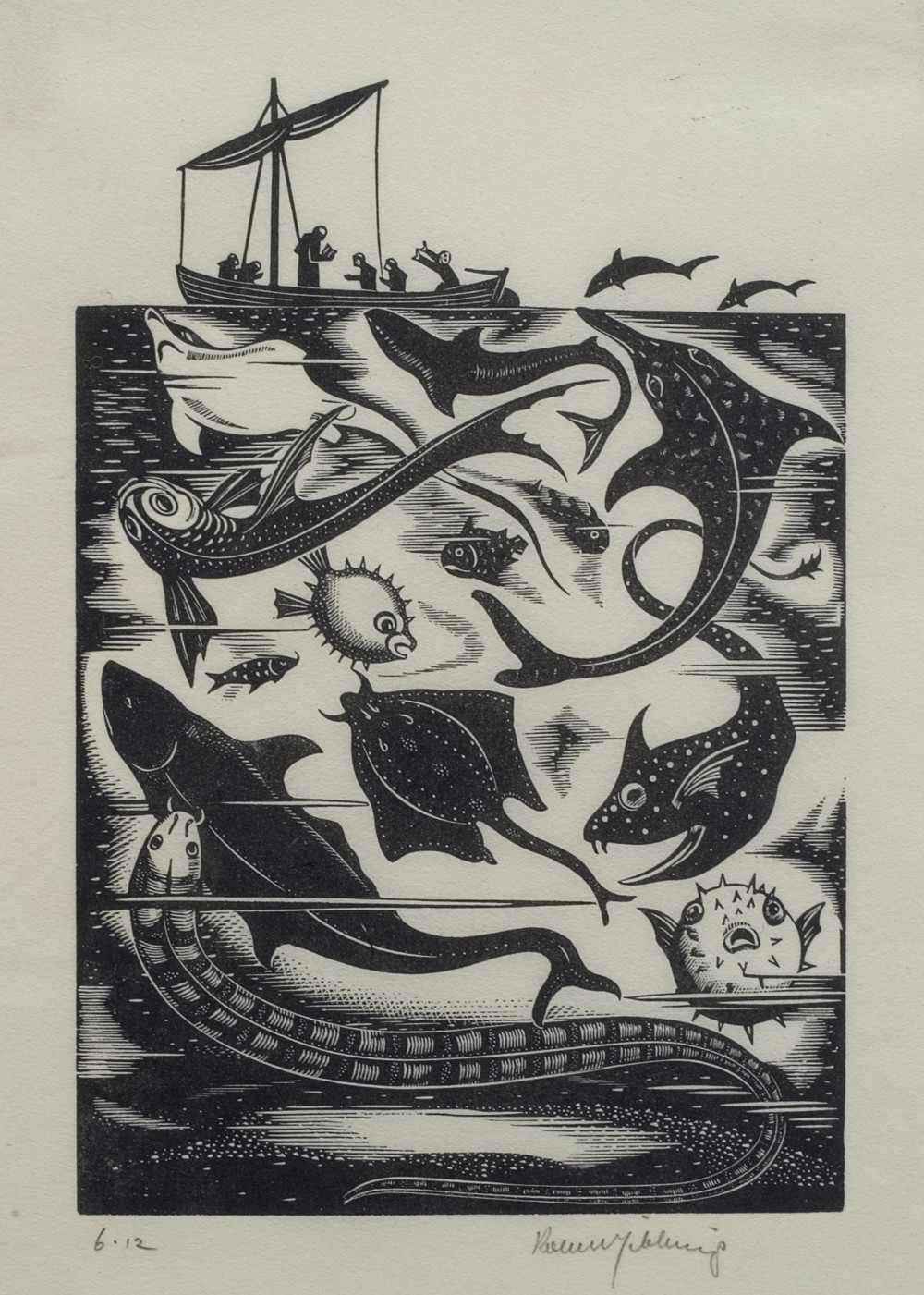
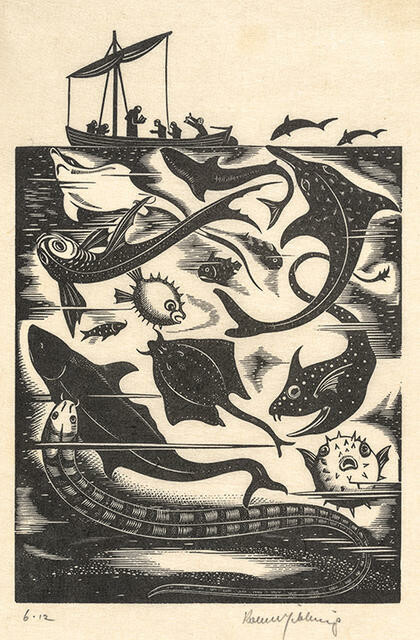
    St Brendan and the Sea Monsters by Robert Gibbings

    St Brendan and the Sea Monsters by Robert Gibbings

    This article first appeared in The Press on 14 December 2005

    At just 14 cm tall, the exquisite St Brendan and the Sea Monsters by Irish-born Robert Gibbings (1889-1958) is one of the smallest works in Christchurch Art Gallery's collection, but carries with it some of the largest tales. A rhythmic composition of swirling sea serpents, stingrays and sharks, this finely-crafted woodcut print tells the story of 6th century Irish explorer-monk St. Brendan, or Brendan the Navigator, whose recorded travels were an important part of medieval European folklore, and which continue to fascinate.

    Article
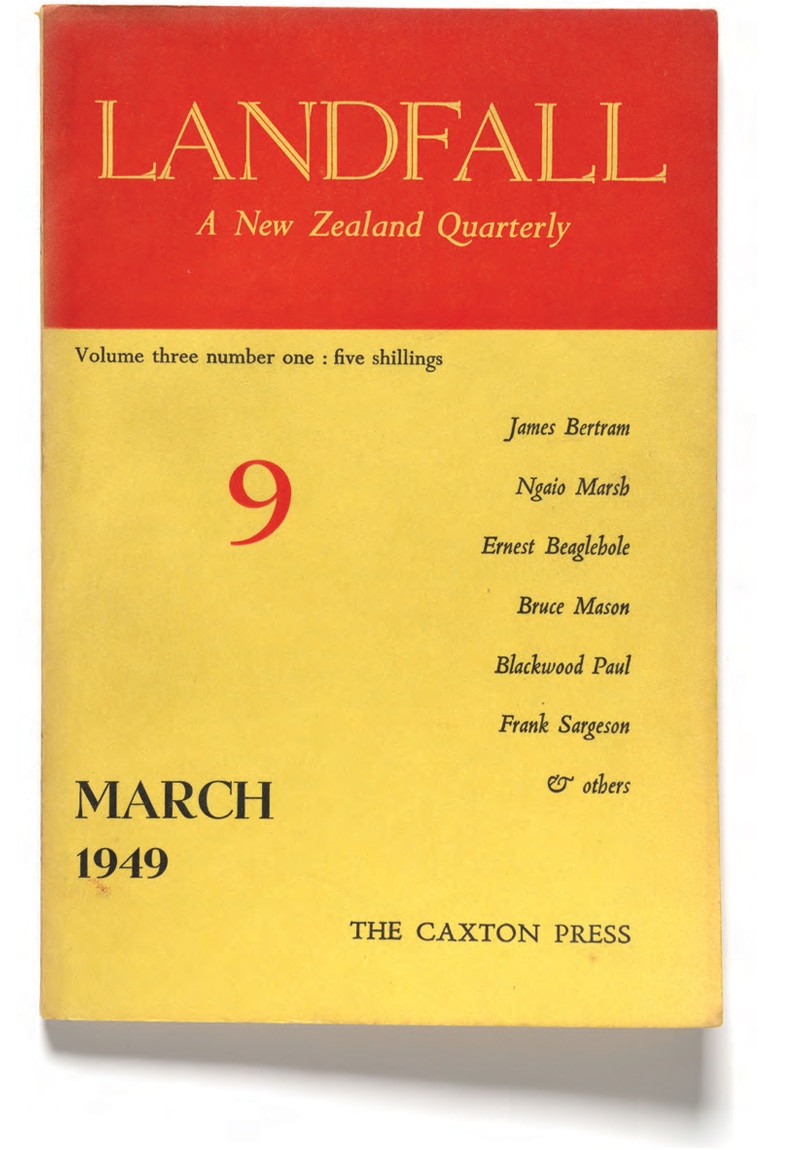
    Tomorrow, Book, Caxton Press, Landfall

    Tomorrow, Book, Caxton Press, Landfall

    In the decades before and after the Second World War, Christchurch experienced a remarkable artistic efflorescence that encompassed the visual arts, literature, music, theatre and the publishing of books and journals. And the phenomenon was noticed beyond these islands. For instance, in his 1955 autobiography, English publisher and editor of Penguin New Writing and London Magazine, John Lehmann, wrote (with a measure of exaggeration, perhaps) that of all the world’s cities only Christchurch at that time acted ‘as a focus of creative literature of more than local significance’.
    Continued

    Collection
    St Brendan and the Sea Monsters

    Robert Gibbings St Brendan and the Sea Monsters

    Robert Gibbings was an early convert to wood engraving and quickly appreciated its qualities. He once wrote:

    Discipline in art: was that what I’d come to London for? Impressionism was what I thought I was after. I couldn’t think what all this hard labour on wood was about. There was no tradition at the time; it seemed a lot of finicky gouging to get a few lines that might have been obtained more easily with a pen or brush. But slowly a love of the wood came upon me. I began to enjoy the crisp purr of the graver as it furrowed the polished surface. I began to appreciate the cleanness of the white line that it incised: even the simplest silhouettes had an austere quality, a dignity, that could not be achieved by other means. Clear, precise statement, that was what it amounted to. Near enough wouldn’t do: it had to be just right.

    The Golden Age 18 December 2015 – 1 May 2016

    An illustration from 'Beasts and Saints', translated by Helen Waddell, published by Constable, 1949.

    Collection
    Native Fuchsia

    E. Mervyn Taylor Native Fuchsia

    Mervyn Taylor was one of the few New Zealand artists to successfully work with the wood engraving medium during the 20th century, reflecting the medium’s revival in England at the time. Initially trained as a jeweller’s engraver, he made a successful transition to wood engraving, one of the most difficult print mediums to master, and produced work that focused on Māori and New Zealand subject matter. Taylor was born in Auckland. In 1952 he was awarded the Association of New Zealand Art Societies Scholarship, which allowed him to study Māori life and culture in Te Kaha in the eastern Bay of Plenty. He was elected a member of the Society of Illustrators, New York, in 1950 and a fellow of the Institute of Arts and Letters, Linau, in 1953. Taylor held a solo exhibition at the Museum of Natural History in New York in 1954, and his work was included in the First International Biennale of Prints in Tokyo in 1957.

    The Golden Age 18 December 2015 – 1 May 2016

    Collection
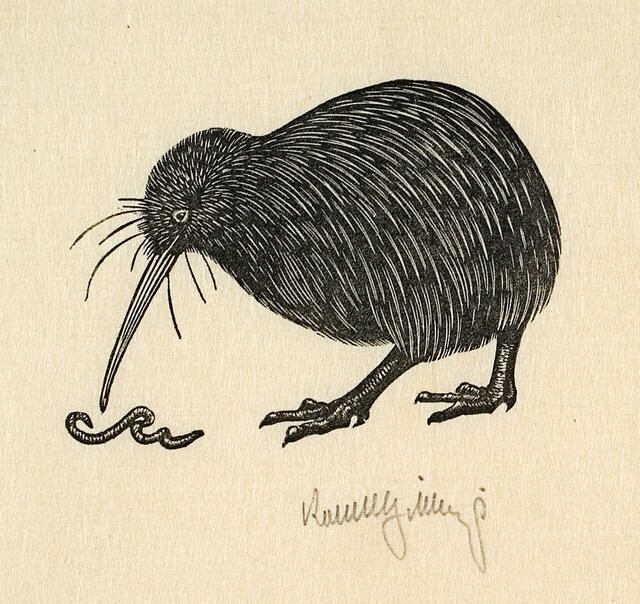
    Tauhou Feeding Chick

    E. Mervyn Taylor Tauhou Feeding Chick

    Aotearoa’s best-known and respected printmaker working during the twentieth century, Mervyn Taylor produced at least 239 wood-engravings over the course of his career, and many more linocuts as well. He initially worked as a jeweller, for which his training included engraving. Unlike his contemporaries who trained at art schools throughout the country and abroad, Mervyn was self-taught. His prints focused on subjects that were unique to Aotearoa at a time when a national identity was at the forefront of Pākehā art, including elements from Māori culture as well as landscapes and native flora and fauna. His wood-engravings remain popular and are highly sought after.

    Ink on Paper: Aotearoa New Zealand Printmakers of the Modern Era, 11 February – 28 May 2023

    Tūhono mai ki tā mātou Pānui
    Subscribe to our Newsletter
    Christchurch Art Gallery Te Puna o Waiwhetū

    OPEN 7 DAYS 10am – 5pm, Wednesday 10am – 9pm


    Kai te koko o Worcester Boulevard me Montreal Street, pouaka poutāpeta 2626, Ōtautahi 8140, Aotearoa


    Cnr Worcester Boulevard and Montreal Street, PO Box 2626, Ōtautahi Christchurch 8140, Aotearoa New Zealand (+64)-3-9417300
    Email


    Kai raro kā ata i te manatārua, ā, kāore e āhei ana te tiki ake, te whakamahi rānei, atu i tā te Copyright Act 1994 e whakaae ana, mehemea kāore kia whakaaetia rawatia. Kai tēnei whāraki ētahi mōhiohio anō.


    Images are subject to copyright and, except as allowed by the Copyright Act 1994, may not be downloaded or otherwise used without express consent. See this page for further information.