Tom Chadwick
British, b.1912, d.1942
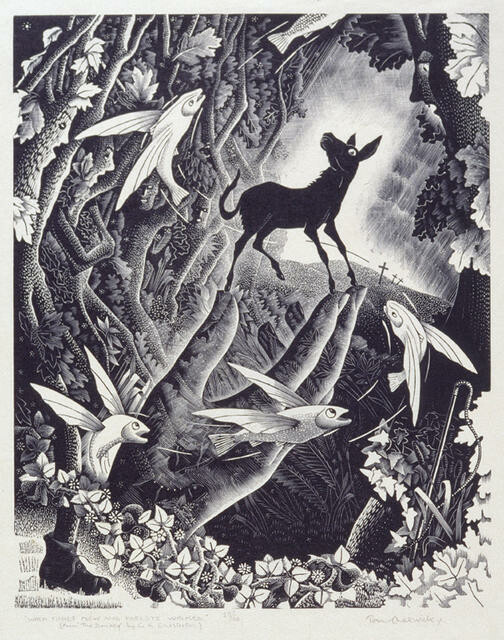
When Fishes Flew and Forests Walked (from ‘The Donkey’ By G. K. Chesterton)
- 1935
- wood engraving
- Presented by Mr Rex Nan Kivell, 1953
- 625 x 450mm
- 94/79
Tags: animals, anthropomorphism, crosses (visual works), donkeys, fantasy (imagination), fish (animals), hands (animal or human components), monochrome, shoes (footwear), trees
Listen to the poem by G K Chesterton that inspired this work.
Exhibition History
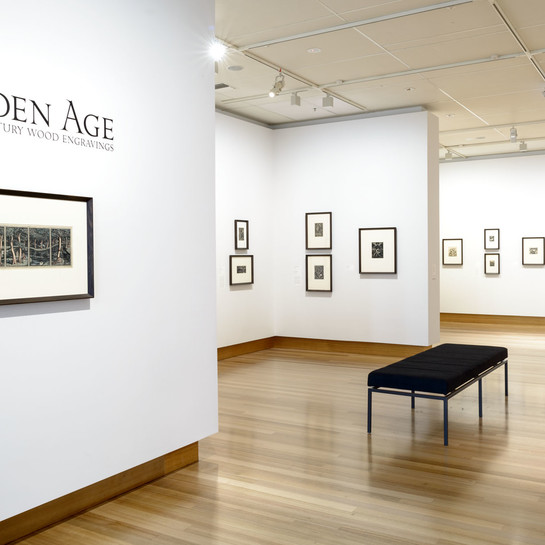
Related reading: The Golden Age
film
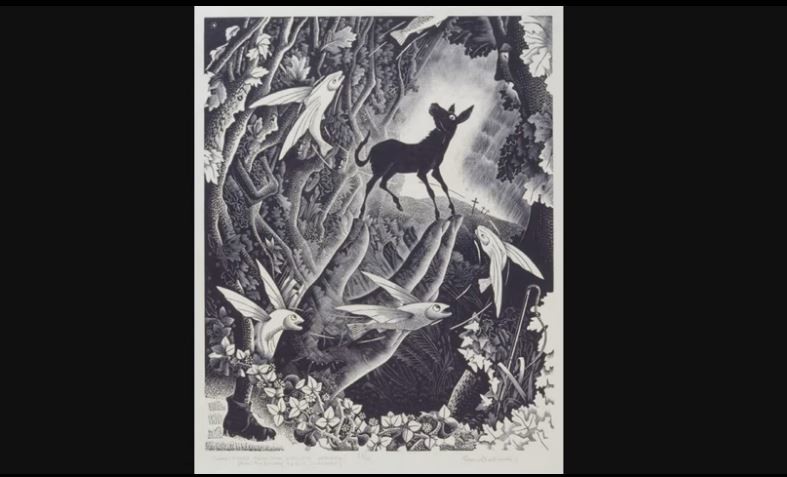
Tom Chadwick - The Donkey
Tom Chadwick illustrated the poem 'The Donkey' by G K Chesteron. The poem is read here by Elric Hooper.
Notes
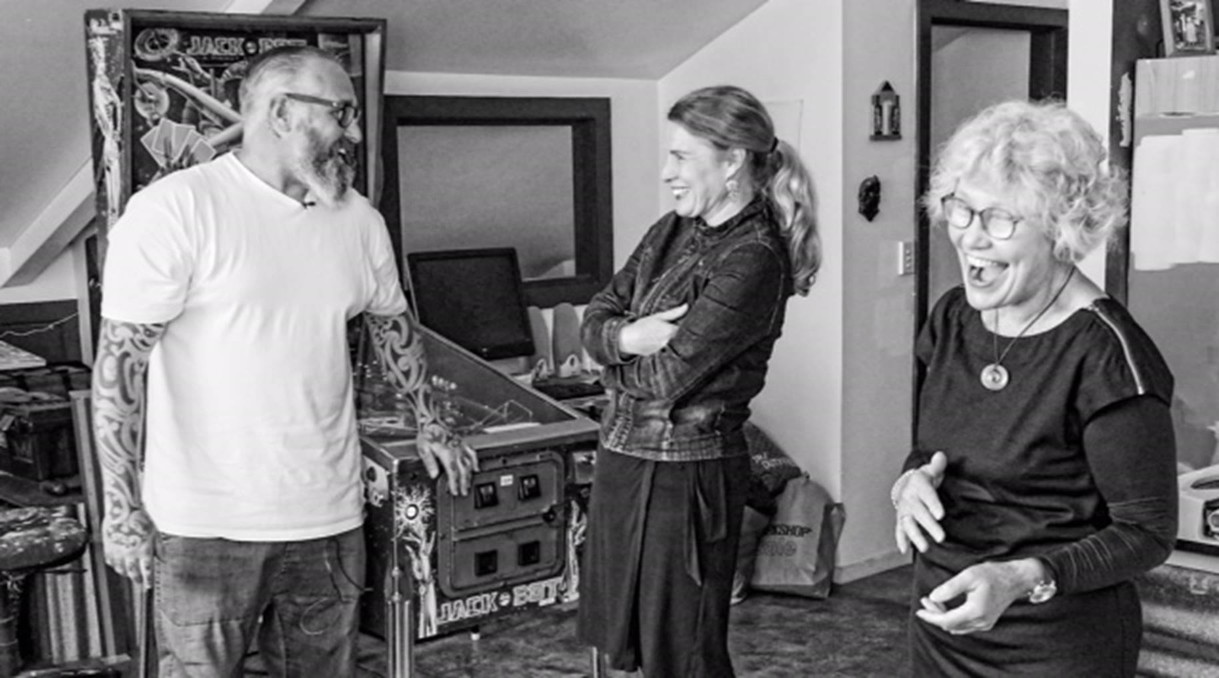
The listening post
Gallery librarian and archivist Tim Jones has been working with director Liz Grant to research and record around forty new audio pieces on works in the collection. I sat down with Tim and Liz to talk about the delights and challenges of the audio guide project.
Notes
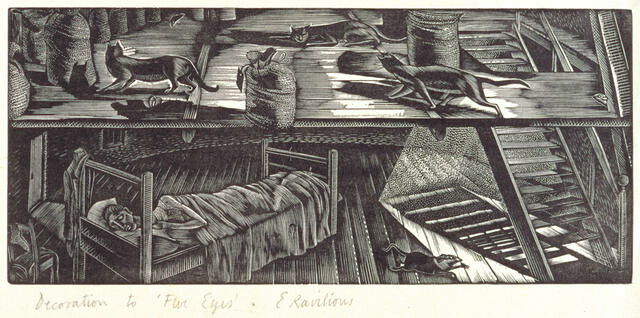
Five eyes by Eric Ravilious
This article first appeared as 'Artist captured poetry in wood carving' in The Press on 11 November 2014.
Notes
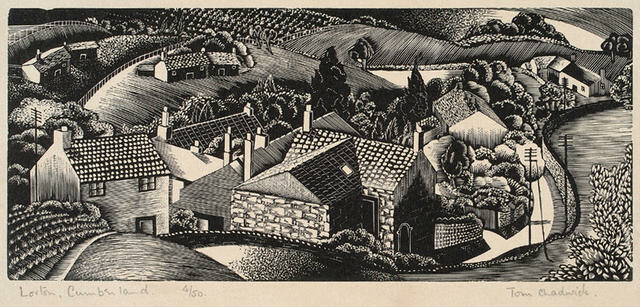
Lorton, Cumberland by Tom Chadwick
This article first appeared as 'Wood engraving artist finally won recognition' in The Press on 27 June 2014.
Notes
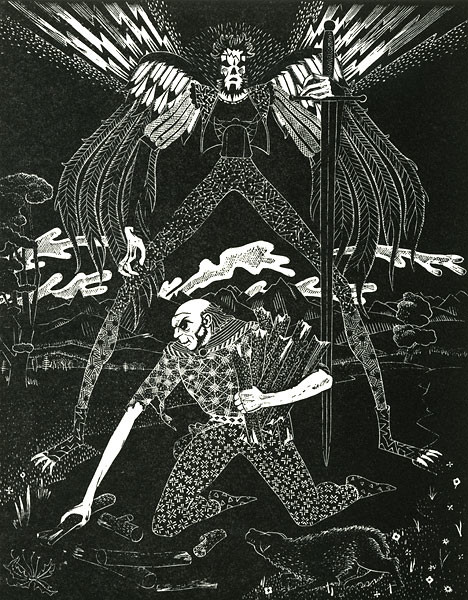
Death and the woodcutter by Leo Bensemann
This article first appeared as 'Death mastered' in The Press on 28 March 2013.
Notes
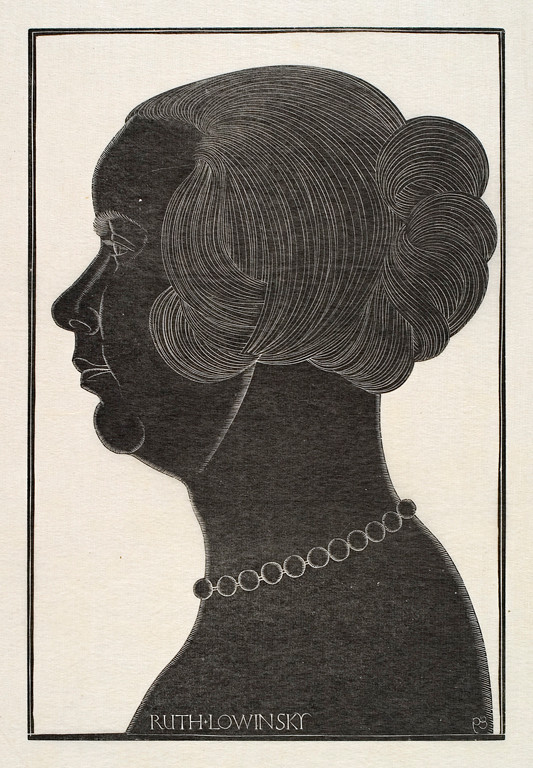
Ruth Lowinsky by Eric Gill
This article first appeared as 'An oblique profile' in The Press on 12 July 2013.
Notes
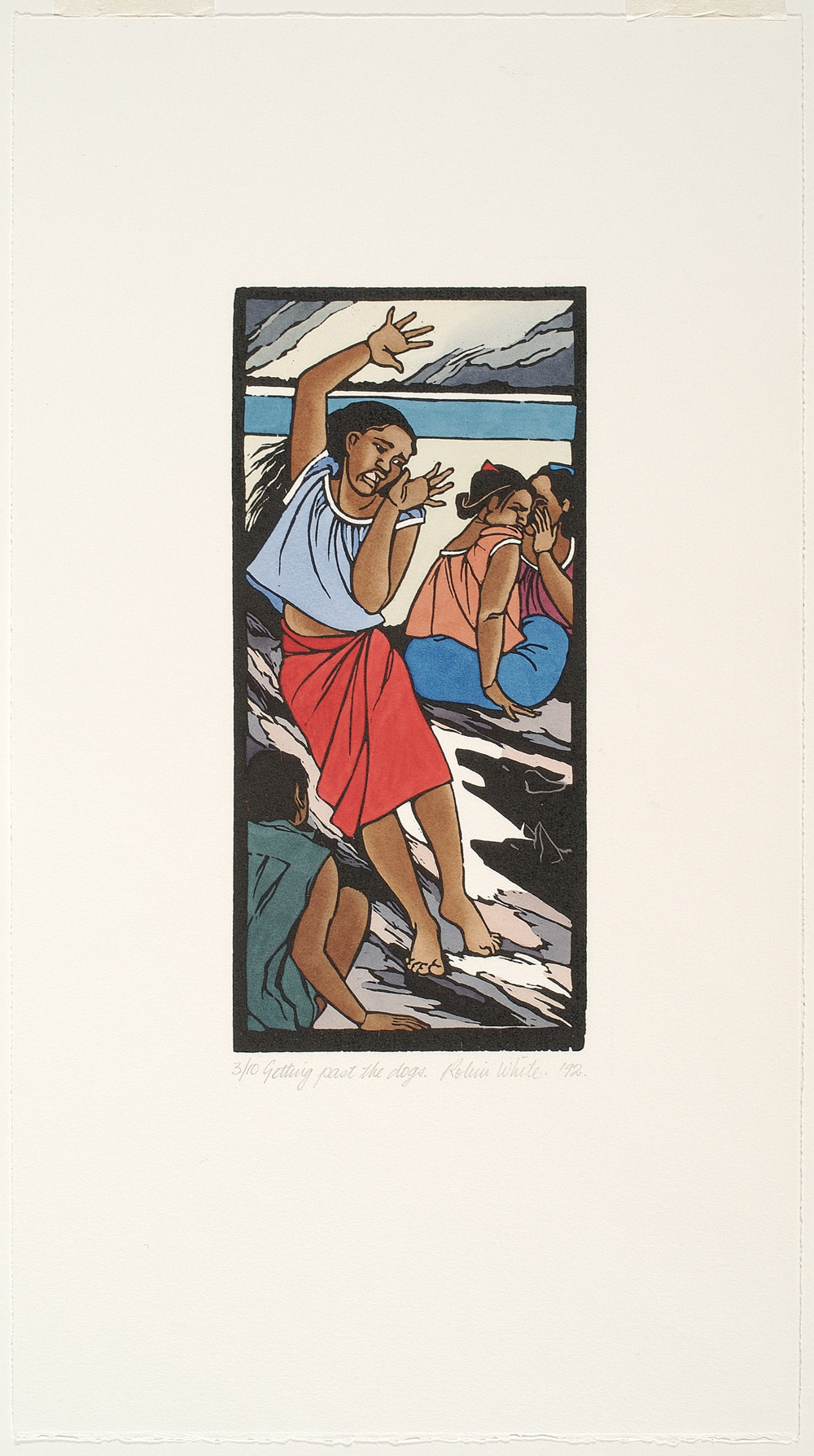
The Print Collection
If the question "what is the largest individual collection area numerically held by the Gallery?" was to be asked, the answer would have to be the Works on Paper collection, within which are 2145 original contemporary and historical prints, the earliest dating from the second half of the fifteenth century.
Notes
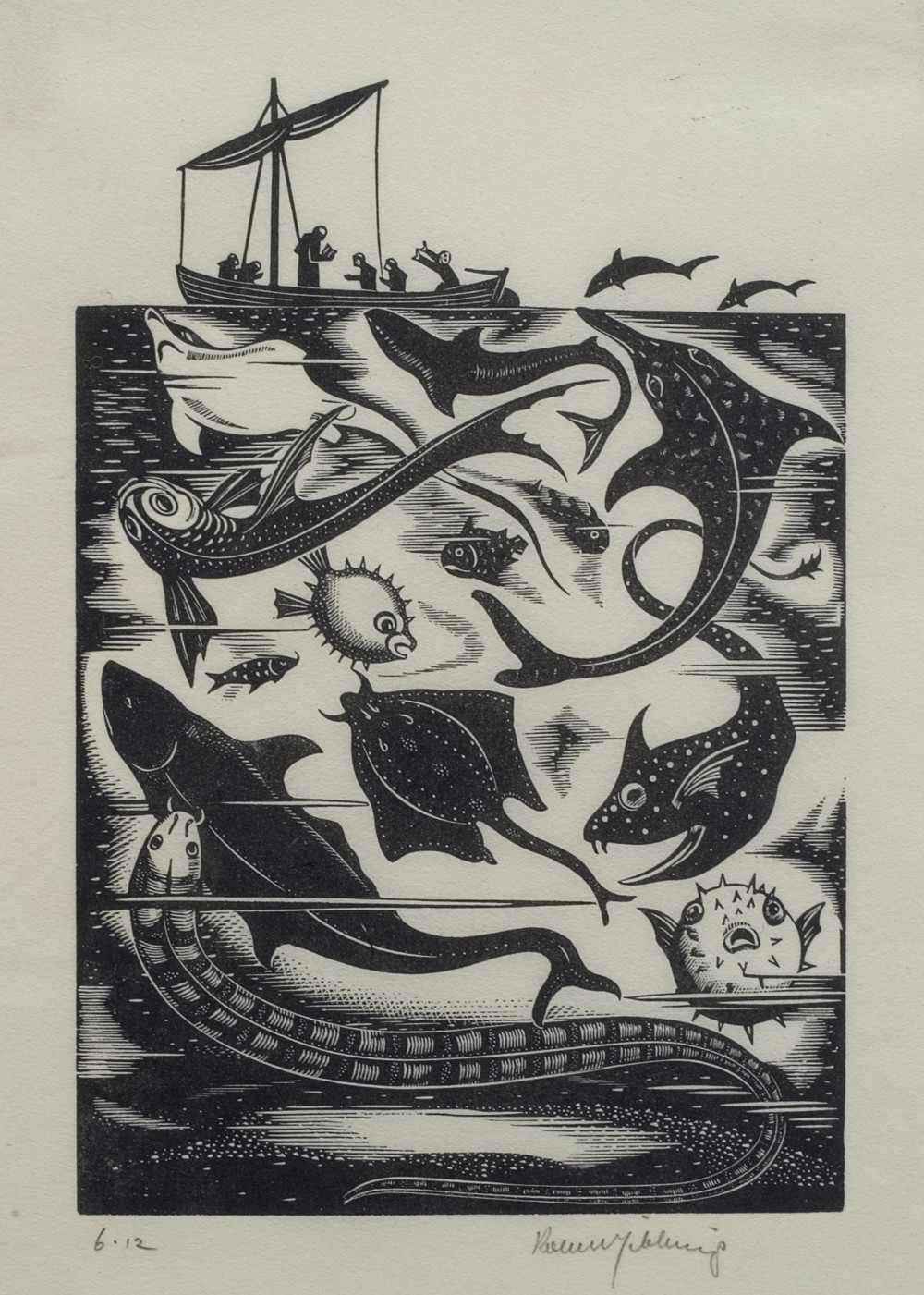
St Brendan and the Sea Monsters by Robert Gibbings
This article first appeared in The Press on 14 December 2005
At just 14 cm tall, the exquisite St Brendan and the Sea Monsters by Irish-born Robert Gibbings (1889-1958) is one of the smallest works in Christchurch Art Gallery's collection, but carries with it some of the largest tales. A rhythmic composition of swirling sea serpents, stingrays and sharks, this finely-crafted woodcut print tells the story of 6th century Irish explorer-monk St. Brendan, or Brendan the Navigator, whose recorded travels were an important part of medieval European folklore, and which continue to fascinate.
Article
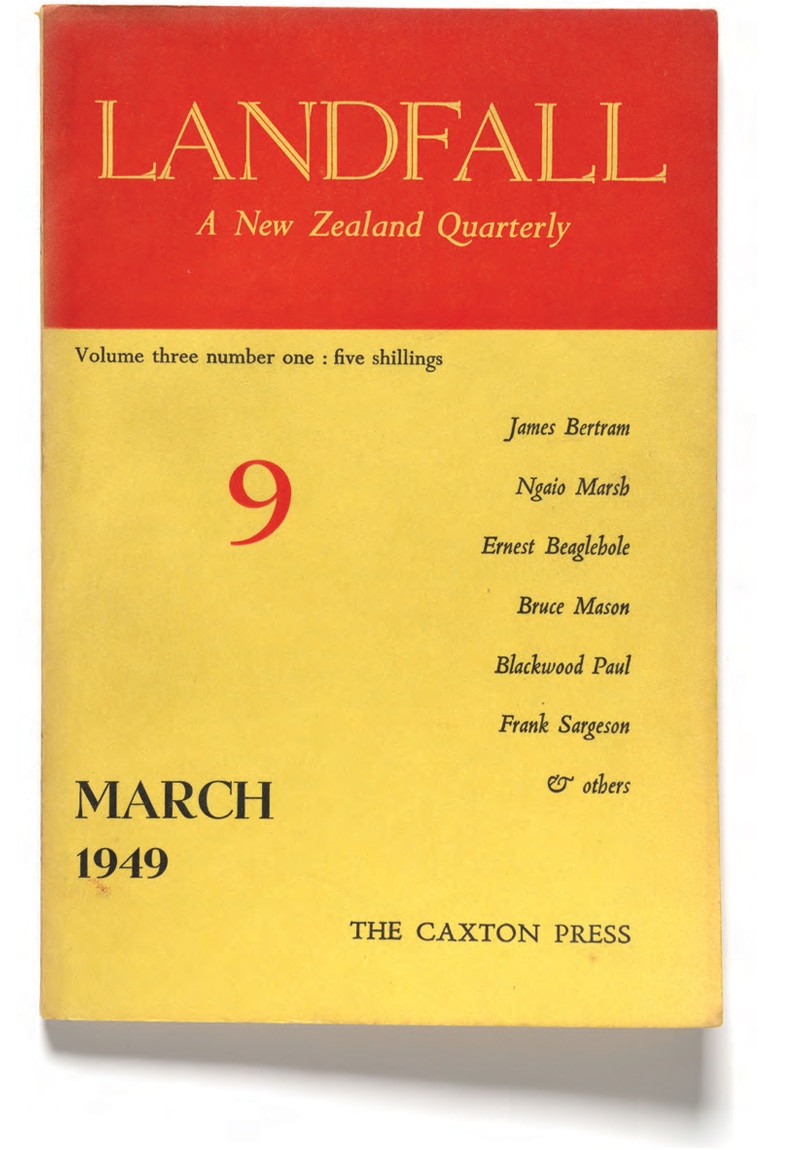
Tomorrow, Book, Caxton Press, Landfall
In the decades before and after the Second World War, Christchurch experienced a remarkable artistic efflorescence that encompassed the visual arts, literature, music, theatre and the publishing of books and journals. And the phenomenon was noticed beyond these islands. For instance, in his 1955 autobiography, English publisher and editor of Penguin New Writing and London Magazine, John Lehmann, wrote (with a measure of exaggeration, perhaps) that of all the world’s cities only Christchurch at that time acted ‘as a focus of creative literature of more than local significance’.
Collection
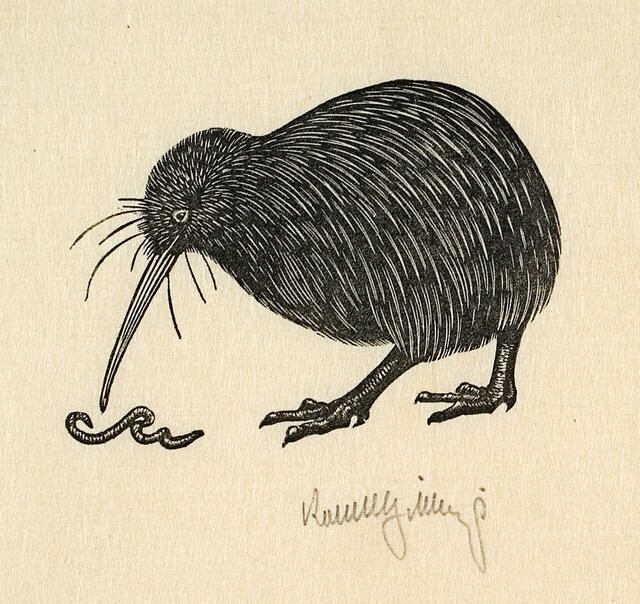
Robert Gibbings Untitled (Kiwi and Worm)
An illustration (page 172) from 'Over the reefs' by Robert Gibbings, published by Dent, 1948.
Collection
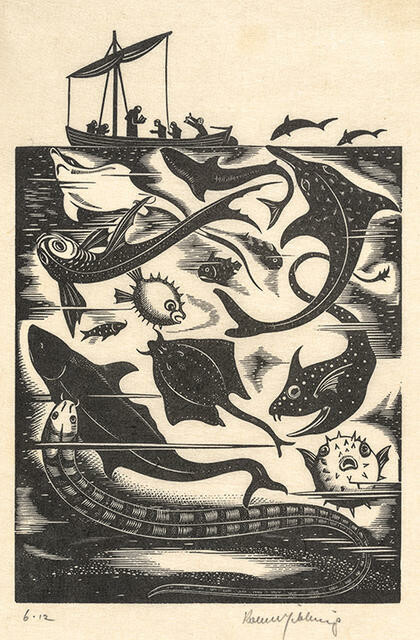
Robert Gibbings St Brendan and the Sea Monsters
Robert Gibbings was an early convert to wood engraving and quickly appreciated its qualities. He once wrote:
Discipline in art: was that what I’d come to London for? Impressionism was what I thought I was after. I couldn’t think what all this hard labour on wood was about. There was no tradition at the time; it seemed a lot of finicky gouging to get a few lines that might have been obtained more easily with a pen or brush. But slowly a love of the wood came upon me. I began to enjoy the crisp purr of the graver as it furrowed the polished surface. I began to appreciate the cleanness of the white line that it incised: even the simplest silhouettes had an austere quality, a dignity, that could not be achieved by other means. Clear, precise statement, that was what it amounted to. Near enough wouldn’t do: it had to be just right.
The Golden Age 18 December 2015 – 1 May 2016
An illustration from 'Beasts and Saints', translated by Helen Waddell, published by Constable, 1949.