Awhitu Wānanga
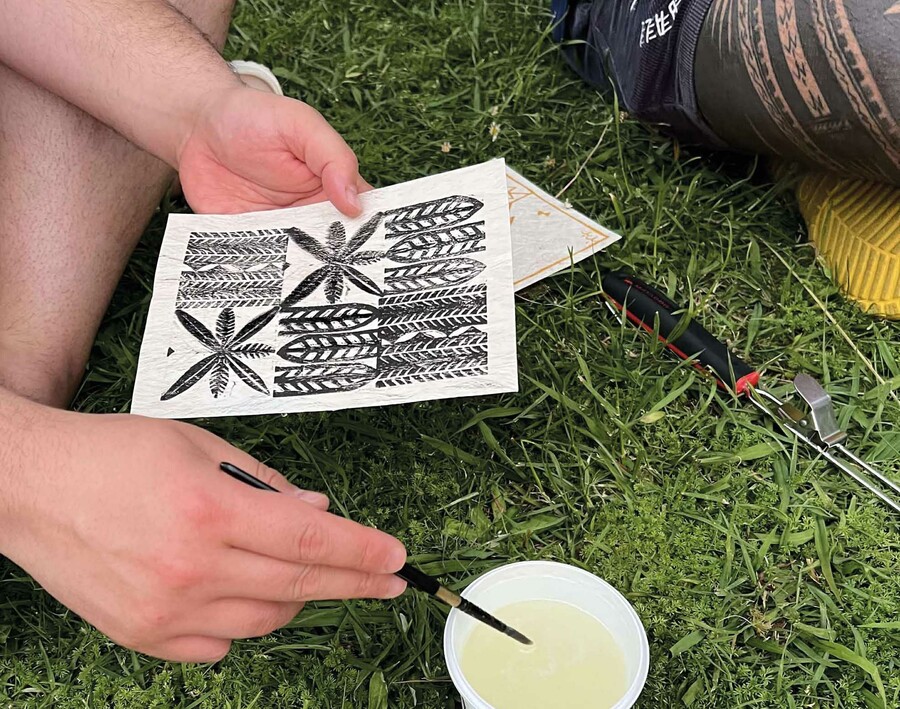
Work in progress. Photo: Cora-Allan
Made in the Pacific: A Collection of Tāoga celebrates Pacific tāoga, bringing together examples made by moana ancestors with new work by their distant mokopuna.
The museum treasures in this exhibition are by makers who gained their knowledge from elders and specialists in their communities. Their work contains precious cultural histories within both the materials and visual language.
These historical tāoga were used in the creative practice of making barkcloth, known variously in the Pacific realm as tapa, hiapo, siapo, ate, ngatu and masi. As the exhibition’s curator, and a hiapo maker myself, I gravitated towards these objects and the contemporary artists who work with these materials and share their own stories in textile.
The artists in this exhibition are all expert visual orators, using pattern, symbology and text to eloquently depict important narratives. Their individual practices have developed as the result of years of making, research and experimentation with new technologies and materials.
They all have much to share, so I decided to bring as many as possible together for a wānanga before the exhibition began.
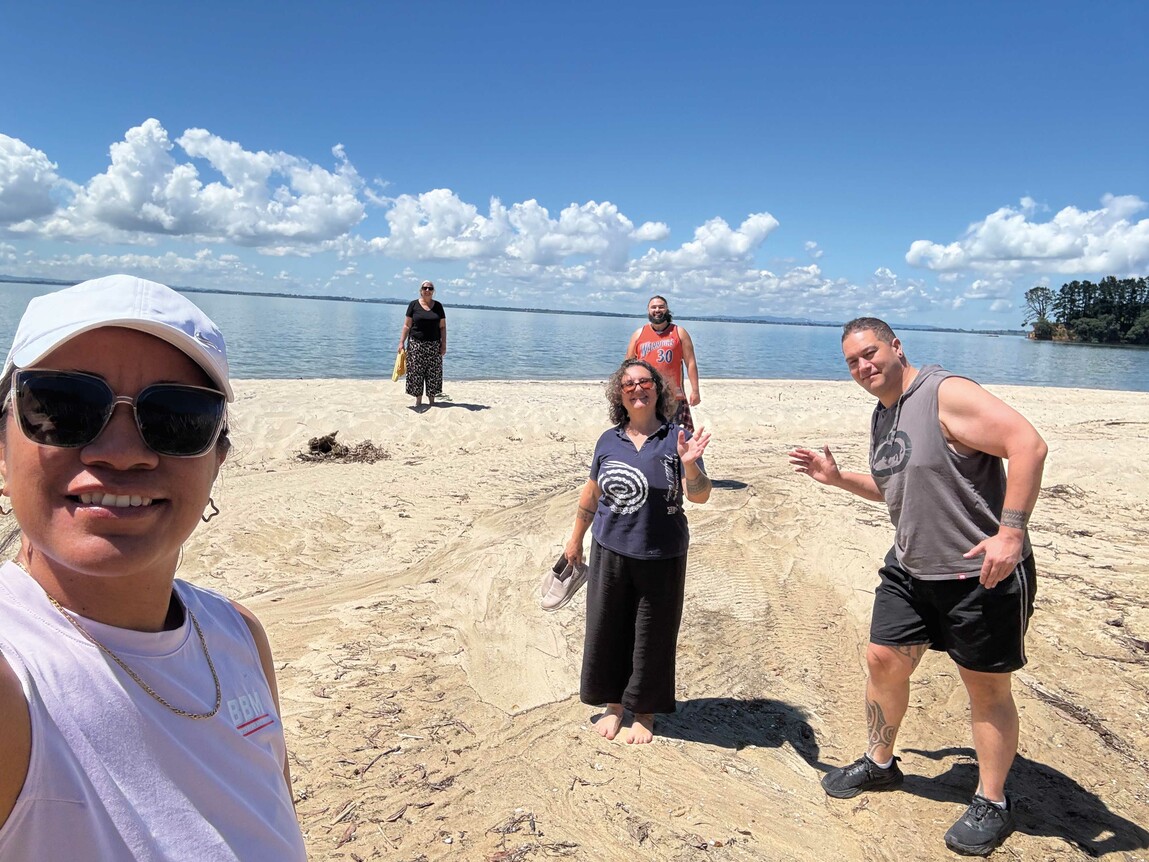
Cora-Allan, Sue Pearson, Pauline Reynolds, Doron Riki-Semu and Isaac Te Awa in Awhitu. Photo: Cora-Allan
Day 1
We came together at a large Airbnb in Awhitu, which is situated near the ocean at the Manukau Heads south of Tāmaki Makaurau Auckland. It was the perfect place for sharing space, hosting workshops and spreading out to beat tapa cloth under shady trees.
The attendees were local artists Doron Riki-Semu and his fiancé Riki Jono who live in Auckland; Isaac Te Awa, weaver and curator of Mātauranga Māori at Te Papa in Te Whanganui-a-Tara Wellington; and artists Pauline Reynolds and Sue Pearson who both whakapapa to Tahiti and flew all the way from Norfolk Island to join us.
Doron, Pauline and Sue are exhibiting artists in the Made in the Pacific exhibition, and the wānanga allowed me to have time with them to discuss their work and figure out how I, as a curator, could assist them in delivering their desired artworks.
Our first evening was spent settling in and catching up with one another – over the last three years we have been lucky to spend time working on other tapa-based projects together.
We didn’t want to waste any time and shortly after our first meal each person presented a small slideshow with an overview of their year, creative projects and future adventures.
This activity revealed the busy and fruitful year everyone in the group had had, but it also showed the amount of work that each put into enhancing their own communities. I think it is important to stay connected to your culture through knowing your community members; as a traditional knowledge holder I have made it a part of my life to make sure I attend Niue events and take part in market days whenever I see an opportunity to share about hiapo.
Within our group we had health workers, educators, curators, business owners, clothing designers, barkcloth makers, weavers, carvers, dye makers, a master printmaker, a council elder, revivalists and more. With this in mind, each person was asked to share something with the group, as a workshop or in whatever form they preferred.
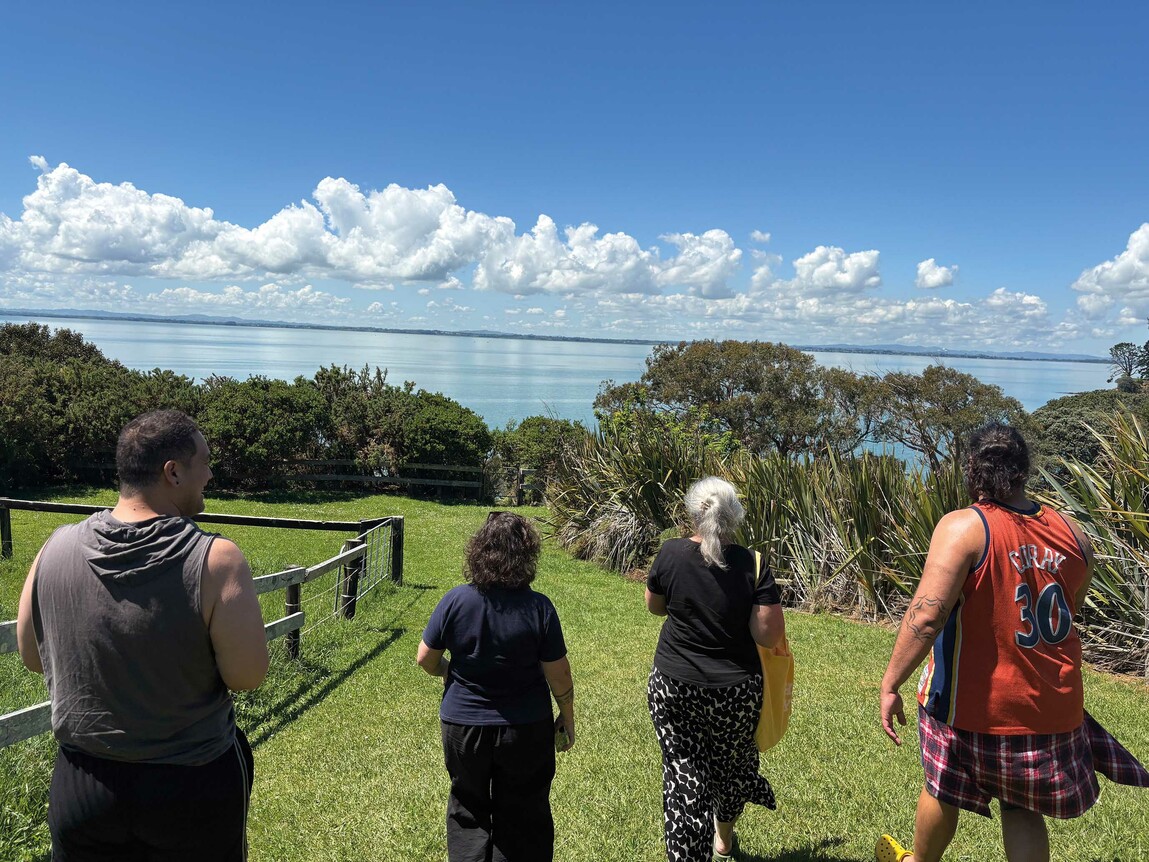
Isaac Te Awa, Pauline Reynolds, Sue Pearson and Doron Riki-Semu in Awhitu. Photo: Cora-Allan
Day 2
Bright and early the next day we began laying out the tools and materials that had been brought to share. The downstairs room was full of excitement as each person unpacked their bags to reveal shells, wood, feathers, pearls, hard-to-source weaving materials and many more treasures, which were piled up on a large making table. Seen together with the tapa tools and barkcloth, it was a maker’s dream.
We took a ceremonial walk down to the moana before we started our workshops and you could feel the energy and gratitude spilling from the group as we made our way back to the house for our first workshop.
Doron is a registered nurse and lecturer in nursing studies at Manukau Institute of Technology. He is also an active member of GoodSAM, which allows you to respond to nearby cardiac arrests as a volunteer. After hearing some of his experiences with the GoodSAM community we were excited by the opportunity to learn and refresh our first-aid skills. So yes, this creative wānanga began with a workshop in cardiopulmonary resuscitation. I find the diverse realities of artists’ lives – and how these can influence their work and practice – fascinating.
Doron is a careful and thoughtful maker who is explorative and continuously refining the visual language he produces. His work in this exhibition is deeply touching and shares his journey as a queer Pacific man who is to be married shortly (two weeks before the show opening) without his family at his side. Shortly after a cup of tea, we laid out the tapa-making tools for those who wanted to keep beating between workshop sessions, and we cleared the table for Sue to lead a printmaking workshop.
Using hand-made stencils and plant materials found around the house, Sue led us through the processes of printing with earth-toned inks that produced beautiful textures and colour. She has a long history of creating beautiful fabrics and designing clothing, exhibits globally and runs an art gallery shop on Norfolk Island.
I have seen many examples of Tahitian tapa showing their maker’s ability to create perfect prints of ferns, but before Sue’s printing workshop, I hadn’t witnessed such expertise. Her skill reflects her heritage, and we are fortunate to feature her workshop in the opening weekend events we have planned for the exhibition.
After lunch, we gathered in the shade to beat tapa together, connecting through the rhythmic sound of wooden anvils. It had been two years since our last gathering in Tahiti, and I wouldn’t be surprised if the neighbours heard our laughter over the tapping.
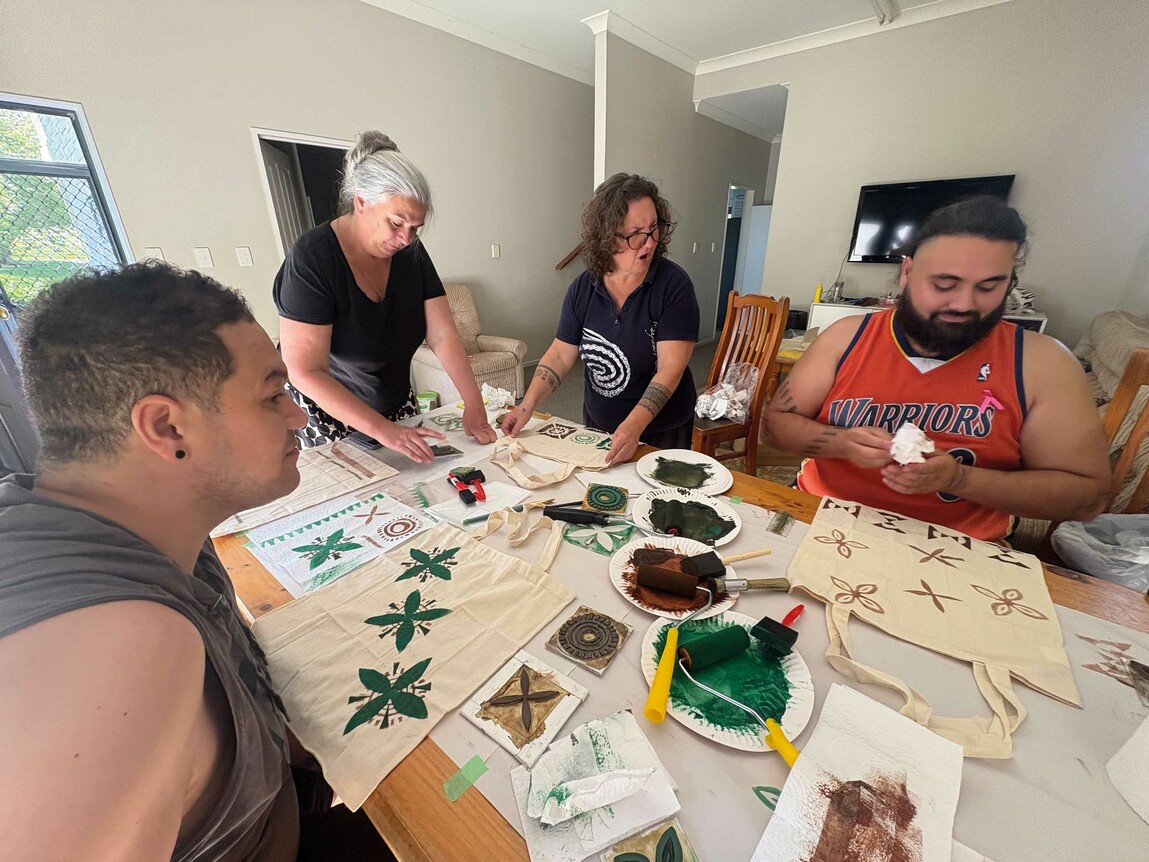
Isaac Te Awa, Sue Pearson, Pauline Reynolds and Doron Riki-Semu in Awhitu. Photo: Cora-Allan
Day 3
Realising that our time would quickly fill up, we asked ourselves: does anyone need to learn anything? Pauline wanted to learn how to weave a net, so Isaac was next up to share, and we began the day at the harakeke in the garden.
Those not making nets spent time beating tapa or exploring the materials Isaac brought from Wellington. His extensive collection of natural resources is used for various crafts and adornment; he even keeps birds in his fridge for feathers and jars of pre-drilled kōwhai seeds ready for use.
We ended the day smoking tapa under the guidance of Doron who had been lucky enough to see smoked masi from Fiji during a museum visit last year. He will use this special mark-making technique on his works for Made in the Pacific. I previously saw smoked masi in the collection of the University of Aberdeen in Scotland and later discovered smoked tapa in the Canterbury Museum Pacific collection when I was researching tāoga for this show.
Pauline and I had not yet had the opportunity to share; however, Pauline thoughtfully prepared a meal reminiscent of one we enjoyed in Tahiti, which made for a memorable dinner on our final evening together.
Sue and Pauline have demonstrated a longstanding commitment to tapa cloth that predates our involvement as a group. We are fortunate to be able to collaborate with them as we continue to advance our materials, techniques and understanding of these distinctive practices.
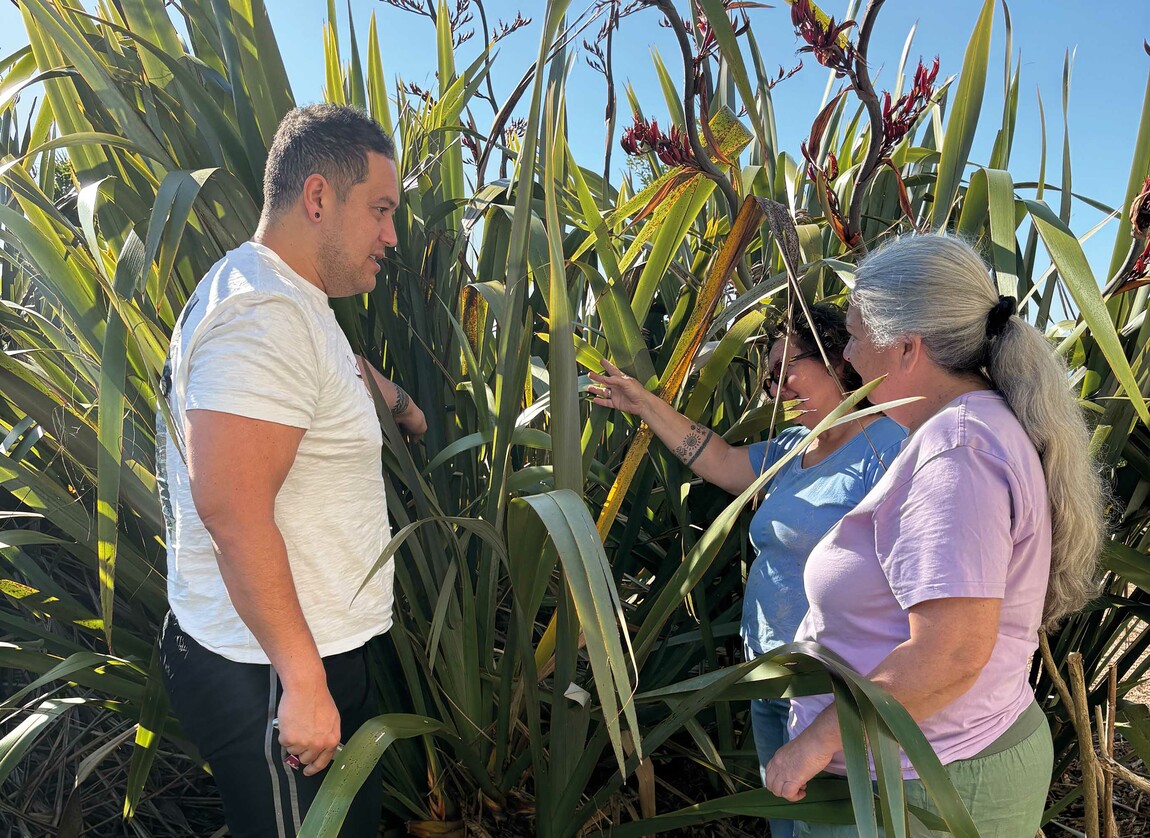
Isaac Te Awa, Pauline Reynolds and Sue Pearson in Awhitu. Photo: Cora-Allan
Day 4
By our last morning, it was clear our group is committed to the continual advancement of tapa making. Coming from multiple island groups, this type of connection across the Pacific can also be seen in the gathering of tāoga within this new and exciting exhibition. The historic and contemporary tāoga it features carry not only their original stories but also the essence of their creation. Pacific tāoga originates from deep traditions of knowledge that continue to evolve today. I hope viewers feel the spirit of wānanga in these works and that other artists are encouraged to create, explore and share together by organising their own wānanga.
Related
Exhibition
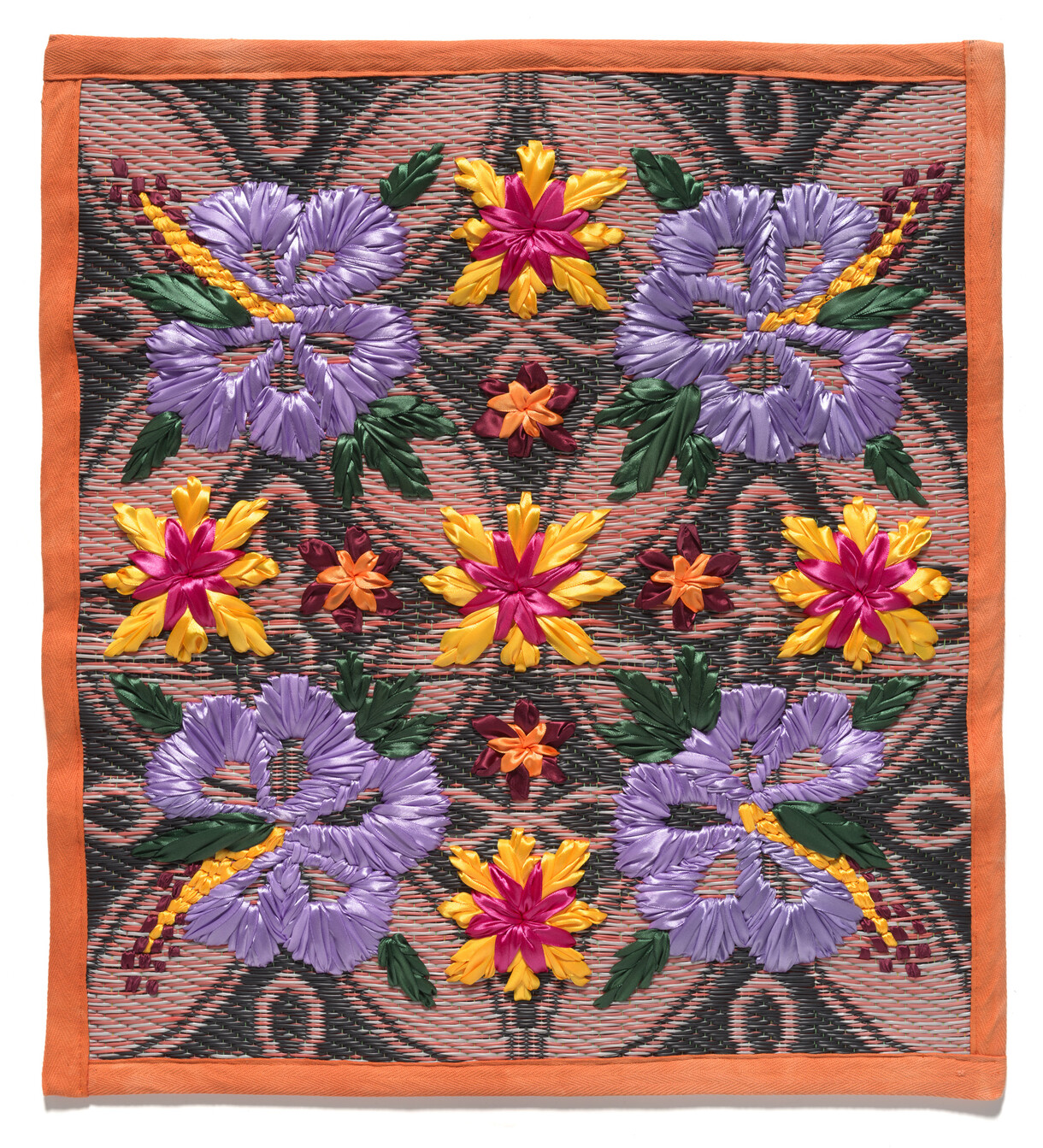
Made in the Pacific: A Collection of Tāoga
28 March – 11 October 2026
A selection of Pacific tāoga from the Canterbury Museum in conversation with contemporary artworks that highlight the continued strength in culture and traditional art forms.
Exhibition
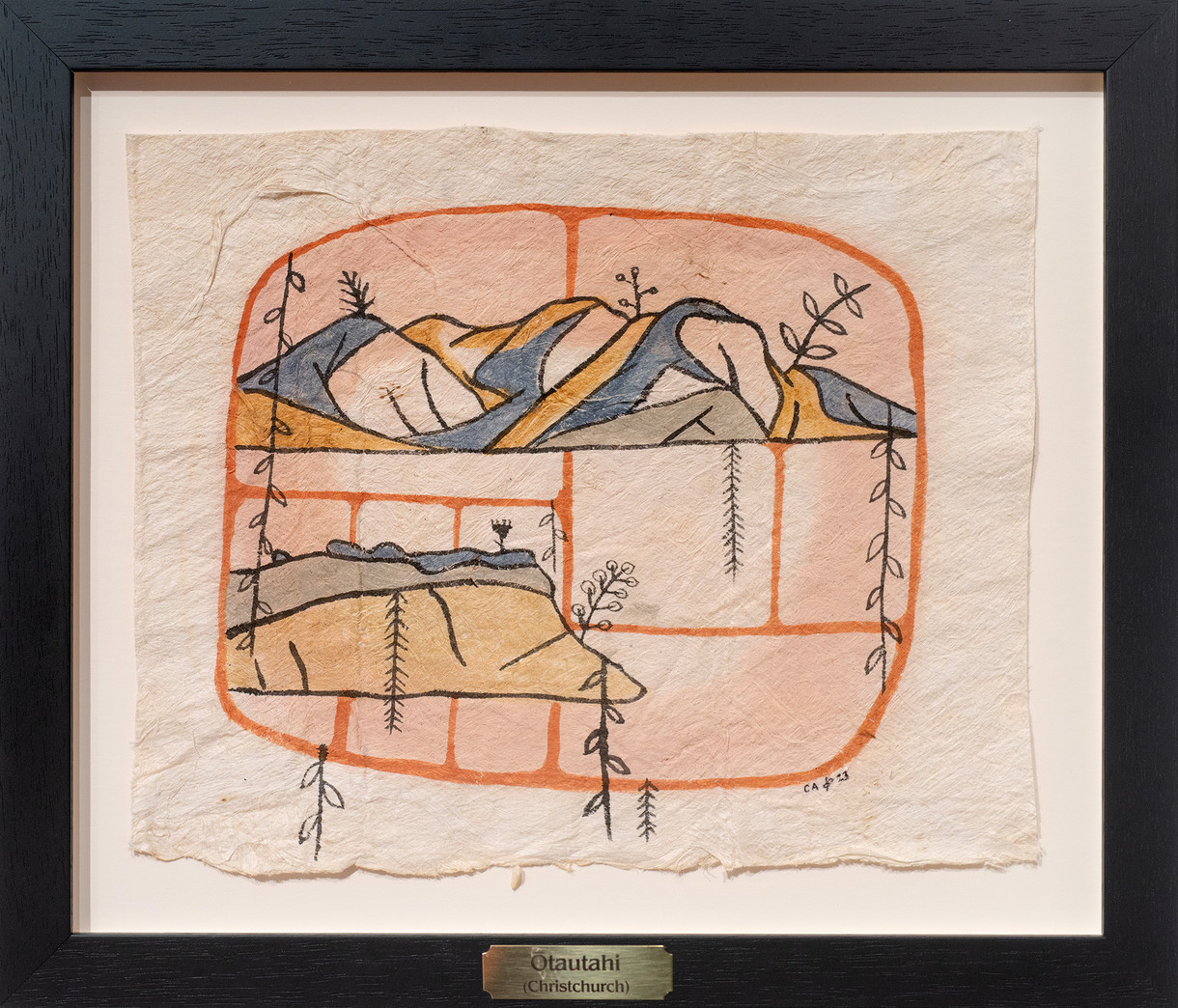
Cora-Allan: Encountering Aotearoa
13 April – 25 August 2024
A major body of new work that considers the whenua from the vantage point of the moana.
Interview
A Shift in Place
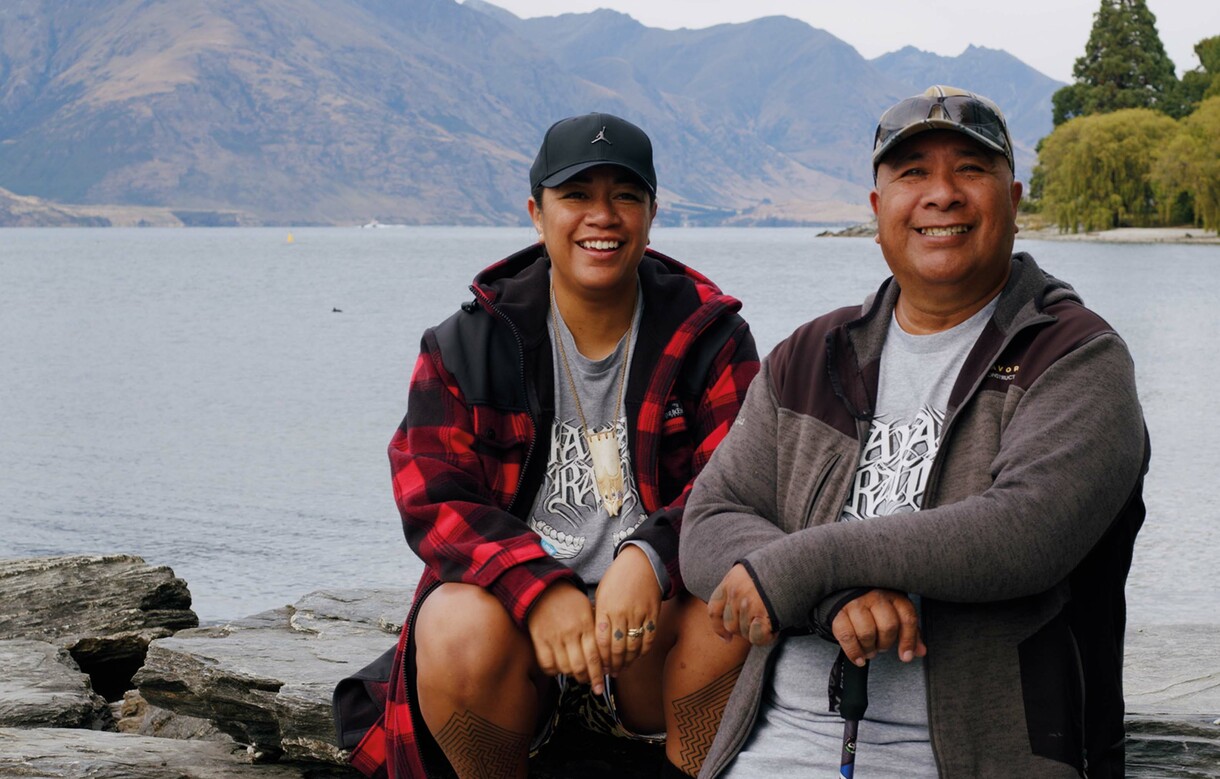
After Encountering Aotearoa opened at Dunedin Public Art Gallery I spent time reflecting on whether I was happy with the body of work and how it conveyed the journey I had taken with my Pāpā and my relationship with the whenua.
Commentary
Encountering Aotearoa: Whenua, Place and Practice
I stand staring at a painting of Motupōhue Bluff Hill. Being from the far south myself, its shape is instantly recognisable, its silhouette painted in vibrant colours that mirror the way light reflects on the real Motupōhue. The paint used to create this familiar scene is made from whenua, and includes pukepoto, the rich blue pigment that comes from the land near the hill: my whenua. There’s a resonance between the work and its materials that makes it special, layered with connections that reflect my own identity and experiences, reaffirming memories and a sense of belonging.