Evelyn Page
Aotearoa New Zealand, b.1899, d.1988
Summer Morn
- 1929
- Oil on canvas
- E Rosa Sawtell bequest, 1940
- 880 x 678mm
- 70/64
- View on google maps
Location: Ravenscar Gallery
Tags: backs (object portions), boats, gaze (psychoanalytical concept), Impressionist (style), nudes (representations), oars, parasols, people (agents), reflections (perceived properties), rivers, summer (season), sunlight, trees, umbrellas, women (female humans)
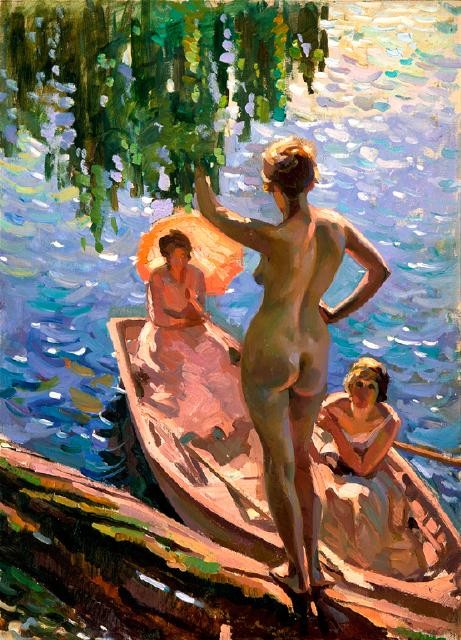
Evelyn Page revelled in the effects of sunlight upon her subjects, both people and the landscape. You can share her joy in the warm summer sunlight upon the figures, tree and river in Summer Morn, one of the Gallery’s most beloved paintings. Landscape painting dominated Aotearoa New Zealand art at the time, and one contemporary reviewer praised Page for “tackling the difficult problem of the nude in the open air”. Page was a founding member of The Group, a gathering of progressive young artists in Ōtautahi Christchurch, and she exhibited Summer Morn in the third Group exhibition in September 1929. From around 1939 to 1947, Evelyn and her husband Fred lived at Waitahuna in Governors Bay, which became a treasured meeting place for some of Aotearoa’s leading artists, writers, musicians and academics of the day.
(Timeless: Treasures from the Historical Collection 19 September 2026 – 30 May 2027)
Read an article that appeared in Stuff online.
Listen to the artist talking about this work.
Exhibition History

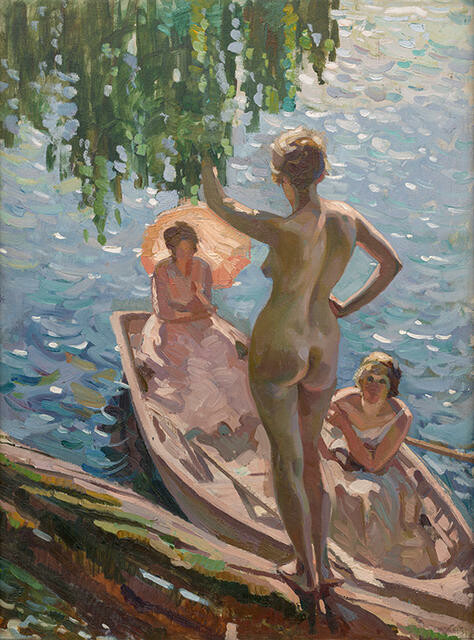
This scene is on an island in the Karamea River, on the West Coast where Evelyn Page went on holiday with friends during the summer of 1929/1930. The model for the painting banned it from being displayed during her lifetime, so it has been able to be exhibited only since 1978. Page has used an Impressionist style and, apart from the dominant figure, the main focus is on the effects of light in the outdoors environment, with strong highlights on the heads and shoulders of two of the figures and reflections on the surface of the water.
Born in Christchurch, Page (née Polson) studied at the Canterbury College School of Art. A member of the Canterbury Society of Arts, in 1927 she also joined The Group, formed to give artists a greater say over showing their work. Page spent a year in Britain in 1937 and on her return she and composer Frederick Page married. In 1947 they moved to Wellington from Governor's Bay, near Christchurch.
Related
Notes
The Painting collection: Focusing on New Zealand
The initial focus of the Canterbury Society of Arts collection had been painting by both British and New Zealand living artists acquired for educational purposes. The Society did not set out to form a museum-type painting collection, although it was conscious of the need to improve the standard of the work represented.