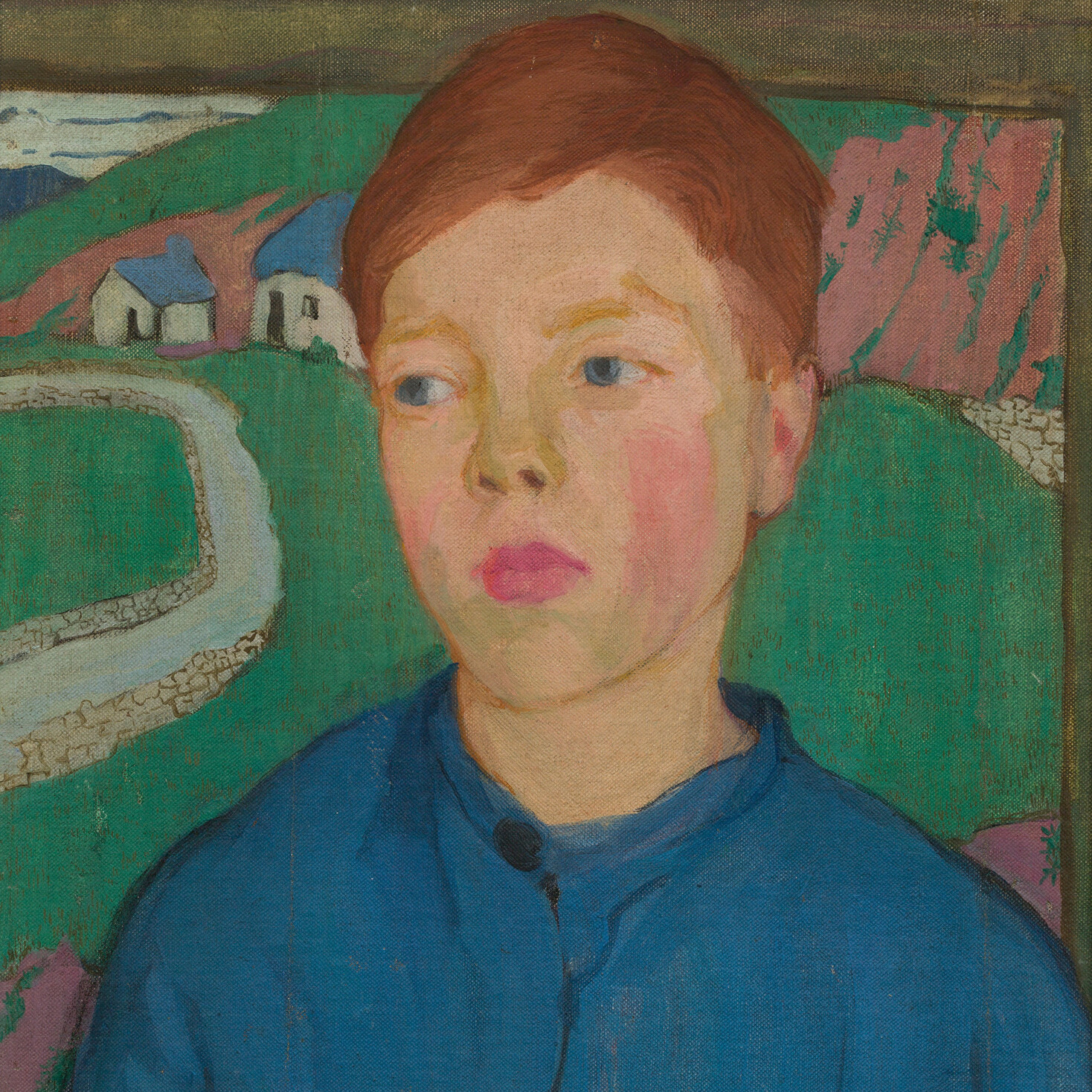
Kā Kaupapa o te Wā
What’s On
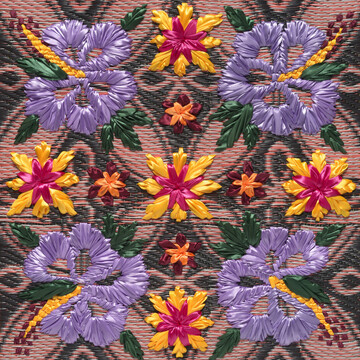
Made in the Pacific: A Collection of Tāoga
A selection of Pacific tāoga from the Canterbury Museum in conversation with contemporary artworks that highlight the continued strength in culture and traditional art forms.
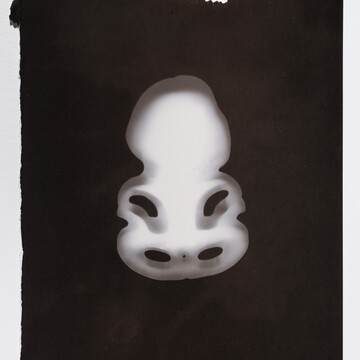
Mark Adams: A Survey | He Kohinga Whakaahua
A comprehensive survey spanning the artist's career.
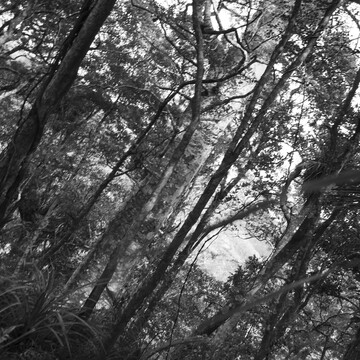
Ana Iti: Ngahere Behind a Pile of Metal
An immersive installation considering the legacies of deforestation and significance of kauri trees.
E tuwhera ana te wharetoi i kā rā e 7 o te wiki, 10am - 5pm
Ka tuwhera ki te 9pm i kā pō Wenerei
Open 7 days, 10am - 5pm
Late night Wednesday until 9pm
Uruka utukore, ahokore utukore
Free entry, free wifi
Director's Foreword
Director’s Foreword
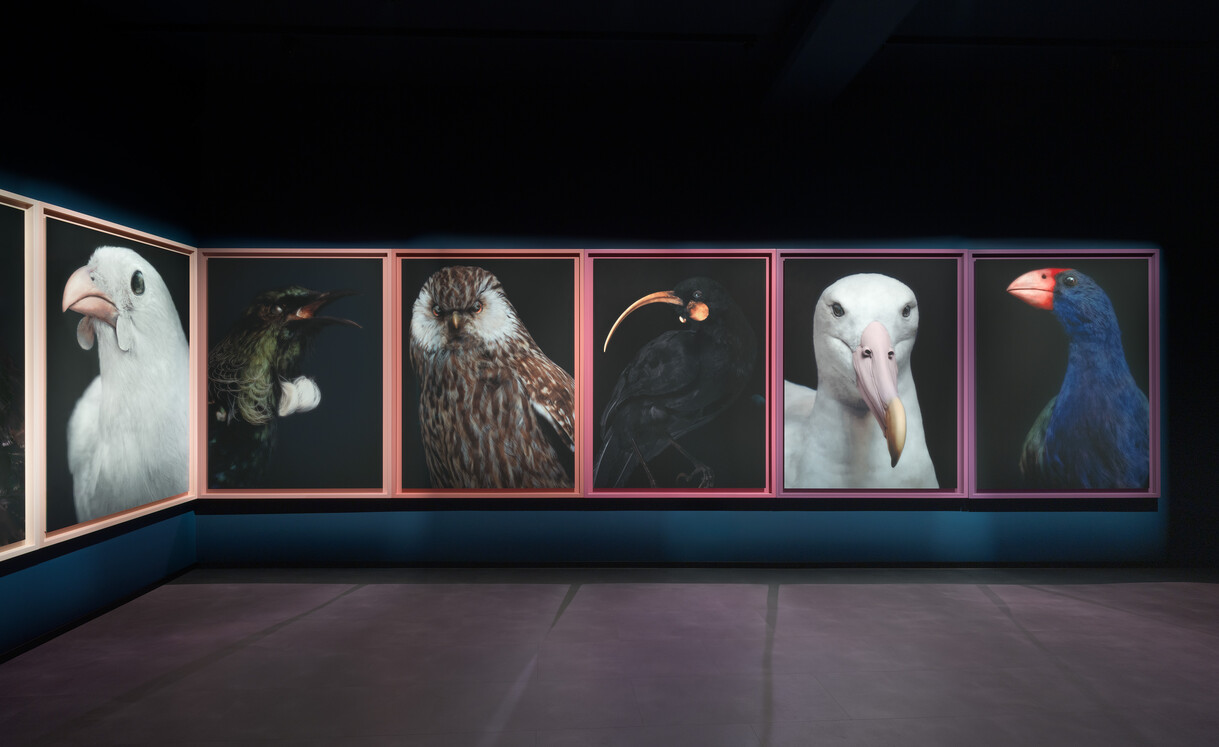
In late 2024, the Gallery received the great honour of being chosen by Creative New Zealand as their delivery partner for the national pavilion at this year’s Venice Biennale. That was the first step in a long process, and as I write this I am preparing to attend the opening of Fiona Pardington’s spectacular exhibition Taharaki Skyside. Our decision to propose Fiona for this occasion was based in our deep respect for her body of practice, and our belief that her current works – profoundly moving photographic portraits of taxidermied native manu in museum collections – were a perfect fit for this moment on the global stage.
Artist Profile
Revisiting Te Pātaka o Rākaihautū Banks Peninsula and Whangaroa Akaroa Harbour
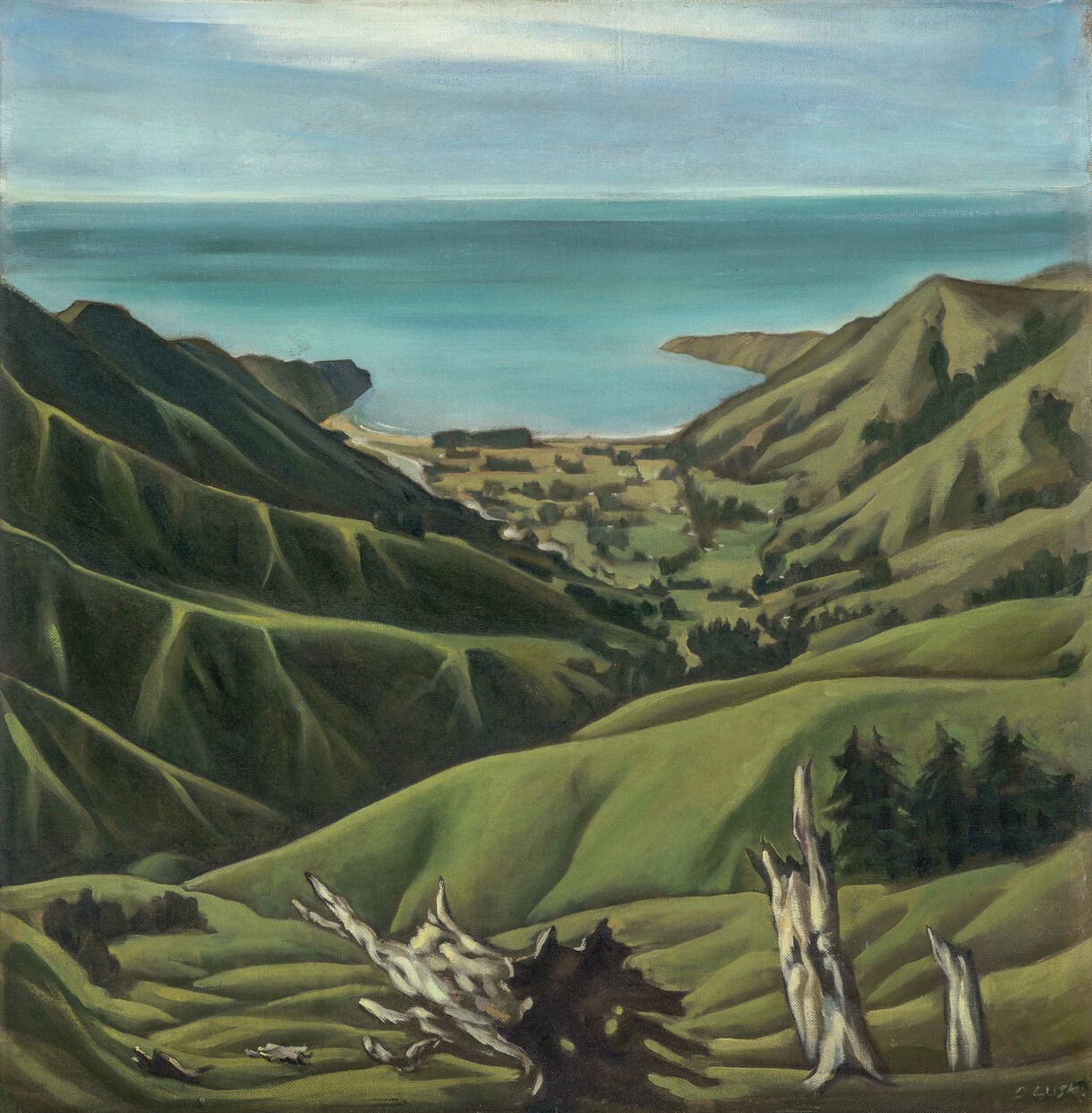
Te Pātaka o Rākaihautū Banks Peninsula and Whangaroa Akaroa Harbour have long been a haven for walkers and hikers, boaties and swimmers alike. The winding roads offer stunning vistas of Whakaraupō Lyttelton Harbour and the other outlying bays from high vantage points, and for decades artists have been inspired by the sheer power of the volcanic landforms.
My Favourite
Sybil Andrews: Storm
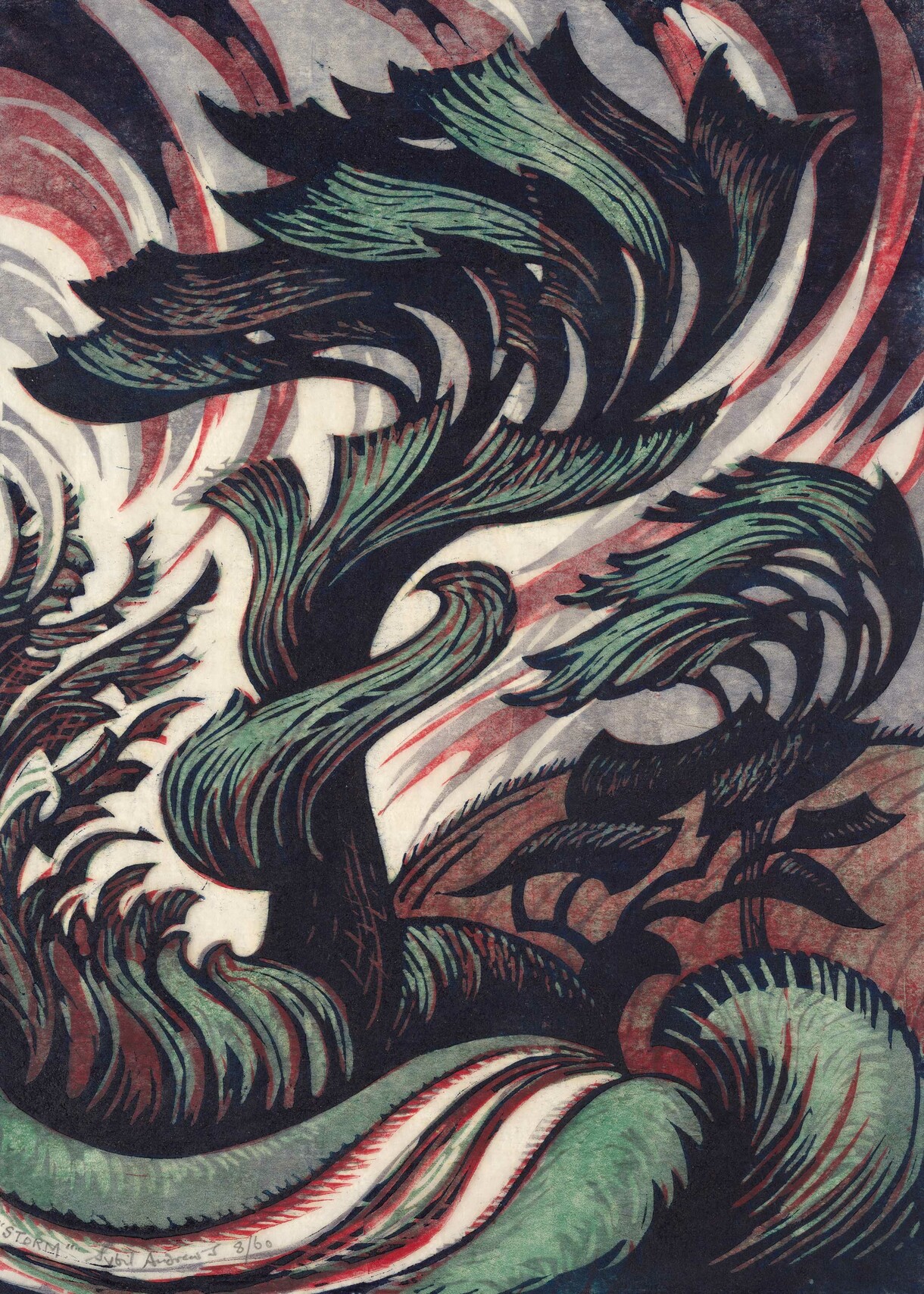
My mum Joan was always coming up with cool ways to keep us busy in the school holidays, and printmaking was a favourite activity for me. You didn’t have to be great at drawing, and all the stages were fun.
Interview
Te Pō-whāwhā
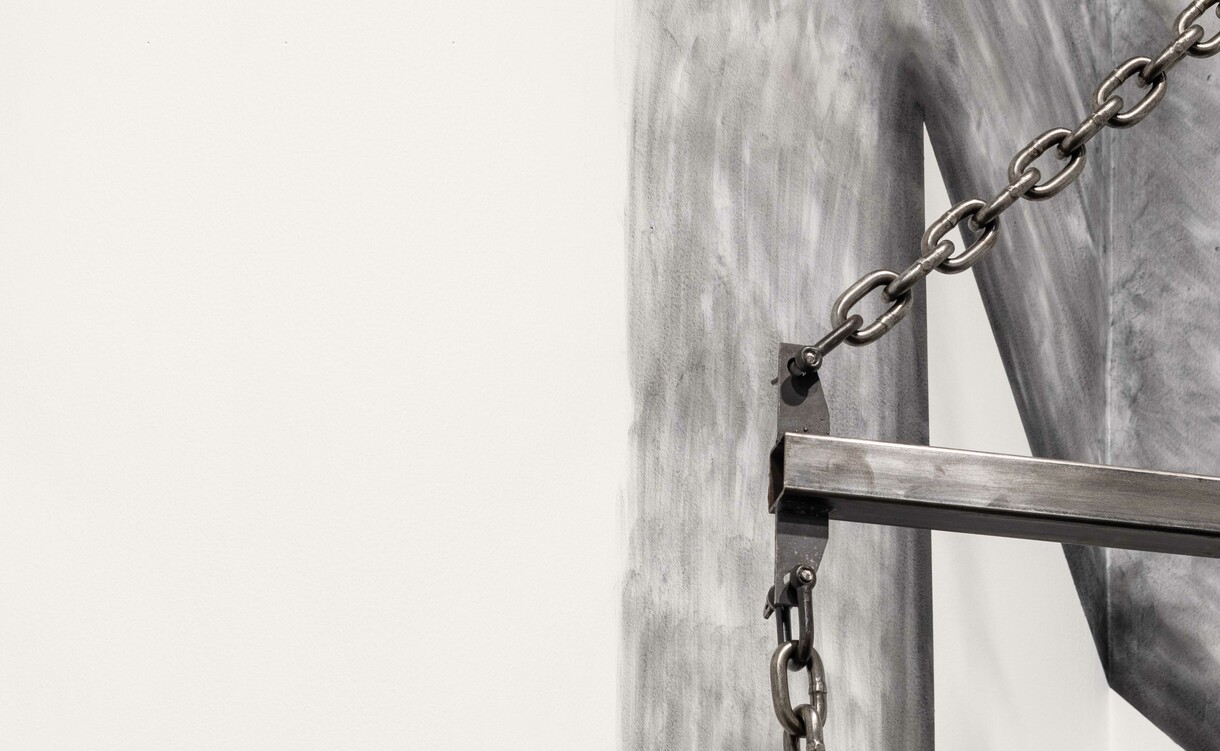
Over the past decade, Ana Iti (Te Rarawa, Ngāi Tūpoto, Ngāti Here, Pākehā) has developed a distinct multidisciplinary practice, combining drawing, sculpture, text and moving image to explore decolonial histories and relationships to the land. For her immersive new commission for the Gallery, Ngahere Behind a Pile of Metal, Iti spent time in Te Tai Tokerau, researching the impact of colonisation and legacies of the kauri logging industry for her tīpuna, whānau and the region. Here, she talks with curator Melanie Oliver and shares some context for her new installation.
Commentary
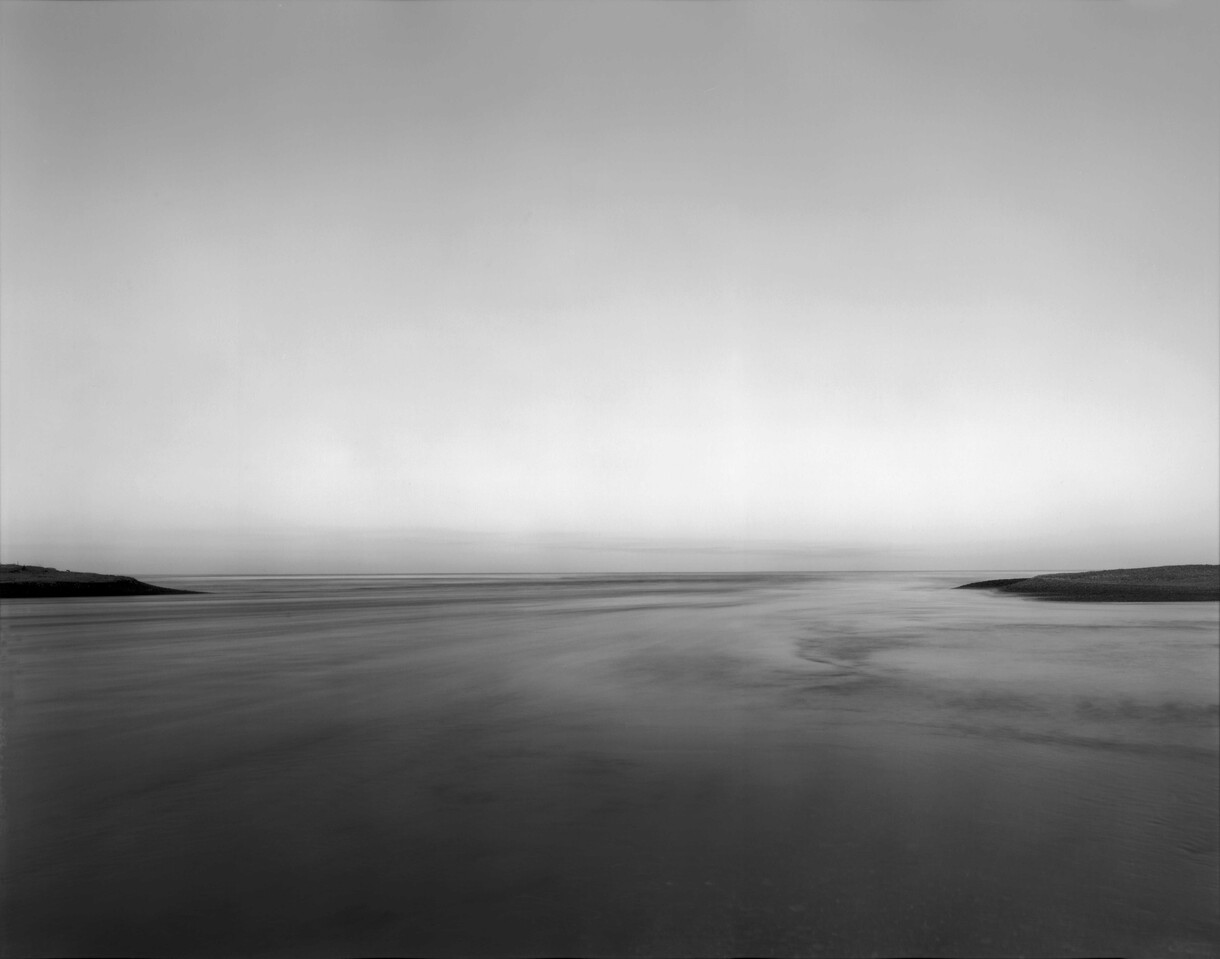
Land of Memories
As an archaeologist specialising in Māori rock art heritage I have been taken by the intertwining of three modern recognitions in international rock art and archaeological research. Firstly, landscapes are not objectively viewed and fixed physical environments – rather they are mental constructs that exist in our minds and are shaped by our cultural understandings, personal experiences, beliefs and changing social contexts. Secondly, fixed in place where the ancestors made it, the location of a piece of rock art in a landscape is a critical part of its meaning over and above its motif subject. And, thirdly, still fixed in place, rock art is intergenerational; it can last tens of thousands of years.
Artist Profile
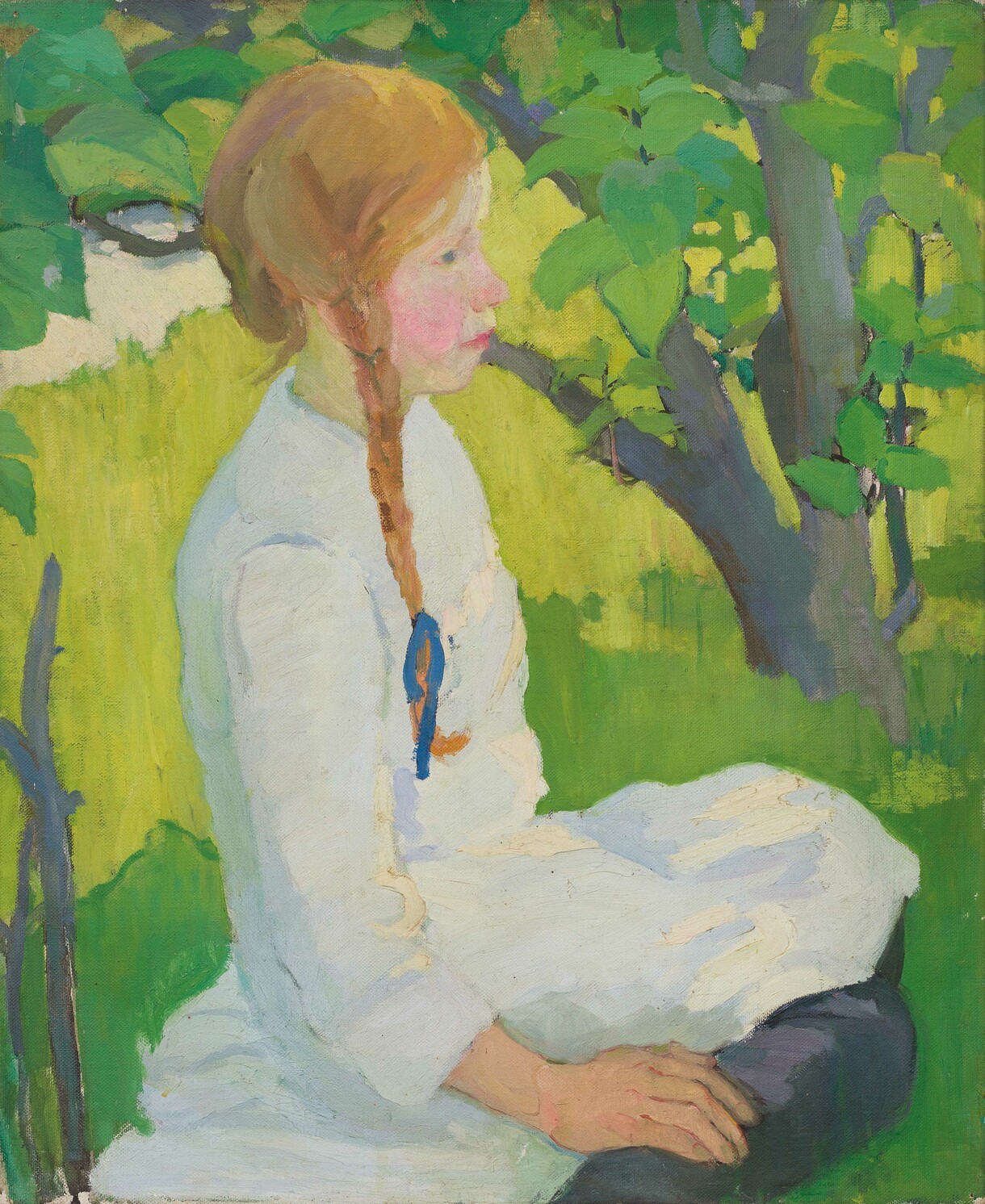
Ahead of Her Time
Whanganui born artist Edith Marion Collier (1885–1964) was one of the earliest pioneers of modernism in Aotearoa New Zealand. During nearly nine years of art studies in Europe from 1913 to 1921 she produced some of the most avant-garde works by any New Zealander at that time.
Interview
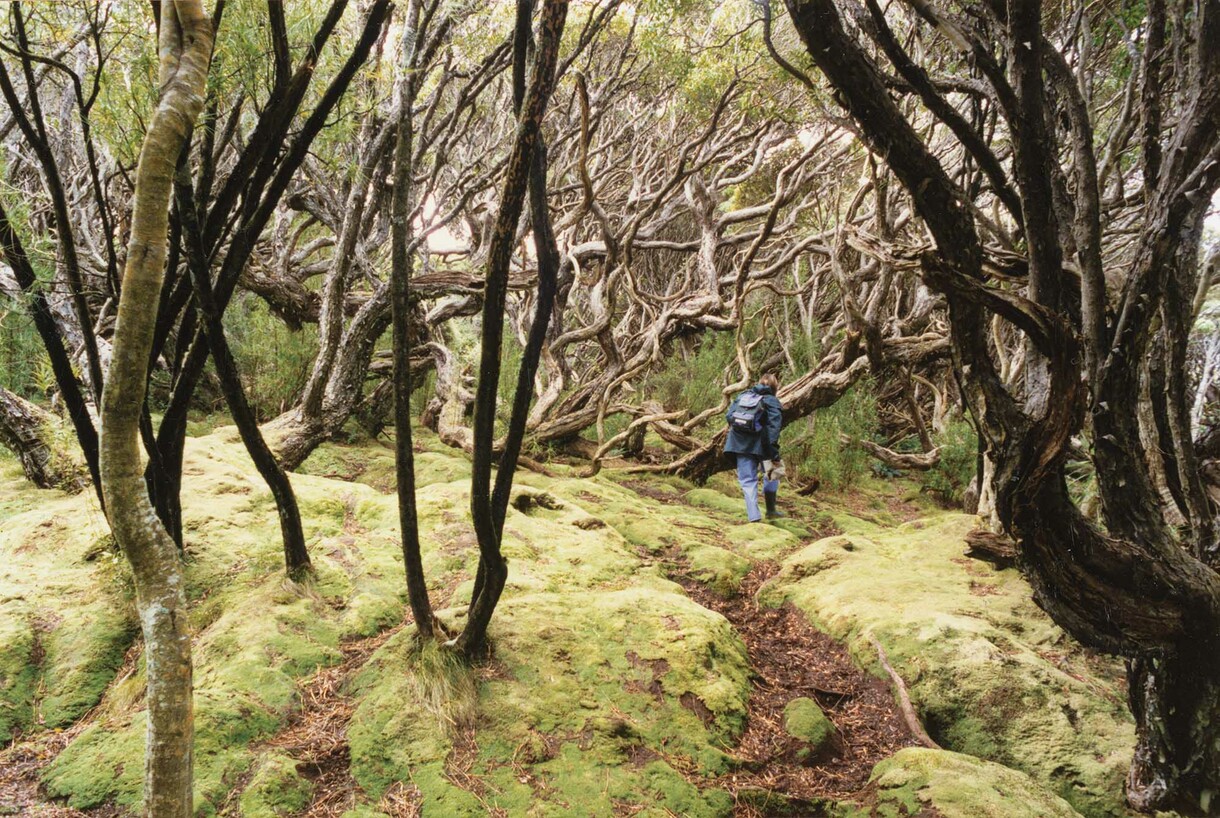
Beneath the Canopy
Denise Copland is one of Aotearoa New Zealand’s most influential printmakers. For over five decades, she has challenged how we think about our relationship with the natural world, combining expressive mark-making with technical expertise. One of Copland’s works, Indigenous III, is currently on display in the Kai raro i te kāuru section of He Kapuka Oneone – A Handful of Soil. Felicity Milburn invited her to share a little more about her practice and approach.