
Kā Kaupapa o te Wā
What’s On
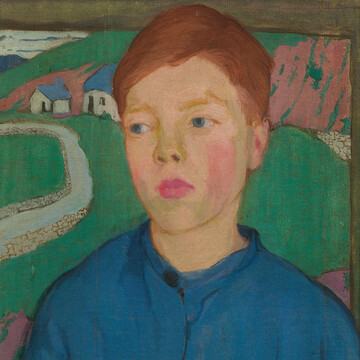
Edith Collier: Early New Zealand Modernist
A rare opportunity to view the work of one of Aotearoa New Zealand’s most adventurous and experimental modernist artists.
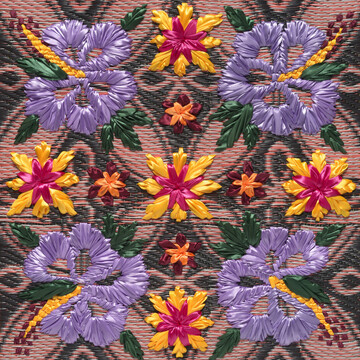
Made in the Pacific: A Collection of Tāoga
A selection of Pacific tāoga from the Canterbury Museum in conversation with contemporary artworks that highlight the continued strength in culture and traditional art forms.
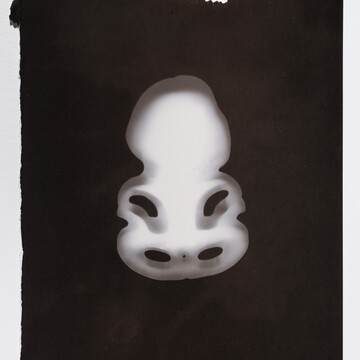
Mark Adams: A Survey | He Kohinga Whakaahua
A comprehensive survey spanning the artist's career.
E tuwhera ana te wharetoi i kā rā e 7 o te wiki, 10am - 5pm
Ka tuwhera ki te 9pm i kā pō Wenerei
Open 7 days, 10am - 5pm
Late night Wednesday until 9pm
Uruka utukore, ahokore utukore
Free entry, free wifi
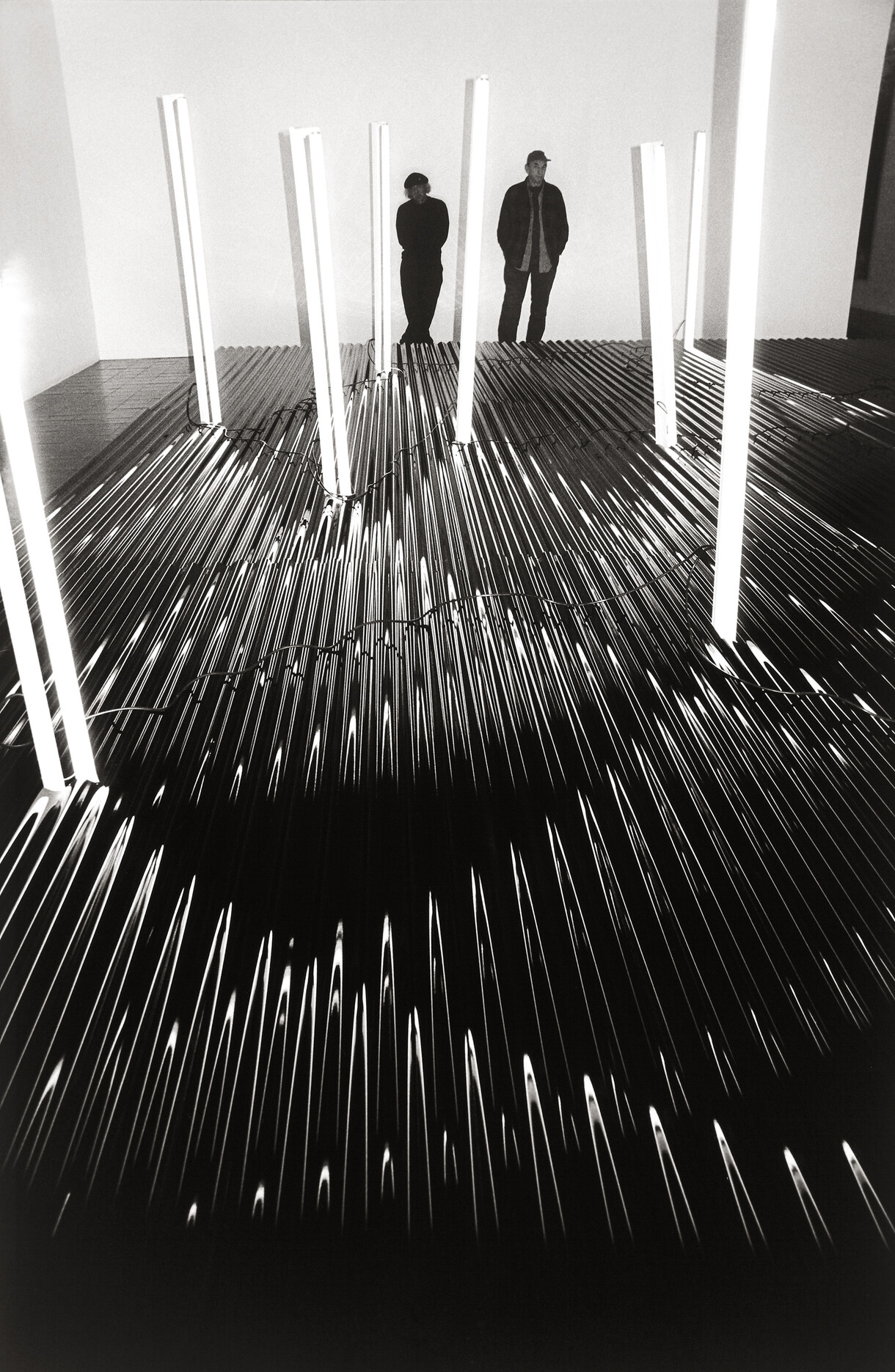

Collection
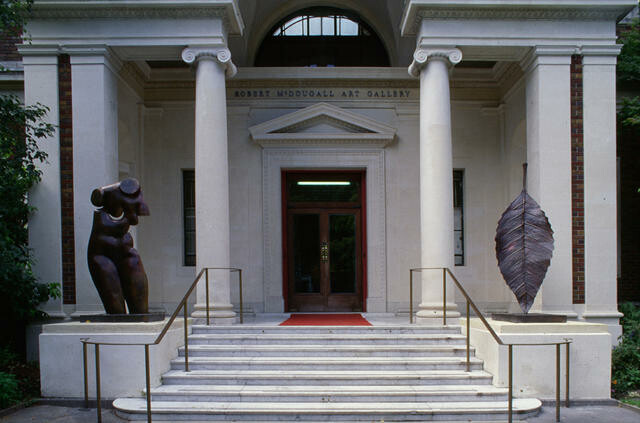
Paul Dibble E Noho Ra De Chirico
The title of this sculpture means 'Goodbye De Chirico' in Māori. By taking the forms of a classical female torso and leaf and relocating them in a New Zealand/ Pacific context, Dibble pays homage to Giorgio de Chirico (1888 - 1974), an Italian artist known for his atmospheric paintings of strange pseudo-classical buildings and deserted city squares. De Chirico often included unexpected or unrelated objects in his compositions, giving his paintings a mysterious and dream-like quality. Although they initially appear monumental, Dibble's bronzes are deceptively thin. He has said that he likes this flatness because it "promises so much from some angles, but delivers so little. Like a billboard or a building facade, it can be very powerful". While the torso is drawn directly from de Chirico's paintings, the leaf is an abstract symbol, suggesting the fall of modernism, which dominated Western visual art throughout the twentieth century. Interestingly, the phrase 'e noho ra' is used in Maori culture only by someone who is leaving and not when farewelling someone who is departing, a nuance that emphasises Dibble's intention of 'moving on' in a new artistic direction.
Notes
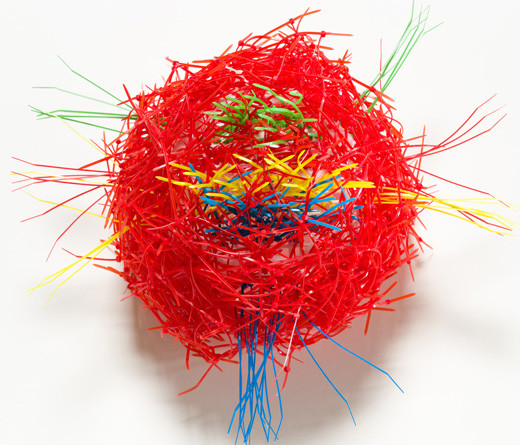
Strange creatures
Some weird and wonderful creatures have been taking up residence in our gallery storage rooms. Luckily, they're artworks, not the pesty kind.
Notes
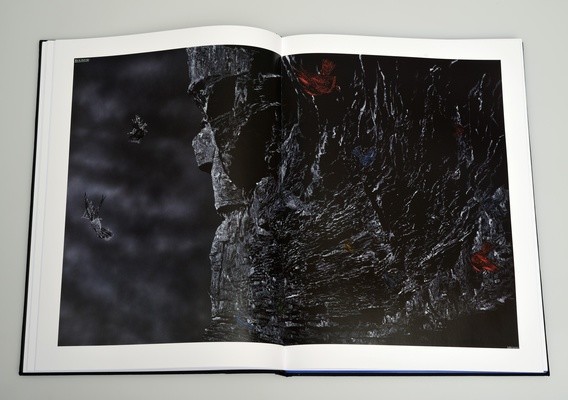
Radio Cotton
Have a listen to Graham Beattie of Beattie's Book Blog talking about our Shane Cotton book on Radio Live last Sunday.
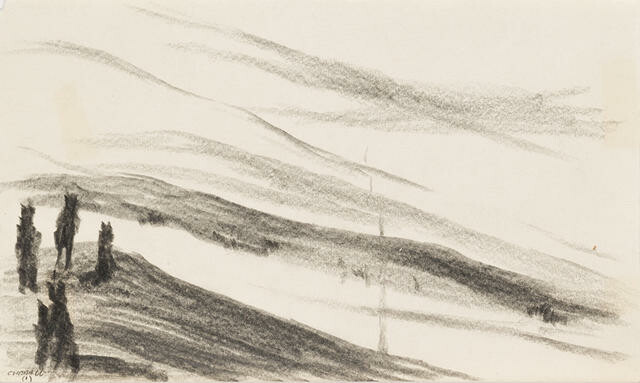
Notes
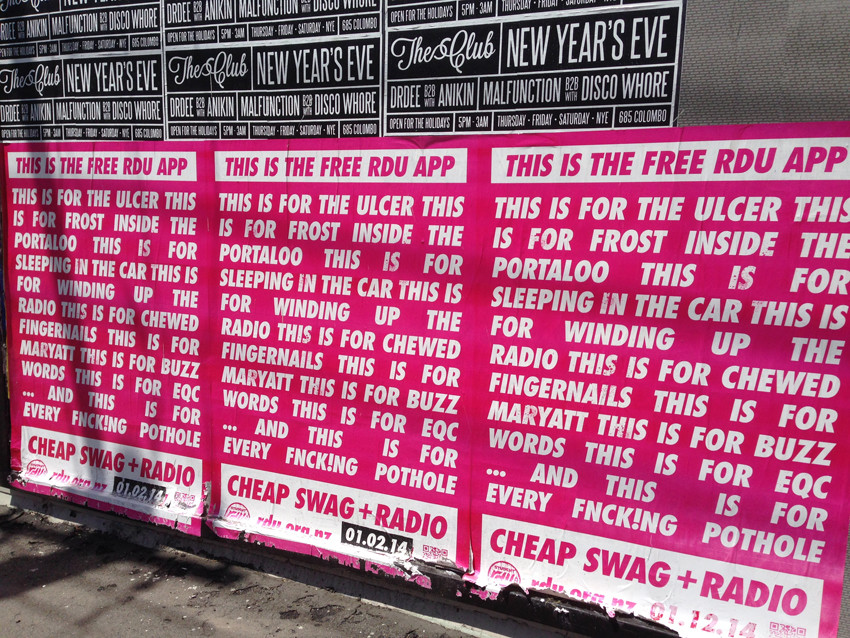
TXTING
Local radio station RDU's latest poster run seems to owe somewhat of a debt to artist Jenny Holzer's Truism series.
Collection
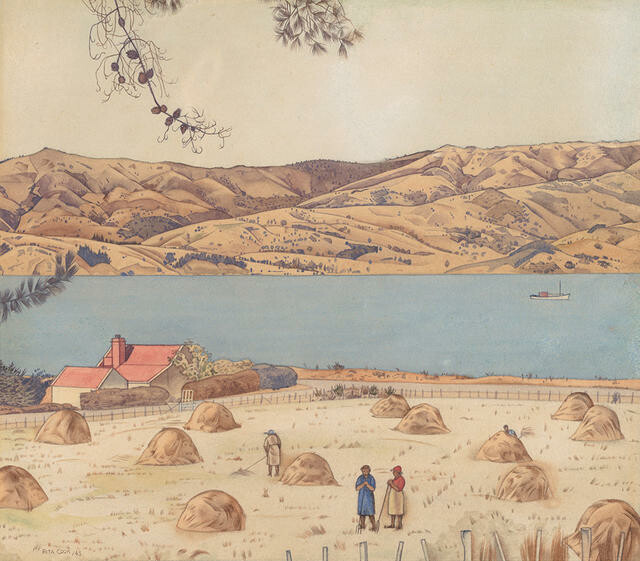
Rita Angus Haycocks, Wainui
In the summer of 1943, during the height of World War II, Ōtautahi Christchurch artist Rita Angus was called up by the Industrial Manpower Board to report for work at a local factory as part of the country’s war effort. Angus was a pacifist, so she chose instead to move to Wainui, a small coastal settlement in Akaroa Harbour, where she spent several weeks. Wainui was a refuge, a place of retreat and recuperation for Angus, and she embarked on an extraordinary series of small watercolours of the surrounding landscape. The intense attention to detail and her precision and clarity in applying the watercolour paints is exceptional. Angus wrote: “Wainui is charming, the bach is built on a rise overlooking the harbour and opposite Akaroa, and the weather has been rather wonderful. […] I find the bach very comfortable, most of my subjects are near here. I’m aware of much I’ve not noticed before, and how very short is one’s life. Again a hermit, I can reflect on the last few weeks in Christchurch, they were wonderful weeks to me. […] I thought I could be a more simple hermit than I am.”
He Kapuka Oneone – A Handful of Soil (from August 2024)
Collection
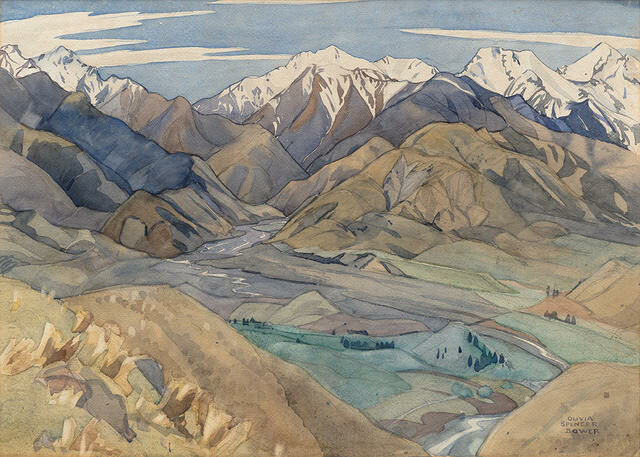
Olivia Spencer Bower Kaikoura Country
“The Māori name for Kaikōura is Te Ahi Kaikōura o Tama Ki Te Raki, the place where Tama Ki Te Raki cooked his crayfish. […] Another interesting thing about the mountains of the Kaikōura territory: you’ve got Te Parinui o Whiti, one of Kāi Tahu’s marker boundaries, and the highest peak, Tapuae o Uenuku. Tapuae means footsteps, the sacred footsteps of Uenuku. Uenuku is said to have been put ashore from the Uruao or Uruaokapuarangi canoe [said to have come from Hawaiki, led by Rākaihautū], and he climbed the mountain and named it Te Tapuae o Uenuku. The mountains behind have many different names; most of the Seaward Kaikōurashave Māori names. Behind them is the Awatere valley, inland; Tapuae o Uenuku is at the head of those valleys.”
—Tā Tipene O’Regan, 2016
Tama Ki Te Raki ~ mythical exploring ancestor
Te Parinui o Whiti ~ the White Bluffs
Kāi Tahu ~ tribal group of much of Te Waipounamu South Island
Uenuku ~ prominent Māori ancestor who lived in Hawaiki
He Kapuka Oneone – A Handful of Soil (from August 2024)