My Favourite
Don Binney’s Canterbury Garden Bird

Don Binney’s Canterbury Garden Bird

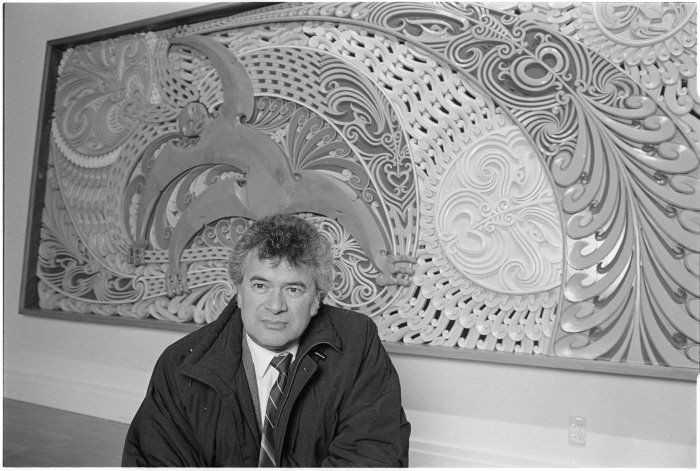
I have chosen Don Binney’s Canterbury Garden Bird (1970) as my favourite painting in the Christchurch collection. This painting was a major work that my husband, Brian Muir, bought for the Robert McDougall Art Gallery when he was director in the 1970s. Don came down to Christchurch in an old Kombi van specifically to paint the work. The painting shows a very solid black bird in the foreground, a fantail, resting on large green leaves. In the background are the Cashmere hills.

Postcard From...
Postcard From...

Postcard From...

Dear Christchurch,

I hope you are doing better and healing, slowly but surely. It has been four years since I moved to Maastricht and life here is pretty good. I am now director of the Master Arts and Heritage at the University of Maastricht in the Netherlands (an exciting international and interdisciplinary programme).

Interview
The Borrowings of Francis Upritchard

The Borrowings of Francis Upritchard

Arriving at the studio and home of Francis Upritchard on a Tuesday morning in East London, you’d hardly know she was opening a solo booth at Frieze Art Fair later that day, launching a fashion collaboration with Peter Pilotto the following day, and juggling studio visits and interviews throughout London’s hectic art-focused week. She’s the picture of tranquillity. The calm doesn’t last long though, as discussions of Christchurch’s rebuild, the Christchurch Art Gallery, our friends and memories are quickly interrupted by an escalating flurry of visitors and family dropping by and couriers collecting objects, packing crates, dropping off documents.

Commentary
Anticipation and Reflection

Anticipation and Reflection

This is a time of considerable anticipation at the Gallery: Bridget Riley’s new work for Christchurch is due for completion in late May 2017. A wall painting, it’s the fourth of five significant works chosen to mark the long years of our closure for seismic strengthening following the Canterbury earthquakes of 2010–11. It has been paid for, sight unseen, by a group of wonderful women donors, with further support for costs associated with its installation secured by auction at our Foundation’s 2016 gala dinner.

Artist Profile
Wayne Youle: Look Mum No Hands

Wayne Youle: Look Mum No Hands

He’s been called a cultural prankster, an agent provocateur and a bullshit artist (that last description came from his dad, but it was bestowed – he’s pretty sure – with love). While we’re at it, add ‘serial pun merchant’ to that list; in art, as in conversation, Wayne Youle can spot a good one-liner a mile off and has never knowingly left an entendre undoubled.

Collection
Tsunami No. 4, Tsunami No. 5, Tsunami No. 6

Kentaro Yamada Tsunami No. 4, Tsunami No. 5, Tsunami No. 6

On 11 March 2011, a massive undersea earthquake struck off the Japanese coast, triggering a catastrophic tsunami and a nuclear power station meltdown. These images of the giant wave running straight towards the coast of Sendai began as Kentaro Yamada’s screenshots of television news broadcasts. He reproduced them using the dyeline printing method for making architectural blueprints. Both paper and ink will slowly fade over time. Recalling Hokusai’s famous woodblock print The Great Wave off Kanagawa (1830–3), they are ephemeral and strangely beautiful; reminders of the vulnerability that haunts and connects us all.

(Te Wheke, 2020)

Collection
Study from Life or One of the Old School, Wiremu Watene Tautari (Ngāti Whātua)

Charles Frederick Goldie Study from Life or One of the Old School, Wiremu Watene Tautari (Ngāti Whātua)

Wiremu Watene Tautari was one of Charles Goldie’s earliest Māori portrait sitters – according to his descendants he met Goldie through the timber shipping business. Tautari was a merchant who ran a substantial kauri trade between the upper Waitematā Harbour and the timber mills of Tāmakimakaurau / Auckland, including one at Commercial Bay operated by the artist’s father, David Goldie, who was also the city’s mayor at the time. As a small boy, Tautari was present in 1841 when Ngāti Whātua gave the Crown the land that would become central Auckland. When almost complete loss of lands followed, he was active throughout his long life in campaigning for the return of Ngāti Whātua rights and land.

(Te Wheke, 2020)

Load more