Kā Kaupapa o te Wā
What’s On
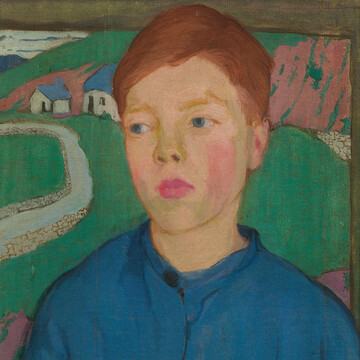
Edith Collier: Early New Zealand Modernist
A rare opportunity to view the work of one of Aotearoa New Zealand’s most adventurous and experimental modernist artists.
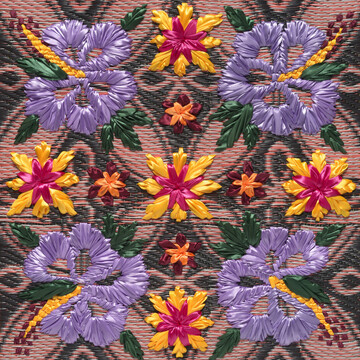
Made in the Pacific: A Collection of Tāoga
A selection of Pacific tāoga from the Canterbury Museum in conversation with contemporary artworks that highlight the continued strength in culture and traditional art forms.
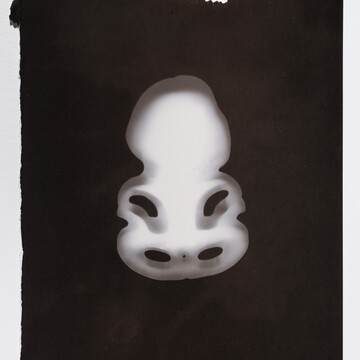
Mark Adams: A Survey | He Kohinga Whakaahua
A comprehensive survey spanning the artist's career.
E tuwhera ana te wharetoi i kā rā e 7 o te wiki, 10am - 5pm
Ka tuwhera ki te 9pm i kā pō Wenerei
Open 7 days, 10am - 5pm
Late night Wednesday until 9pm
Uruka utukore, ahokore utukore
Free entry, free wifi
Exhibition
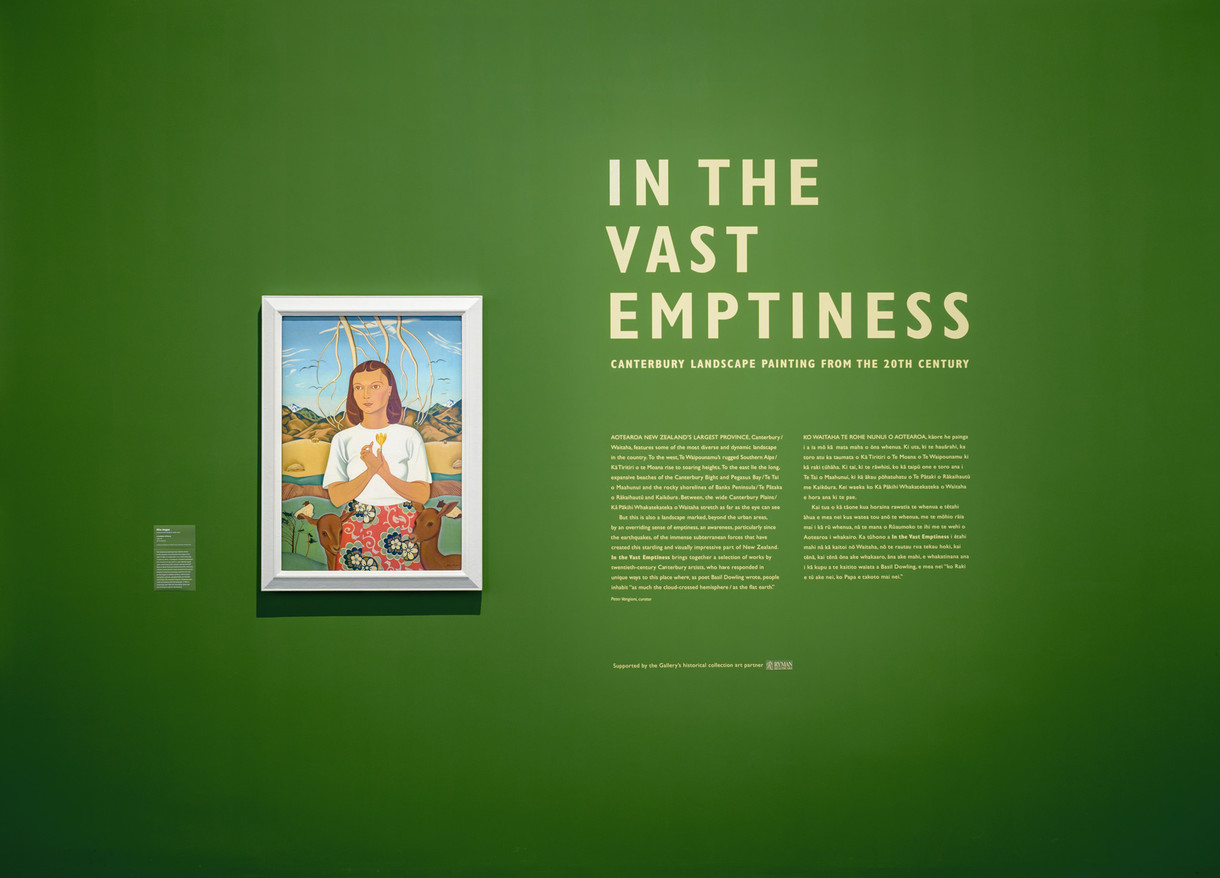
In the Vast Emptiness
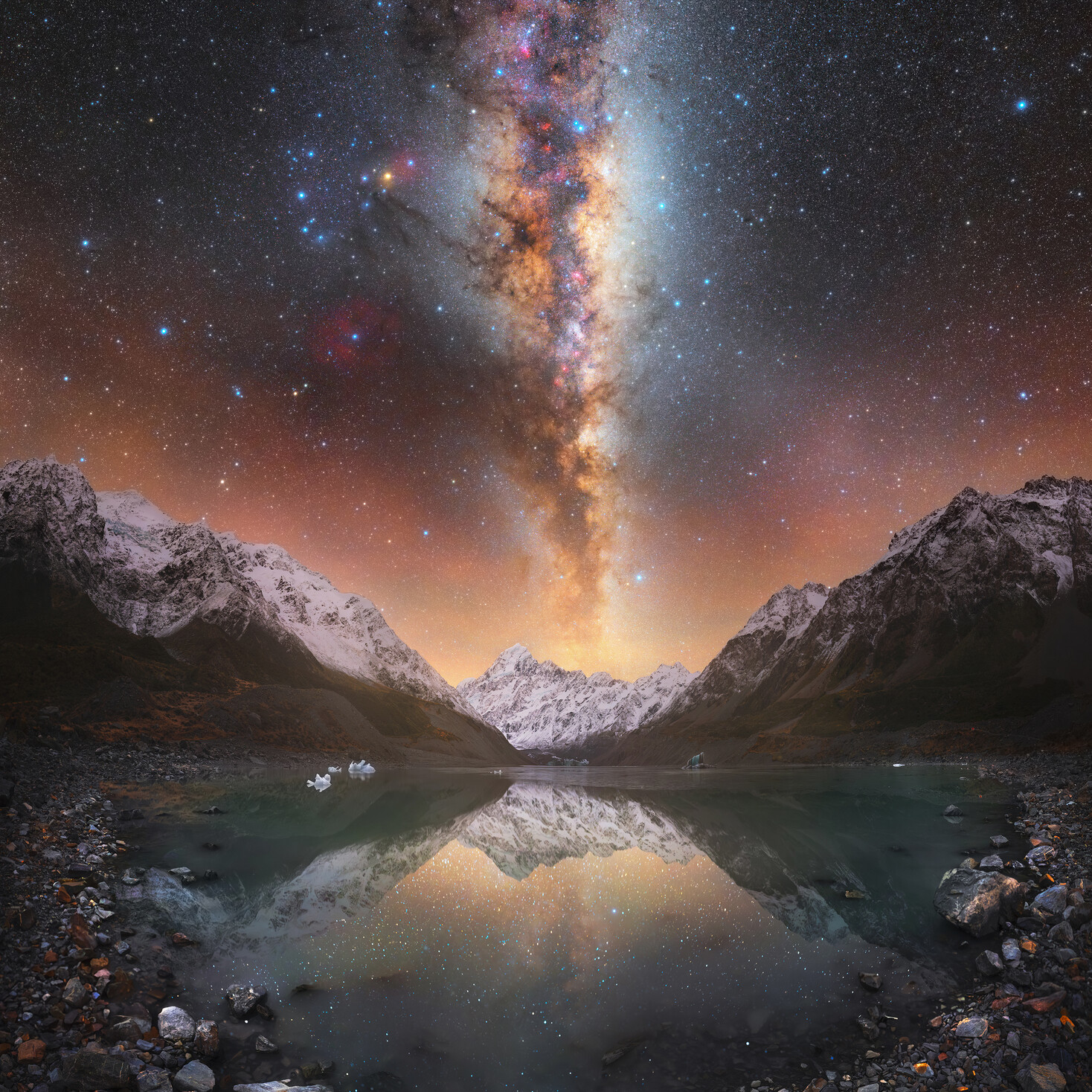
The Canterbury landscape as captured by twentieth century painters.
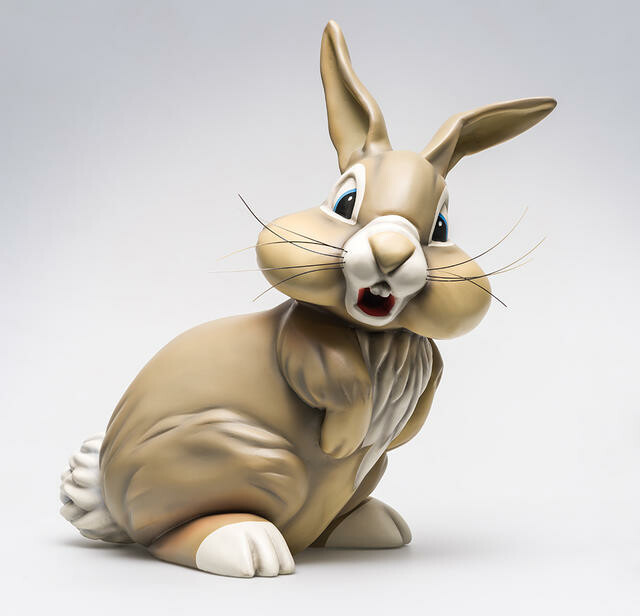
Collection
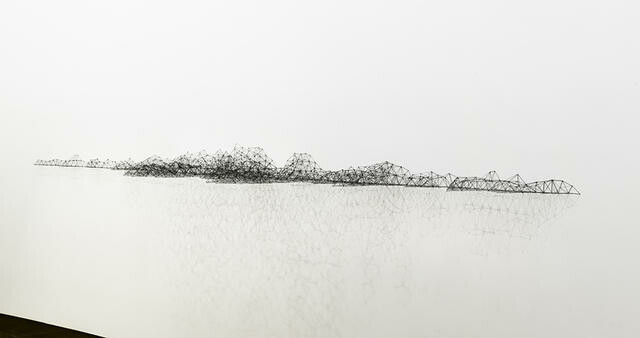
Peter Trevelyan survey #4
Peter Trevelyan’s choice of 0.5mm mechanical pencil leads as a sculptural medium, although unlikely, suggests three-dimensional drawing, thereby connecting his work to drawing’s traditionally defined role. The structure recalls topographical landforms as seen from a distance; the shipboard sketches of late-eighteenth-century European explorers. It also speaks of historical mapping systems; the recording of trigonometric points to describe geology and landforms.
(Above ground, 2015)

Collection
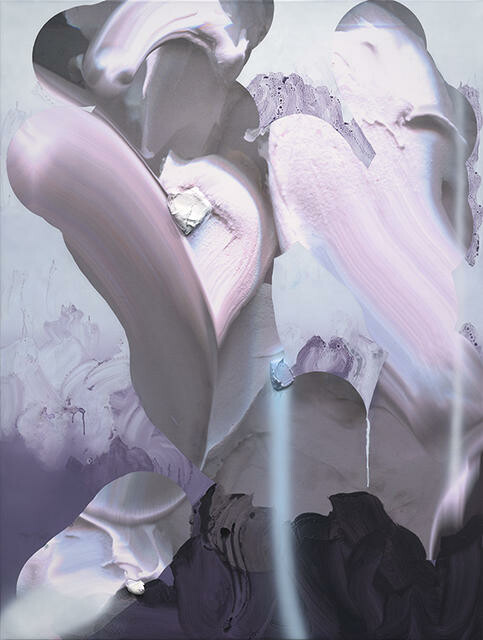
André Hemer New Representation #2
Artists throughout time have adapted content, style and tactics in order to represent changing perception, ambition and experience. André Hemer combines new technologies with old to push painting beyond its usual limits. His digitally- and hand-worked canvases are exploratory and open-ended. He says of them:I like to think that put alongside one another in a museum of the future, these works will reveal themselves more than they do now – because they will be removed from the nowness that seems as persuasive as ever. For this reason perhaps, I am always wary of work that proposes strongly to know itself in the moment. … I paint to record, to investigate. I am proposing New Representation, but I do so while admitting that we may not know exactly what to make of what it is that we are experiencing.
(As Time Unfolds, 5 December 2020 – 7 March 2021)
Collection
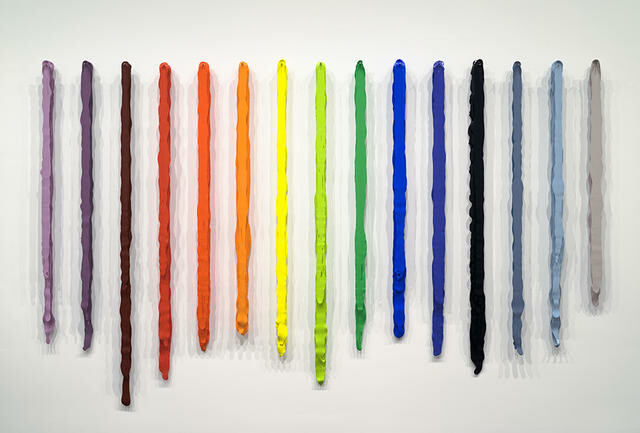
Helen Calder Arrangement for 15 Colours (15/44)
Christchurch-based artist Helen Calder pulls paint out into open space to explore its sculptural properties. She wrote in 2013:
When paint is freed from a flat support, its thickness and rubbery plasticity is evident. The ‘freed’ paint objects have fronts, edges and backs and of course colour all the way through. The physical ‘undoing of painting’ makes it possible to have parts that are interchangeable rather than fixed; open-ended paintings that can continue to evolve through different locations and time.
(Unseen: The Changing Collection, 18 December 2015 – 19 June 2016)