Petrus van der Velden - The Dutch Funeral
Petrus van der Velden - The Dutch Funeral
Elric Hooper recalls a childhood visit to the Robert McDougall Art Gallery
Related reading: McCahon and van der Velden
Exhibition
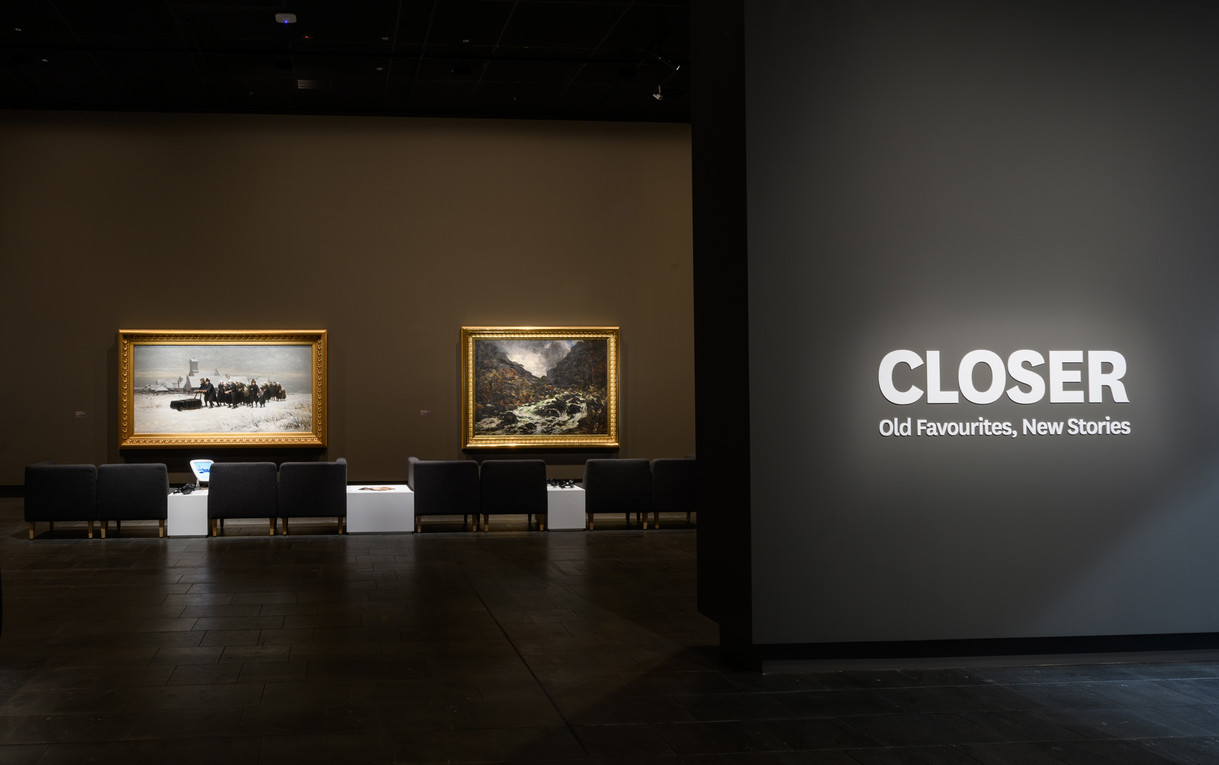
Closer: Old Favourites, New Stories
16 December 2017 – 26 August 2018
New perspectives on ten of the Gallery’s best-loved paintings.
Notes
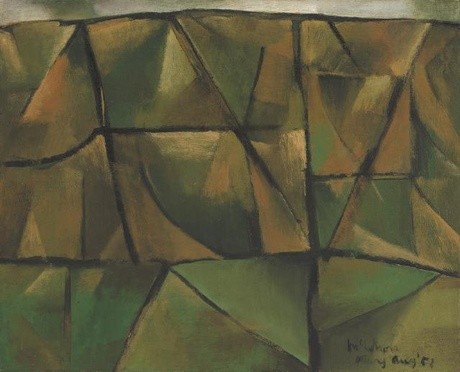
Canterbury Landscape by Colin McCahon
In 2014 we purchased an important landscape work by Colin McCahon. Curator Peter Vangioni speaks about this new addition to Christchurch Art Gallery’s collection.
Article
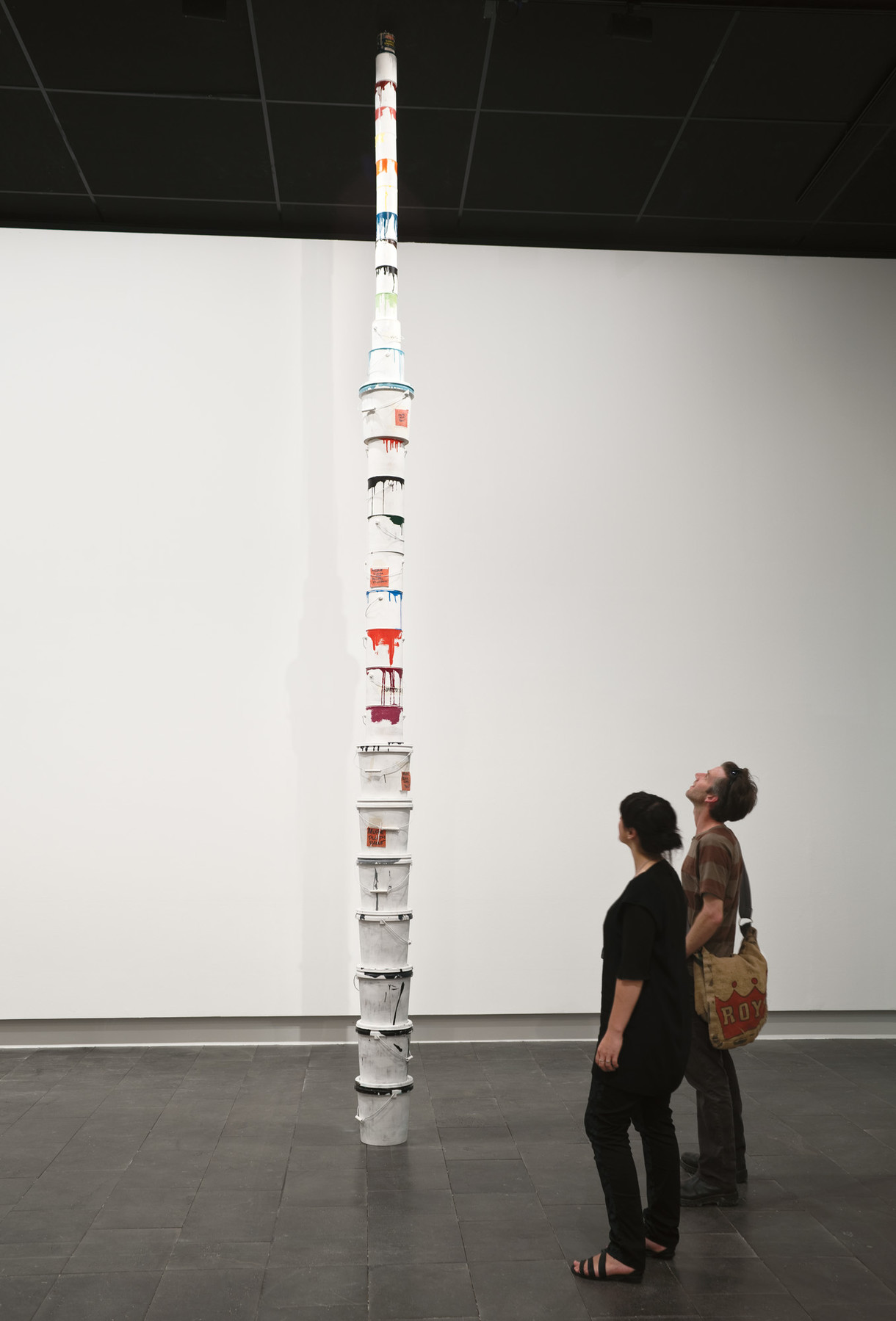
Gazumped
One of the exhibitions brought to a halt by the 22 February earthquake was De-Building, which critic Warren Feeney had described only days earlier as 'Christchurch Art Gallery's finest group show since it opened in 2003'. Seven months on, the show's curator, Justin Paton, reflects on random destruction, strange echoes, critical distance, and the 'gazumping of art by life'.
Interview
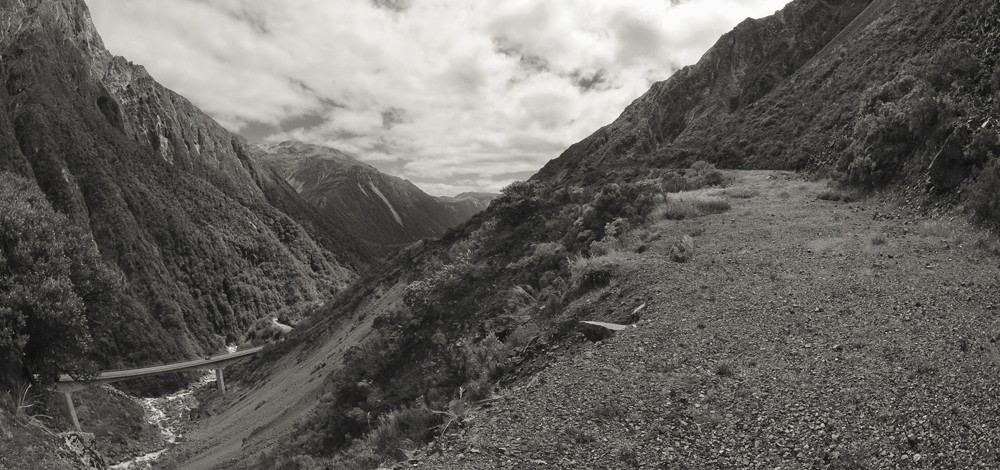
Otira: it's a state of mind
A short road trip to the Otira Gorge was the scene for a conversation between Gallery curator Peter Vangioni and two of the artists included in Van der Velden: Otira, Jason Greig and the Torlesse Supergroup's Roy Montgomery.
Article
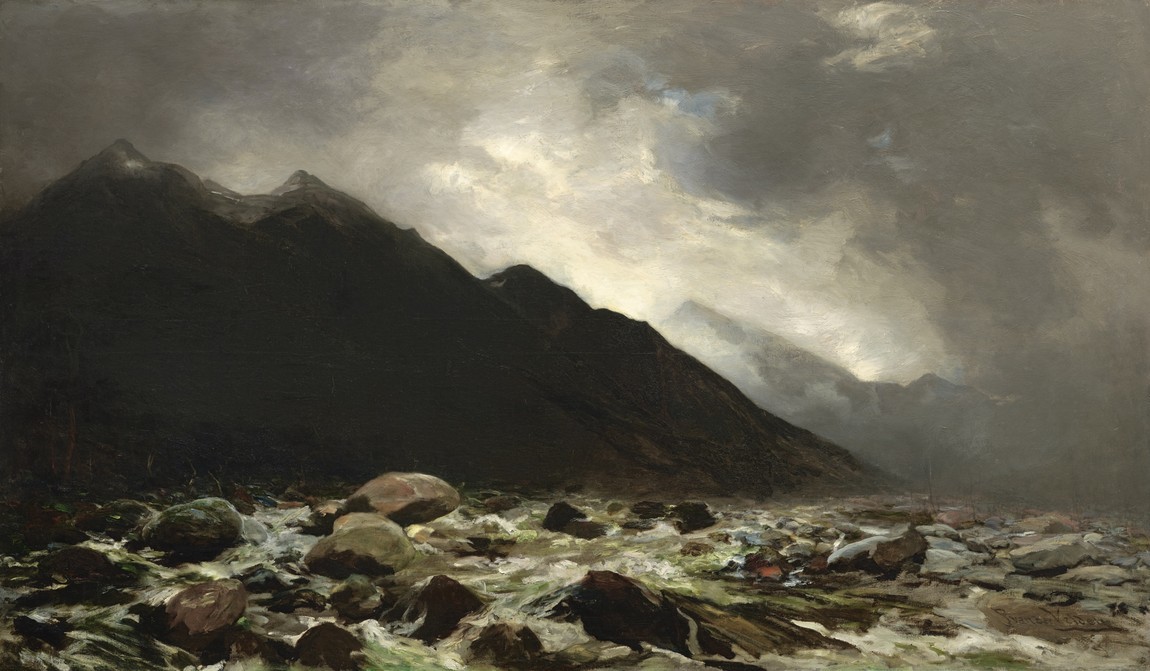
Van der Velden: Otira
A first encounter with a painting by Petrus van der Velden more than twenty years ago was the start of many years of research for Gallery curator Peter Vangioni. Peter is the lead author of the Gallery's new book on van der Velden, and talks here of his fascination with the artist's Otira works.
Collection
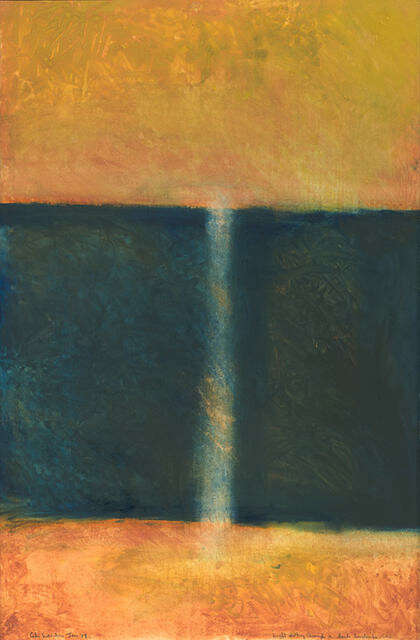
Colin McCahon Light falling through a dark landscape (A)
For the exhibition Untitled #1050 (25 November 2017 – 14 October 2018) this work was displayed with the following label:
“As a painter I may often be more worried about you than you are about me and if I wasn’t concerned I’d not be doing my work properly as a painter. Painting can be a potent way of talking.
“Do you believe in the sunrise?
“My painting year happens first in late winter and early spring. I paint with the season and paint best during the long hot summers. I prefer to paint at night or more especially in the late summer afternoons when, as the light fades, tonal relationships become terrifyingly clear.
“At night I paint under a very large incandescent light bulb. I’ve been doing this for a long time. I am only now, and slowly, becoming able to paint in the morning. After a lifetime of working – farming, factories, gardening, teaching, the years at the Auckland City Art Gallery – I find it hard to paint in the world’s usual work-time. It can be difficult to accept that painting too is work.”
—Colin McCahon, 1972
Collection
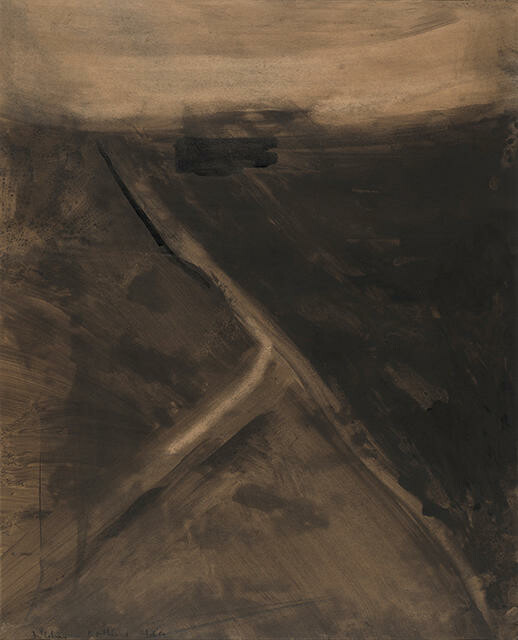
Colin McCahon Northland
In 1958, Colin McCahon spent several months in America, visiting numerous art museums to see historical and contemporary art from the United States and Europe. Returning to a wintry Aotearoa New Zealand, he struggled to readjust. Eventually he found solace and inspiration in memories of a place very close to his heart – the wild, wind-sculpted landscape of Aotearoa’s Far North. Oil paintings were followed by a series of ink wash drawings, painted on paper spread out over the floor like a continuous, unfolding frieze. They are dark and lonely images, full of longing and a sense of return. “It’s a painful love, loving a land,” McCahon wrote. “It takes a long time.”
(Absence, May 2023)
Collection
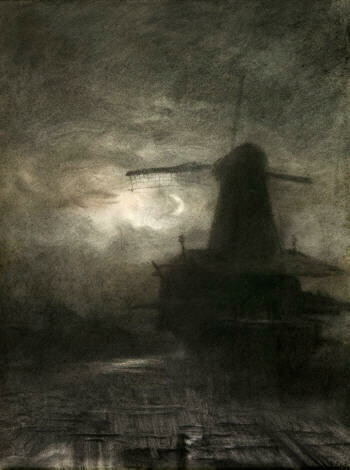
Petrus van der Velden Windmill by Moonlight
“The greatest of all lessons is to learn to see. Many are ‘colour blind’ till they have their eyes opened to nature’s lessons, which she is always trying to teach us. But we must always tell what nature says to us, simply and directly without pretence or falsehood. Tell the Truth. Christ was the greatest artist. His words and pictures are a simple telling of nature's lessons – they are always the Truth. ‘We reason with colours. Colours are dead’, but by telling what nature teaches us the dead colours enable us to express the wonders and beauties of the Creator’s work.”
—Petrus van der Velden
(McCahon / Van der Velden, 18 December 2015 – 7 August 2016)
Collection
![Burial in the Winter on the Island of Marken [The Dutch Funeral]](/media/cache/ba/58/ba582fbead83cae6d3dc89f6402ffa81.jpg)
Petrus van der Velden Burial in the Winter on the Island of Marken [The Dutch Funeral]
Research for the exhibition Closer (16 December 2017 – 19 August 2018) resulted in the restoration of this work's original title. In Dutch 'Begrafenis in den winter op het eiland Marken' and in English 'Burial in the winter on the island of Marken'.
Petrus van der Velden’s funeral procession moves slowly across the snow-covered landscape of Marken. The black-clad mourners and casket form a dark, concentrated mass against an expansive field of grey and white, while the village behind merges with the winter sky. The scene is solemn, yet van der Velden’s care in observation gives the mourners an extraordinary immediacy, making their progress across the frozen ground almost tangible. When the painting was exhibited in The Hague in 1875, one reviewer praised van der Velden’s “truly brilliant debut” and described the scene as “deeply sombre. It is winter on the island of Marken. Nature has donned her shroud.” Another noted the contrast between “the black figures of the funeral procession and the expansive snowfield”, concluding that the artist must have witnessed such an event “in order to render it, so movingly felt, with such tragedy.”
Whose funeral?
For many years, the story behind Petrus van der Velden’s Burial in the Winter on the Island of Marken was unknown. Recent research by Marken historian Jan Schild has identified the man being laid to rest as Cornelis Kaars, a fisherman who died on 6 December 1871. Van der Velden appears to have begun developing the subject soon afterwards, returning to it over several years before completing the large painting.
Kaars’s widow, Jannetje, can be seen behind the sled and casket. She was heavily pregnant when her husband died and gave birth to a son eight days after the funeral; the child survived for less than a month.
Knowing the circumstances behind the funeral changes the procession of anonymous figures into a particular community bearing a shared loss. Van der Velden’s extensive studies of Marken and its people reveal an artist deeply engaged with the lives of those around him, transforming a tragic local event into one of his most ambitious and memorable works.
(Timeless: Treasures from the Historical Collection 19 September 2026 – 30 May 2027)
Collection
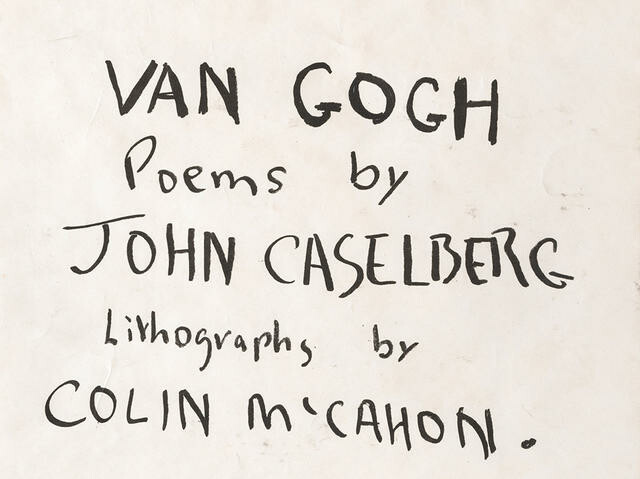
Colin McCahon Van Gogh: Poems by John Caselberg
Colin McCahon produced his first lithograph in 1954, and in 1957 completed two suites of lithographs, including Van Gogh – poems by John Caselberg. He employed a commercial lithographer for these works with mixed results, likely due to the fact that he had little say in quality control with the printer. Nevertheless, it was ultimately a successful suite. Colin incorporated John Caselberg’s poem sequence, ‘Van Gogh’, into his drawings, writing the poem out across several sheets in his iconic handwriting, which he also usedin his paintings. Colin also worked with other print mediums, including a small potato print also in this exhibition, but it is his lithographs from the 1950s that were his most successful.
Ink on Paper: Aotearoa New Zealand Printmakers of the Modern Era, 11 February – 28 May 2023
Collection
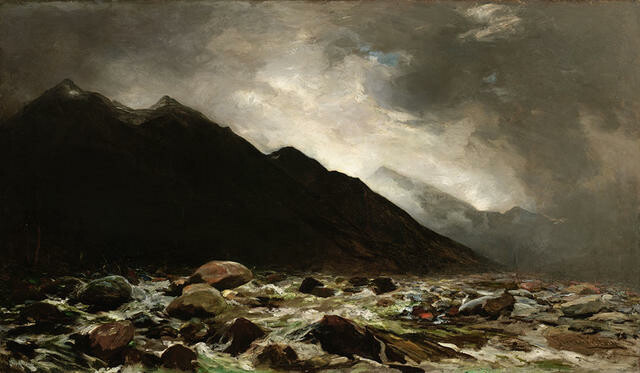
Petrus van der Velden Mount Rolleston and the Otira River
Talking about his first visit to Ōtira in 1890, Rotterdam-born artist Petrus van der Velden later recalled, “For the first three days I did nothing at all but just looked, it took my breath away.” A highly skilled professional artist with substantial exhibiting experience in the Netherlands, van der Velden prioritised capturing or expressing emotion in his art over recording the physical features of the landscape. The awe-inspiring setting aided him in this pursuit – especially during stormy weather – and drew him back again and again.
He Kapuka Oneone – A Handful of Soil (from August 2024)