Leuvehaven in about 1895
Leuvehaven in about 1895
The Leuvehaven, Rotterdam in about 1895. Image kindly supplied by the Gemeentearchief Rotterdam.
Compare this photograph with Petrus van der Velden's 1867 painting of the same scene.
Related reading: McCahon and van der Velden
Collection
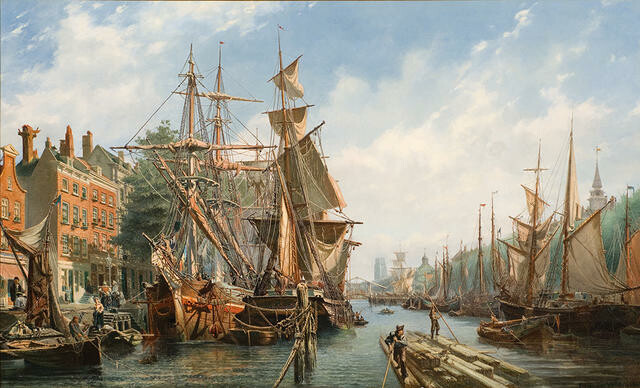
Petrus van der Velden The Leuvehaven, Rotterdam
Petrus van der Velden turned to painting full-time in 1867 after six years as a struggling self-employed lithographer. “The first year was the hardest, and at the end I had done a picture; the harbour and the ships”, he later recalled. Exhibited in Rotterdam and then the Antwerp Salon, it sold to “an English gentleman … for 300 guilders [£25]. Quite a fortune!”
(Out of Time, 23 September 2023 – 28 April 2024)
Notes
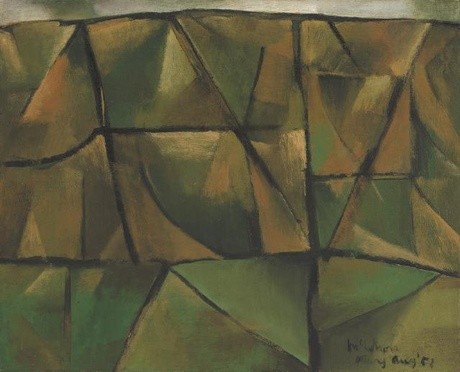
Canterbury Landscape by Colin McCahon
In 2014 we purchased an important landscape work by Colin McCahon. Curator Peter Vangioni speaks about this new addition to Christchurch Art Gallery’s collection.
Article
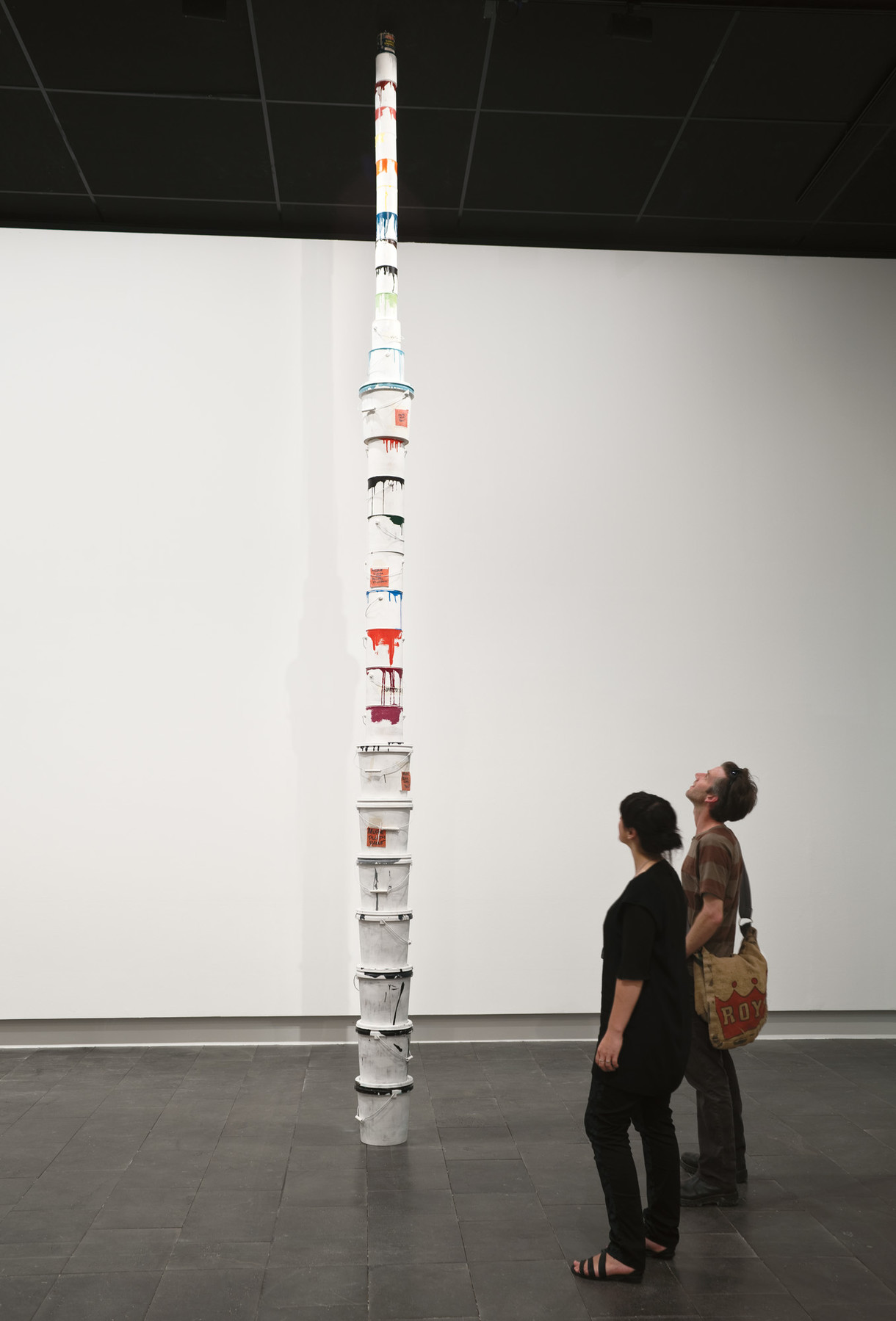
Gazumped
One of the exhibitions brought to a halt by the 22 February earthquake was De-Building, which critic Warren Feeney had described only days earlier as 'Christchurch Art Gallery's finest group show since it opened in 2003'. Seven months on, the show's curator, Justin Paton, reflects on random destruction, strange echoes, critical distance, and the 'gazumping of art by life'.
Interview
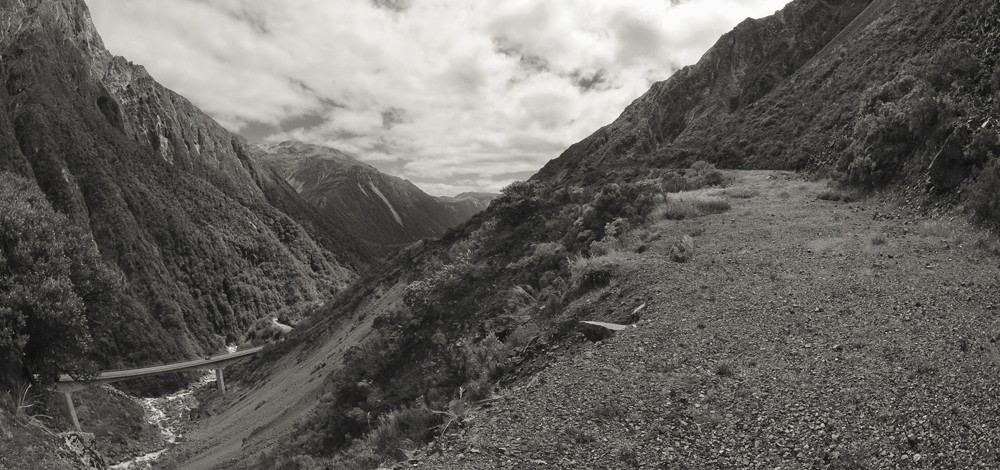
Otira: it's a state of mind
A short road trip to the Otira Gorge was the scene for a conversation between Gallery curator Peter Vangioni and two of the artists included in Van der Velden: Otira, Jason Greig and the Torlesse Supergroup's Roy Montgomery.
Article
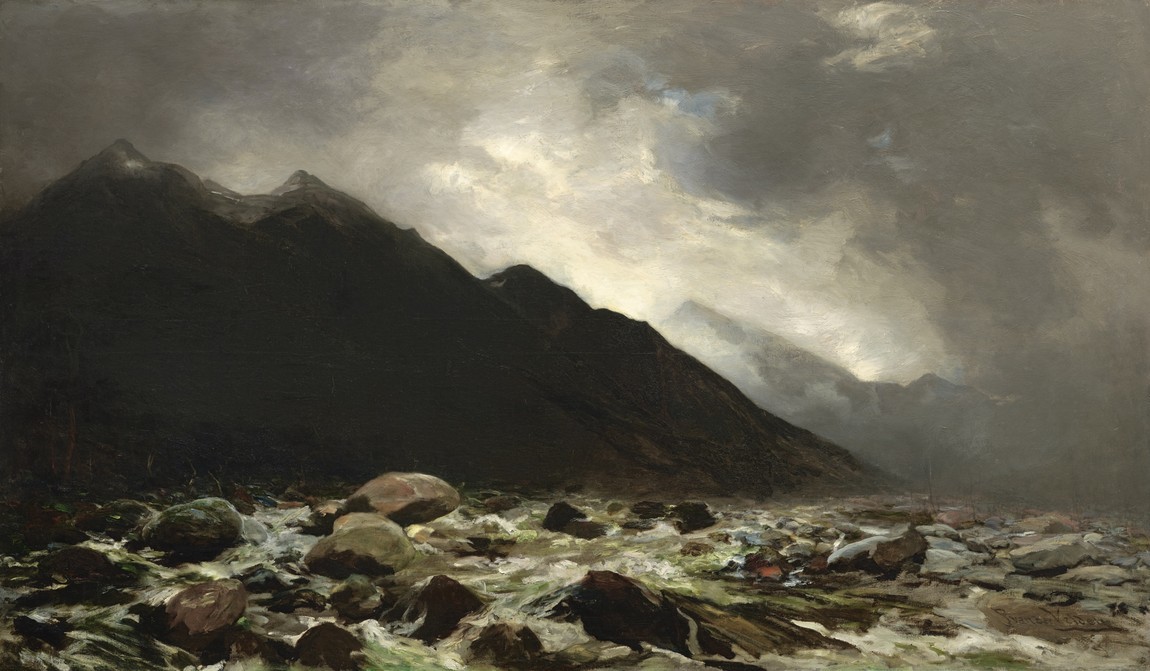
Van der Velden: Otira
A first encounter with a painting by Petrus van der Velden more than twenty years ago was the start of many years of research for Gallery curator Peter Vangioni. Peter is the lead author of the Gallery's new book on van der Velden, and talks here of his fascination with the artist's Otira works.
Collection
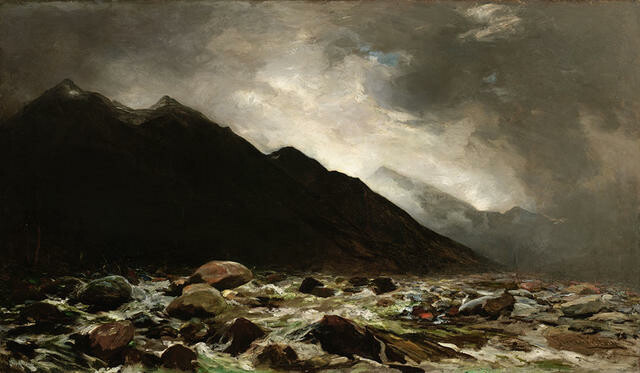
Petrus van der Velden Mount Rolleston and the Otira River
Talking about his first visit to Ōtira in 1890, Rotterdam-born artist Petrus van der Velden later recalled, “For the first three days I did nothing at all but just looked, it took my breath away.” A highly skilled professional artist with substantial exhibiting experience in the Netherlands, van der Velden prioritised capturing or expressing emotion in his art over recording the physical features of the landscape. The awe-inspiring setting aided him in this pursuit – especially during stormy weather – and drew him back again and again.
He Kapuka Oneone – A Handful of Soil (from August 2024)
Collection
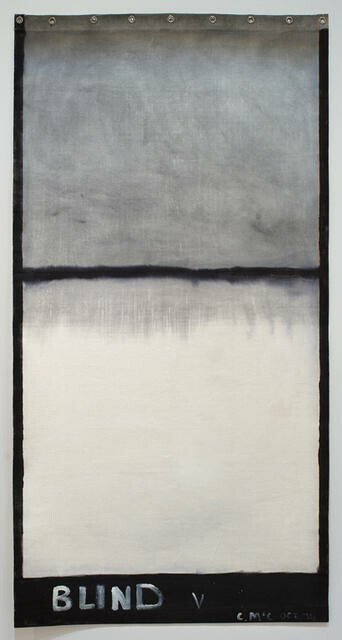
Colin McCahon Blind V
The word ‘blind’ refers to a screen that cuts out light, but Colin McCahon also uses it to refer to an absence of vision. Questions of faith were important to McCahon and he often used references to blindness to suggest the inability to see the real essence and value of things. McCahon’s style was highly personal and distinctive. Blind V is part of a series of five works painted onto window blinds. The abstract forms have the feel of a beach and sky and it has been suggested that the ‘blindness’ which McCahon refers to was the inability of New Zealanders to really see and appreciate their own unique environment.
McCahon is regarded by many as New Zealand’s greatest contemporary artist. Born in Timaru, he studied art in Dunedin. He lived in Christchurch for a time, became keeper and assistant director at Auckland Art Gallery, then lecturer in painting at the Elam School of Fine Arts, University of Auckland, before taking up painting full time in 1970.
Collection
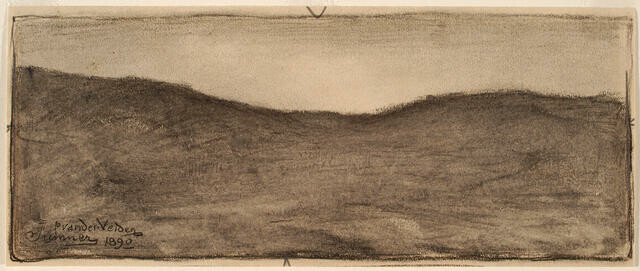
Petrus van der Velden Sumner
“Colour is light, light is love and love is God and therefore on Sundays instead of going to church I teach my children drawing after nature. I have come to the conclusion that painting or drawing after nature, instead of being a luxury is the most necessary for the education of man. […] The aim of our existence is nothing else than to study nature and with so doing to understand more and more how grand and pure nature is and gives evidence of so much love.”
—Petrus van der Velden
(McCahon / Van der Velden, 18 December 2015 – 7 August 2016)
Collection
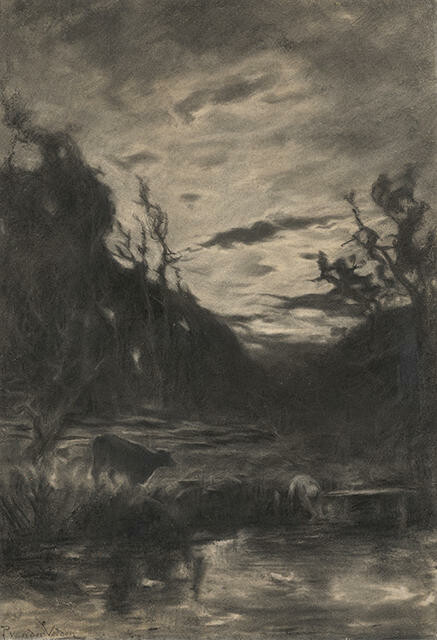
Petrus van der Velden Nor'western Sky
“‘Colour is light’ and there is no darkness at all – there is light or less light. In each part, even the darkest, there is some light and the difficulty is to get the different kinds of light showing in even quite small parts. There are no hard lines in nature – the light shines in and round everything and breaks all the hardness by modifying and diffusing the apparently sharp edges.” —Petrus van der Velden
(McCahon / Van der Velden, 18 December 2015 – 7 August 2016)
Collection
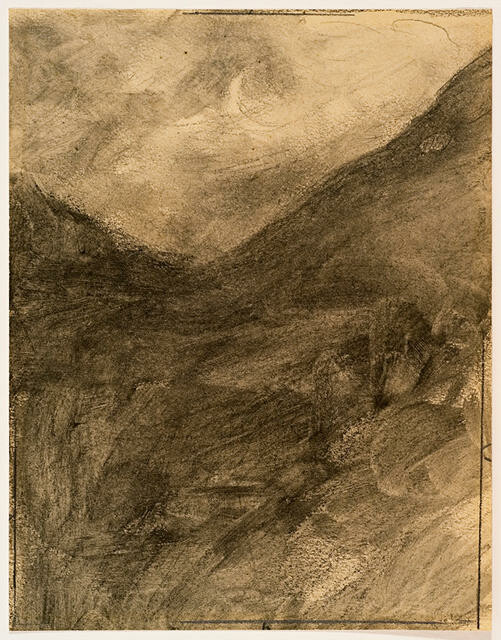
Petrus van der Velden Atmospheric Study, Sumner
Petrus van der Velden valued the medium of drawing as highly as painting and was an extremely talented draughtsman. Spontaneously drawn outdoors directly before the subject, this small study shows Van der Velden’s interest in depicting dramatic, stormy atmospheric conditions with strong contrasts of light and dark. In the early 1890s, van der Velden and his family settled in Sumner, Christchurch where they stayed with the Van Asch family. Van der Velden immediately went about sketching in the region, and by the end of the year he had completed several major paintings based on Sumner scenes. Born in Rotterdam, van der Velden established himself as a painter, particularly of marine subjects, before he and his wife emigrated from Holland in 1890. He struggled to make a living in Christchurch, however, and moved to Sydney in 1898. He returned to settle in Wellington in 1904 and died in Auckland.
Collection
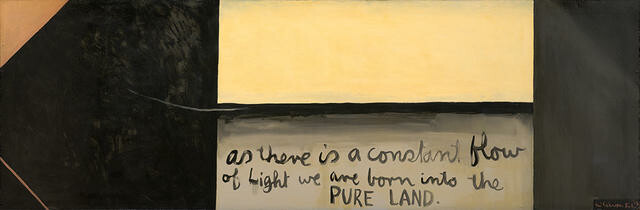
Colin McCahon As there is a constant flow of light we are born into the pure land
‘As there is a constant flow of light we are born into the pure land.’ Colin McCahon quoted this text often on works between the mid-1960s and early 1970s: he took it from the writings of a twelfth-century Japanese Buddhist monk, Shinran, who was the founder of a tradition known as Pure Land Buddhism. McCahon had long been interested in light as a metaphor both for faith and enlightenment, and had begun a related series of dramatic semi-abstract waterfall paintings in 1964, in which a curve of white light cleaved through darkness. Here the landscape element has been reduced to a simple horizon, a dividing line between sky and sea, or sky and land, at the very edge of vision. (March 2018)