Lisa Reihana - Aratohu
Lisa Reihana - Aratohu
Aratohu is a two-channel audiovisual work by Lisa Reihana, commissioned and acquired by Christchurch Art Gallery Te Puna o Waiwhetū Foundation in 2025. Two-channel works enable different scenes to play side-by-side, or for the shots to merge into one. The film is 11 minutes and five seconds long. It features drug use, drink spiking and self harm, and audience discretion is advised.
The film begins in a night club, where people are theatrically dressed. The protagonist is Wairangi, a tall woman wearing baggy black pants, a black and white sparkly one-shoulder top and a metallic earring dangling from below her high ponytail. She smiles and dances, having a good time.
A man orders drinks at a bar. The bartender hands him two blue drinks and taps one, implying that that drink is spiked. The man finds Wairangi, giving her the spiked drink. They dance together and he brings her two more rounds, getting physically closer to her each time. A figure with a human face and tuatara-like body – the taniwha, Aratohu, appears in the club.
The scene blurs and spins, turning blue like the drinks. Wairangi stops smiling. The man dancing with her is insistent. She sways unsteadily, pushing him away and leaves the club through a stairwell. A woman dressed in an elaborate butterfly-esque outfit asks, “you okay, honey bunny?” Wairangi cannot answer, gives a shaky thumbs up and stumbles downstairs. The woman sighs, “be careful baby”.
Outside, a man in his white, two-door classic car watches as Wairangi rummages through empty pockets. Smiling maliciously, he says, “Get in”. The man, in a studded jacket, with a keyhole tattoo on his cheek slides something to Wairangi in the passenger seat. Holding it to her nose, it becomes a pulsing light, and she breathes it in. The substance takes effect, and she starts to lose consciousness. The club flashes in her mind. The car starts. The number plate reads ‘STEALR’.
The taniwha, Aratohu, follows Wairangi downstairs, and out of the club. Wairangi feels the wind outside the car. Her hand falls behind her and her eyes close. The driver touches her forehead. Her eyes open briefly, but she is unconscious. He speeds up.
The driver checks his mirror, and Aratohu appears.
Flashes of Wairangi’s night play, overlaid with a bird’s-eye view of the car travelling into woods. The bright light in her hand flashes over a cold tree-lined hillside. Wairangi is unconscious, alone in the car in the dark. She wakes, slams on the car horn twice before her arm droops beside her. She looks up and sees a version of herself walking backwards with a shopping trolley that has a purple light glowing in it; a foreboding hallucination.
Walking through the dark bush Wairangi is surrounded by overhanging trees. Simultaneously, a blurry Aratohu climbs over mossy rocks with strong arms.
The kāhere (forest) glows silver. Wairangi's eyes widen when Aratohu appears in a black and white diamond patterned cloak that could be a net or scales. In a gravelly voice, Aratohu says, “Tēnā koe, Wairangi”. She walks forward and Aratohu materialises in front of her to hoki, pressing noses and sharing a breath in greeting. Wairangi moves into a pūkana – her eyes wide, one fist above her head. Aratohu says, “Kia tūpato. Be careful Wairangi”.
Her pūkana fades quickly. Aratohu’s face becomes each person who put Wairangi in danger, before settling on her own reflection. Facing each other, Aratohu pulls out a white feather. Placing it on the ground, he asks “do you know where you are?”
Wairangi is wary and keeps her eyes on Aratohu while reaching for the feather. She looks down to pick it up. When she lifts it to her face her hood is up and the feather is a used cigarette. There is no taniwha. The light changes as she tries and fails to light the cigarette.
An inebriated Wairangi is now in a city alleyway. People sleep under plastic sheets. She rifles through someone’s pockets, finds a lighter and throws it away when it doesn’t work.
The screens blur and through the eyes of the taniwha in the alley, people clutch their heads, rock a toy baby back and forth, lean over a bong, and warm their hands over a fire. Wairangi blinks and recalls being driven, as if coming to consciousness. She coughs. The taniwha’s presence finds her. Aratohu says “kia tūpato” again, while on the left channel Wairangi faces a warm, bright light, and, removing her hood, moves towards it. On the right she is suddenly awake to what has occurred.
The night club flashes over both versions of Wairangi. Back in the club the strobing lights, dance music and theatrical attendees are in full swing, just like the start of the evening. The audience is left to question if this is a second chance for Wairangi, or a cycle.
Related
Exhibition
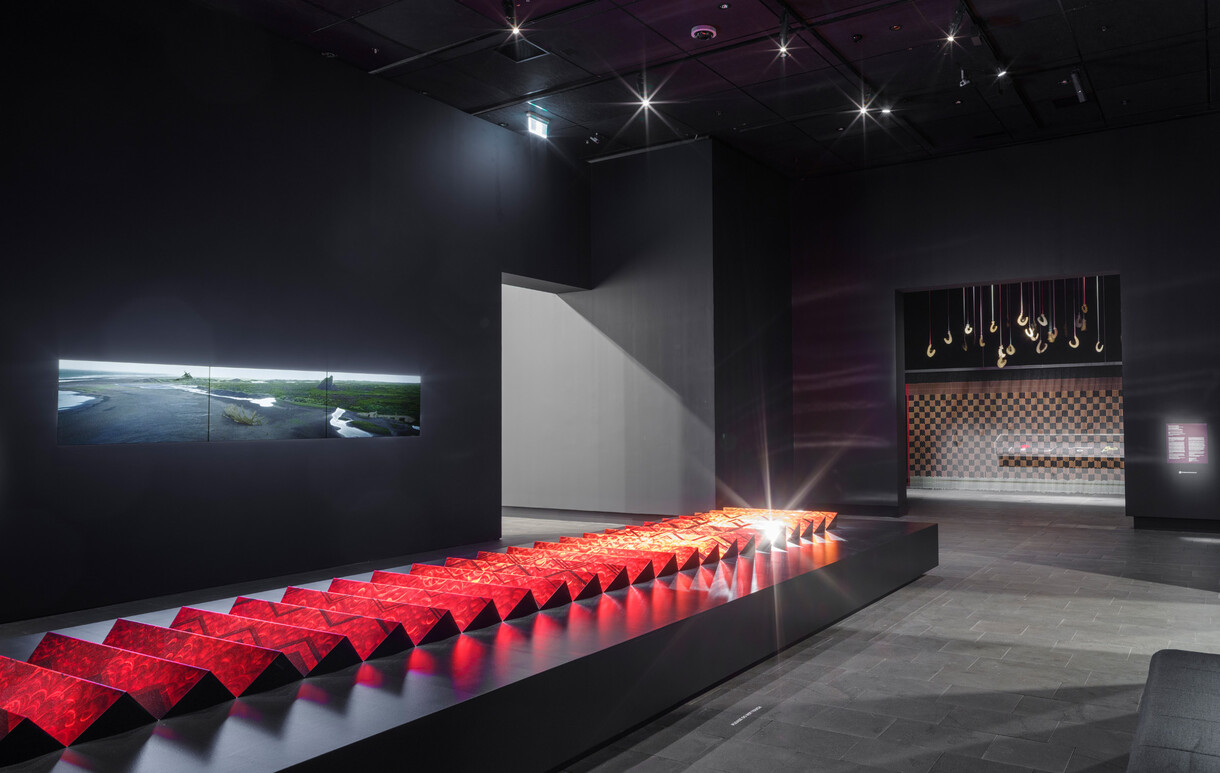
Whāia te Taniwha
20 September 2025 – 15 February 2026
Māori artists consider the enduring relevance of taniwha in Aotearoa.
Article
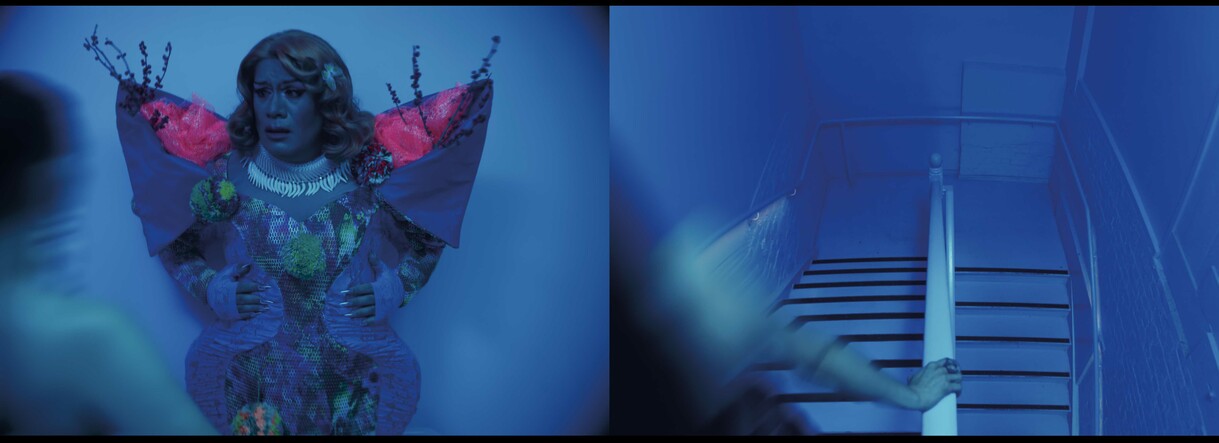
New Acquisition
Aratohu is an extraordinary new film by artist Lisa Reihana (Ngāpuhi, Ngāti Hine, Ngāi Tūteauru, Ngāi Tūpoto). A surrealist fable told over the course of a single evening, Aratohu explores destructive influences and the potential for healing. For lead character Wairangi, a fun night out turns into a journey of self-discovery, as reality and hallucination blur and overlap. Following an encounter with Stealer, a sinister figure representing risk and temptation, Wairangi meets Aratohu, an ancestral being offering an alternative pathway, underpinned by renewed strength in her Māori identity.