
Kā Kaupapa o te Wā
What’s On
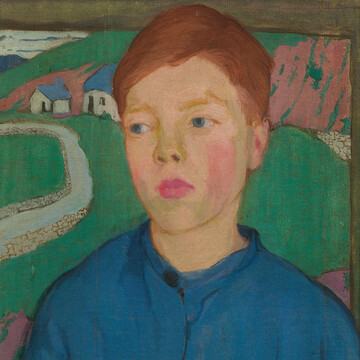
Edith Collier: Early New Zealand Modernist
A rare opportunity to view the work of one of Aotearoa New Zealand’s most adventurous and experimental modernist artists.
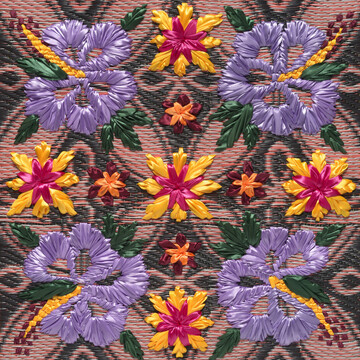
Made in the Pacific: A Collection of Tāoga
A selection of Pacific tāoga from the Canterbury Museum in conversation with contemporary artworks that highlight the continued strength in culture and traditional art forms.
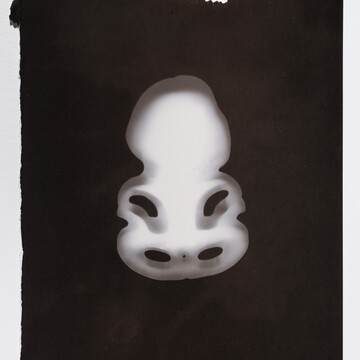
Mark Adams: A Survey | He Kohinga Whakaahua
A comprehensive survey spanning the artist's career.
E tuwhera ana te wharetoi i kā rā e 7 o te wiki, 10am - 5pm
Ka tuwhera ki te 9pm i kā pō Wenerei
Open 7 days, 10am - 5pm
Late night Wednesday until 9pm
Uruka utukore, ahokore utukore
Free entry, free wifi
Collection
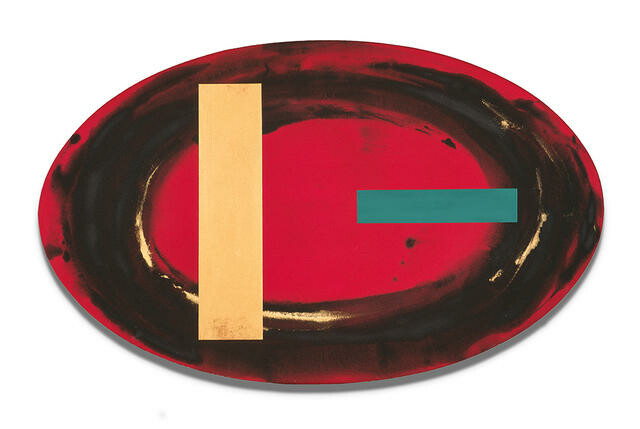
Gretchen Albrecht Emperor 2
This oval painting suggests space in which emotion is contained, a signature format for this abstract artist. Radiating colour emits an aura of intensity and physical energy, countered by rectangular shapes evoking order and balance. With its colour field of rich tones and underlying theme of emotion, this work reaches out to the viewer; the colour, form, gesture and idea all mixing to create a unified expression.
Gretchen Albrecht graduated from the Elam School of Fine Arts, University of Auckland in 1963. In 1981 she was awarded the Frances Hodgkins Fellowship at the University of Otago. Albrecht has exhibited in New Zealand and internationally for more than 35 years. Her recent work has appeared in exhibitions in both Europe and the United States, including the exhibition Decades at the Robert Steele Gallery in New York. A retrospective exhibition of oval and hemisphere paintings, accompanied by recent works on paper and editions, was shown at the Dunedin Public Art Gallery and City Gallery Wellington in 2005.
Article
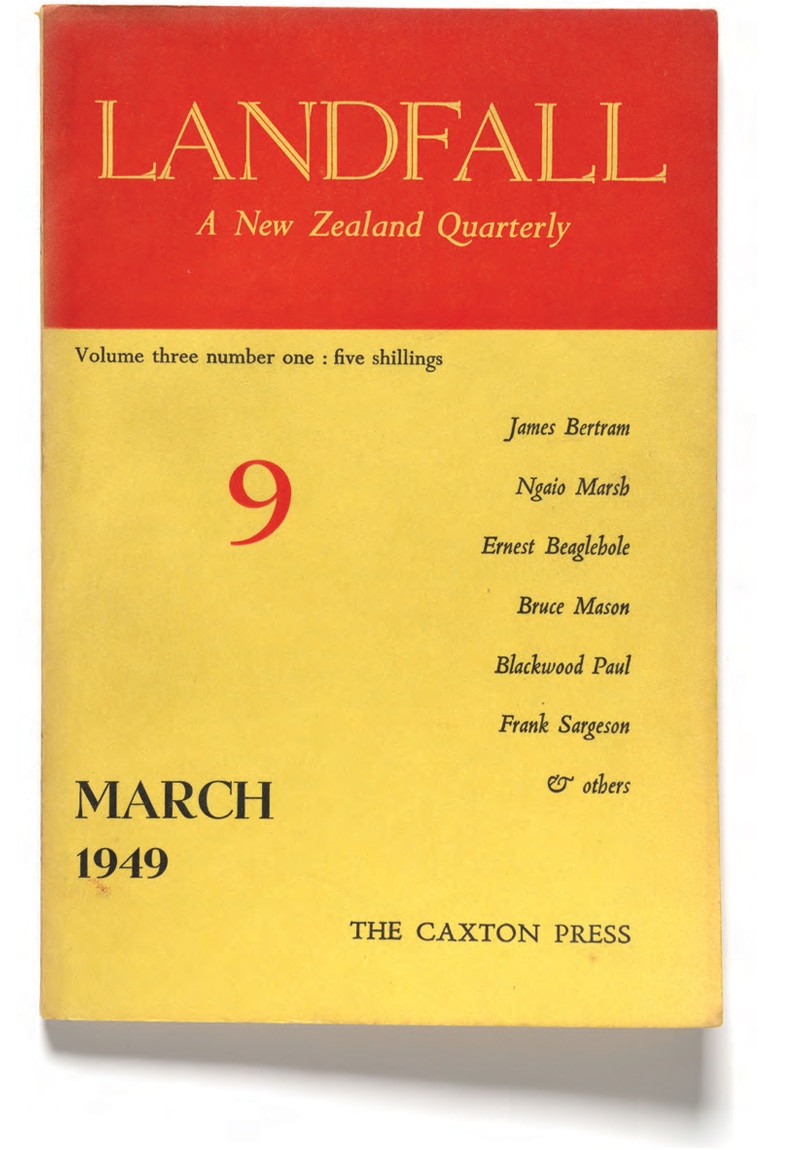
Tomorrow, Book, Caxton Press, Landfall
In the decades before and after the Second World War, Christchurch experienced a remarkable artistic efflorescence that encompassed the visual arts, literature, music, theatre and the publishing of books and journals. And the phenomenon was noticed beyond these islands. For instance, in his 1955 autobiography, English publisher and editor of Penguin New Writing and London Magazine, John Lehmann, wrote (with a measure of exaggeration, perhaps) that of all the world’s cities only Christchurch at that time acted ‘as a focus of creative literature of more than local significance’.
Article

The book as alternative economy and alternative space
In Printed Matter's 1981 mail-order catalogue, artist Edit deAk enthusiastically described the 'many hands at work in the process of making and marketing the book'. Turning the spotlight on individuals and groups involved in the production, distribution and sale of books by artists, deAk likened independent art publishing to activities 'like filmmaking or rock 'n' roll music.' While such comparisons with filmmaking have been relatively scarce over the past few decades, artists, publishers, designers and critics have continued to draw parallels between art publishing and independent music.
Article
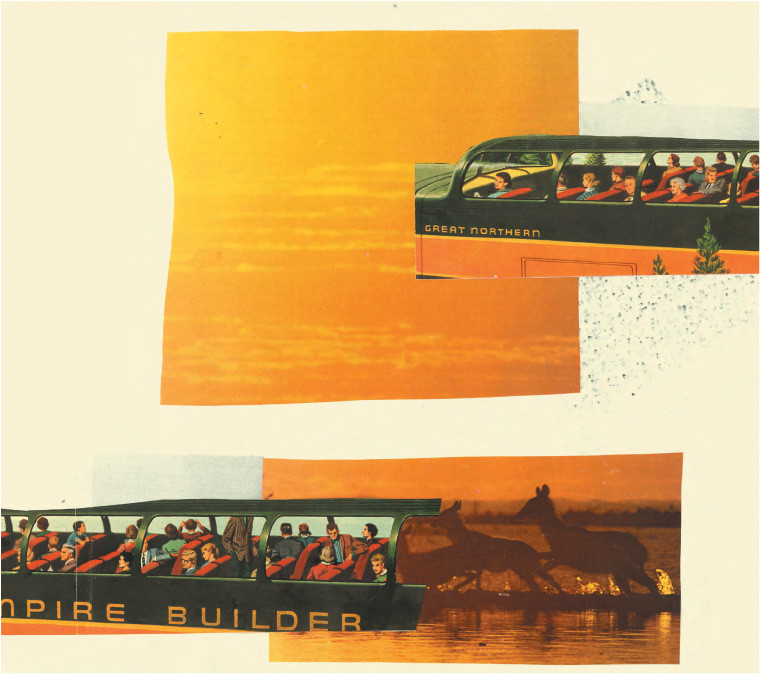
An invitation to participate
You might be well aware of fanzines as a form of analogue self-publishing in and around your own arts community. Or they might be somewhat peripheral to the particularity of your engagement with the arts.
For the uninitiated, the word fanzine is often shortened to zine, and is pronounced 'zeen', as in 'magazine'. This abbreviation doesn't merely signal a growing ubiquity, or an economy of syllables for those (like myself) who say or write the word a lot, it also speaks to the shift away from fandom to a growing eclecticism – bringing the lie to anyone attempting to describe zines as a genre.
Commentary

Radical freedoms
The recent furore around Eleanor Catton's comments in the wake of the NZ Post Book Awards, and the tone of the subsequent debate that ensued, has prompted us to think again about the role of the public intellectual in New Zealand. In our role as visual archivists of this city, and this country, critical reflections on the contemporary are something we frequently expect of artists. But to what degree do artists exercise their individual freedom to radically question community values? And who claims this role for artists and in what situations?
My Favourite
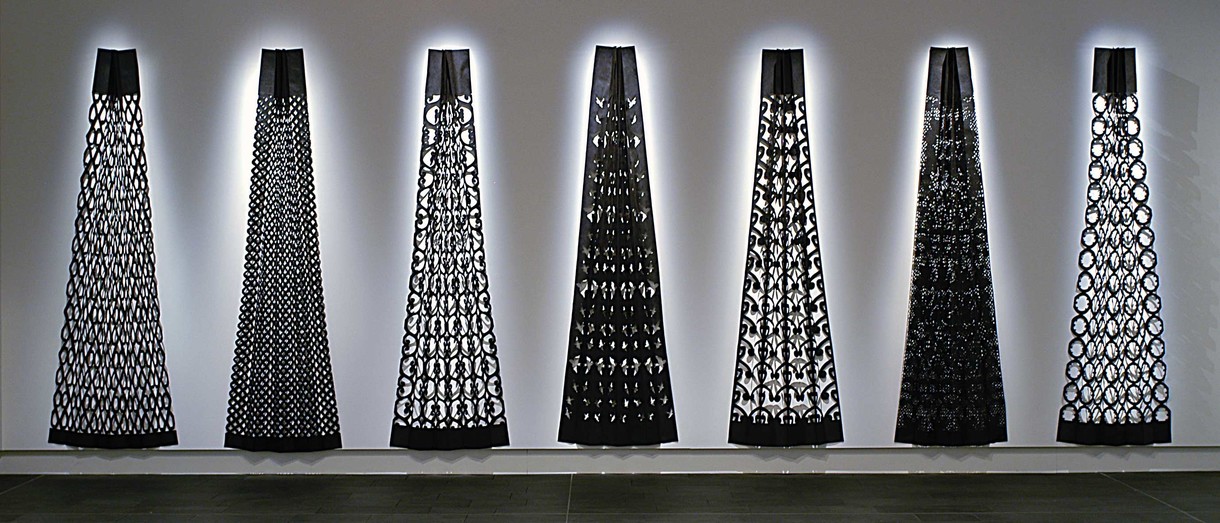
Lonnie Hutchinson's sista7
I am writing about a favourite piece from the Gallery’s collection in autumn 2015, when that collection is in storage and the Gallery is closed at least until Christmas, so I’m prompting memory by consulting the online catalogue. It’s brilliant: hundreds of images, 90 percent of the entire 7,000 collection, but to be honest, it feels a bit odd.
Collection
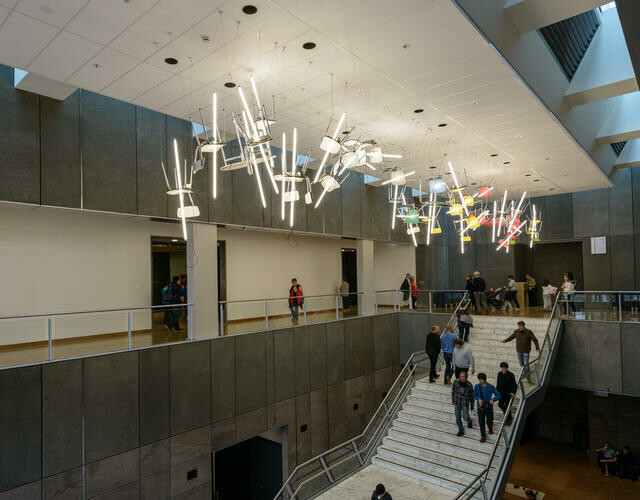
Bill Culbert Bebop
Bill Culbert made Bebop for a corridor in an old church in Venice, Santa Maria della Pietà, when he represented New Zealand at the Venice Biennale in 2013. He found the colourful tables and chairs in flea markets and at attic sales near his studio in the south of France. The title of the work comes from one of the tables.
“We were collecting one of the Formica dining sets from a family in Caromb, a small town just south of Mont Ventoux. They brought it with them from Oran in Algeria when they moved to France decades ago, and they still had the receipt with the name of the furniture – Bebop! It was perfect. Charlie Parker, Dizzy Gillespie. The dancing was phenomenal. It really is about energy, noise… A very noisy work in a very silent space.”
Bebop is a style of jazz that developed in the early 1940s. It is characterised by its fast tempo and improvisation, where solos float free over the underlying structure of the song. Culbert's Bebop floats over the Gallery’s stairs, a wild orchestration of furniture pierced by bars of white light.
Bill Culbert left New Zealand in 1957 with a scholarship to study at the Royal College of Art. He later split his time between London and the Vaucluse, with annual trips back to New Zealand. From the later 1960s he made installations using light and discarded objects – bottles, suitcases, jars, tables and chairs – exploring the ways that light and shadow transform the way we see the everyday world.
He described Bebop as “a vortex of useable things that are out of place.” The Formica and chrome surfaces reflect light, the tumbling furniture creating a sense of movement and energy that travels the length of the work. Culbert called it kaleidoscopic: “as if they are on their way somewhere but not knowing where they're going.”
Notes
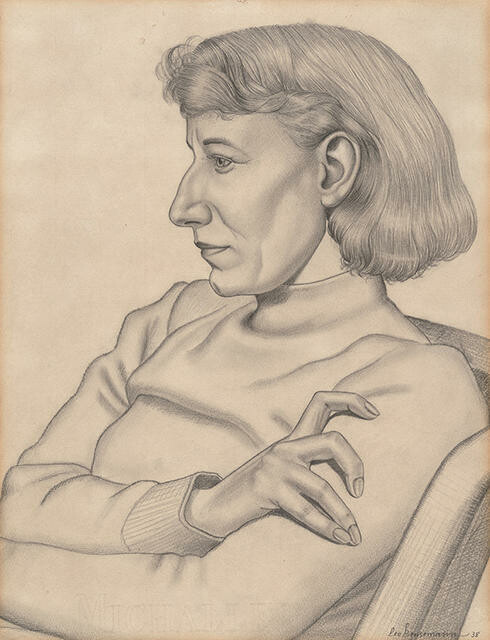
Rita Angus by Leo Bensemann
This article first appeared in The Press as 'Viewing Rita Angus with Leo's eyes' on 26 May 2015
Notes
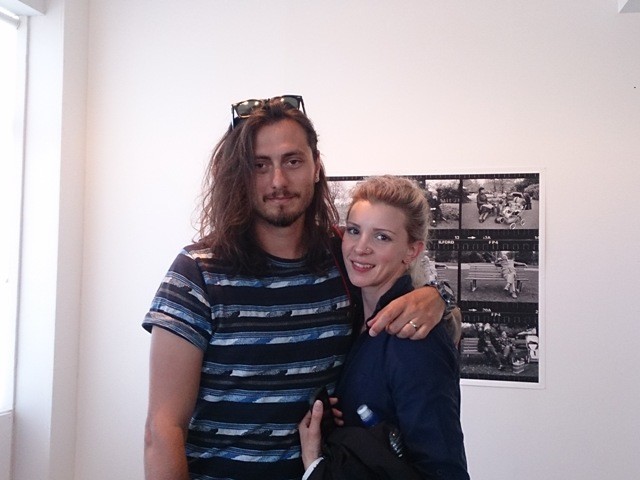
Tracing Our Roots
When Clayton's grandmother heard that he and his wife Lucy would be travelling to New Zealand as part of their big overseas trip, she mentioned that a visit to the Christchurch Art Gallery for these Londoners would be a must.