Kā Kaupapa o te Wā
What’s On
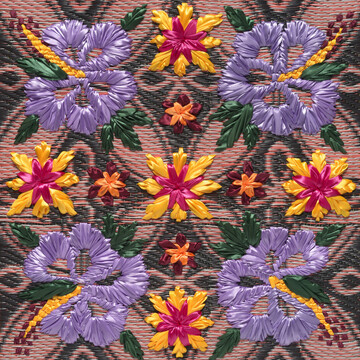
Made in the Pacific: A Collection of Tāoga
A selection of Pacific tāoga from the Canterbury Museum in conversation with contemporary artworks that highlight the continued strength in culture and traditional art forms.
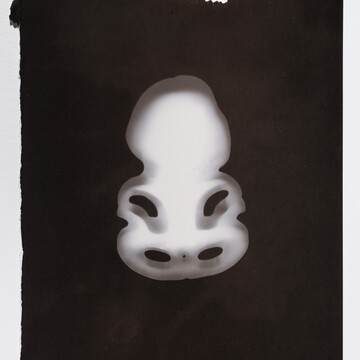
Mark Adams: A Survey | He Kohinga Whakaahua
A comprehensive survey spanning the artist's career.
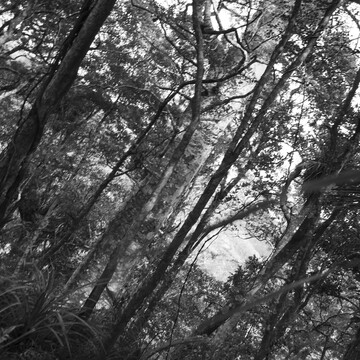
Ana Iti: Ngahere Behind a Pile of Metal
An immersive installation considering the legacies of deforestation and significance of kauri trees.
E tuwhera ana te wharetoi i kā rā e 7 o te wiki, 10am - 5pm
Ka tuwhera ki te 9pm i kā pō Wenerei
Open 7 days, 10am - 5pm
Late night Wednesday until 9pm
Uruka utukore, ahokore utukore
Free entry, free wifi
Collection
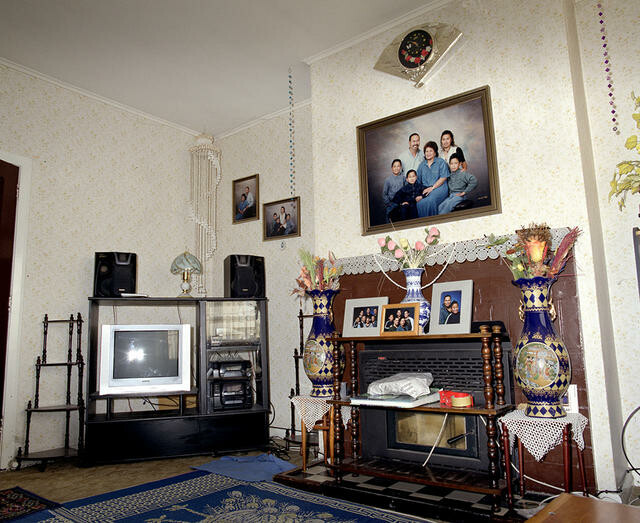
Edith Amituanai The House of Manu
In 2007, Edith Amituanai travelled to Europe to photograph New Zealand-Samoan professional rugby players who were based in France and Italy. She also took photographs in their family homes back in Aotearoa. This series is named Déjeuner, the French term for ‘lunch’, in recognition of the regular family get-togethers that one of the players claimed he was most homesick for. These photographs document what Amituanai describes as third-wave Pacific migration, as the relocation of the players to Europe was driven by the need to further their careers internationally.
The Manu Lounge was shot just prior to this, in 2006, in the home of Amituanai's Aunt Lomona in Spreydon, Christchurch. It shows the lounge laden with images and memorabilia of Carl Manu who was playing rugby in Grand Parma, Italy at the time. Shot from another angle and taken a year later, The House of Manu is part of the following Déjeuner series.
The two photographs show the same room, at first busy with family portraits and decorations, and then in a transitional stage as the family prepare to move house. Many objects have been removed –the display of photographs and mementos in front of the hearth – and one object wrapped in newspaper rests next to a packing tape dispenser. Together, they offer insight into how the idea of 'home' can evolve and shift between generations and circumstances, and how the domestic environments we piece together around us reflect our connections with the past, as well as our dreams for the future.
(Melanie Oliver, 2020)
Collection
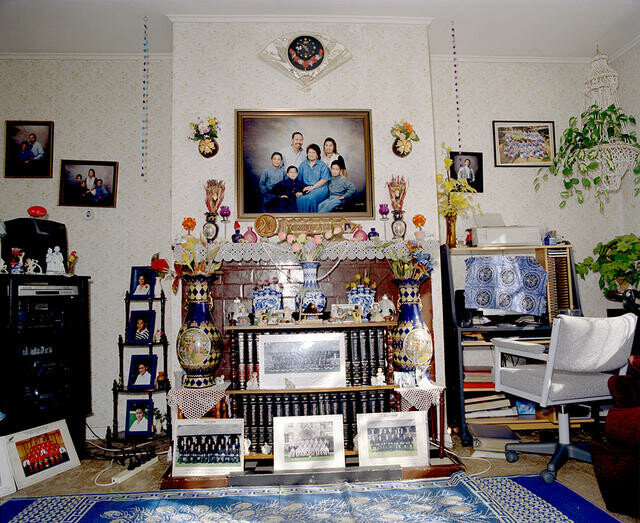
Edith Amituanai The Manu Lounge
Edith Amituanai’s parents left Samoa in the 1980s to join family in Ōtautahi / Christchurch before settling in Tāmakimakaurau / Auckland. Amituanai’s documentary-based photography generates an insider’s view of contemporary Samoan society in Aotearoa New Zealand.The House of Manu and The Manu Lounge reveal the working relationships Amituanai developed with the Manu Samoa rugby team members for a series of work she was making titled Déjeuner. She said: “I can’t photograph the All Blacks the same way, because the All Blacks are, you know, a protected image. And you get about zero point five minutes with them. And I need four years with people.” The absence of the rugby player in the family home increases our understanding of his value within his family unit; his awards and prizes recognise achievements and are a substitute for his presence while away on tour.
(Te Wheke; Pathways Across Oceania, 2021)
Collection
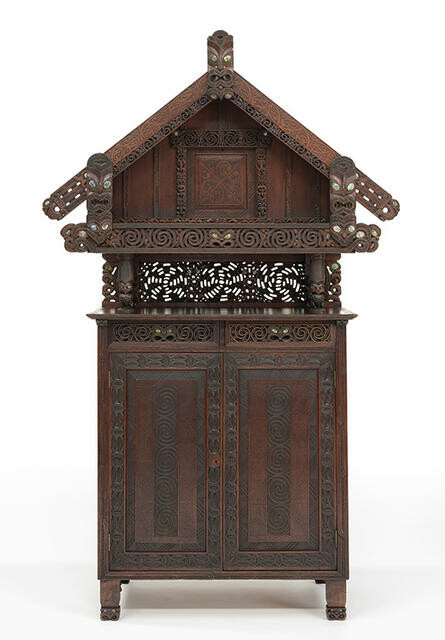
John Henry Menzies Stanford Family Pātaka Cabinet
John Henry Menzies first took up woodcarving as a youth in Lancashire, England. He immigrated to Aotearoa New Zealand aged twenty-one in 1860, and began farming on Te Pātaka o Rākaihautū / Banks Peninsula in 1877. Menzies’ interest in Māori art began in about 1882. He is unlikely to have encountered whakairo (carving) and kōwhaiwhai (rafter patterns) as living traditions until visiting Ōhinemutu in Rotorua five years later. Captivated by what he felt were endangered art forms, he filled two of three houses he built at Kiri-kiri-wairea / McIntosh Bay (later Menzies Bay) and a church at Little Akaloa with extraordinary Māori-inspired furniture and decoration. His most spectacular pieces were made for family members – this highly decorative pātaka cabinet was made for his daughter Charlotte and her husband Edwin Stanford.
(Te Wheke, 2020)
Collection
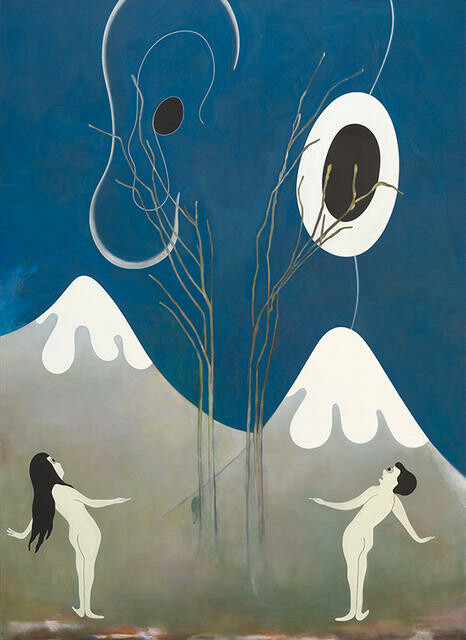
Brent Harris Peaks (The Other Side)
This landscape recalls a view from Brent Harris’s childhood in Te Papaioea / Palmerston North. He recounts a story of climbing on the roof of the family home as a child after a fall of snow and seeing Mounts Taranaki and Ruapehu shimmering in the distance. The palette and composition is borrowed from Giotto’s Dream of Joachim from the Scrovegni Chapel in Padua, Italy; the idea of a revelation in the Aotearoa landscape from Colin McCahon’s early religious paintings. In Harris’s image, an apparition is forming in the sky, but the two onlookers can’t quite take it in, can’t quite make sense of what they’re seeing. The painting speaks of the importance of curiosity and wonder as a means of making sense of the world – but also points to the impossibility of ever being able to apprehend the full picture. (Te Wheke: Pathways Across Oceania, 2021)
Notes
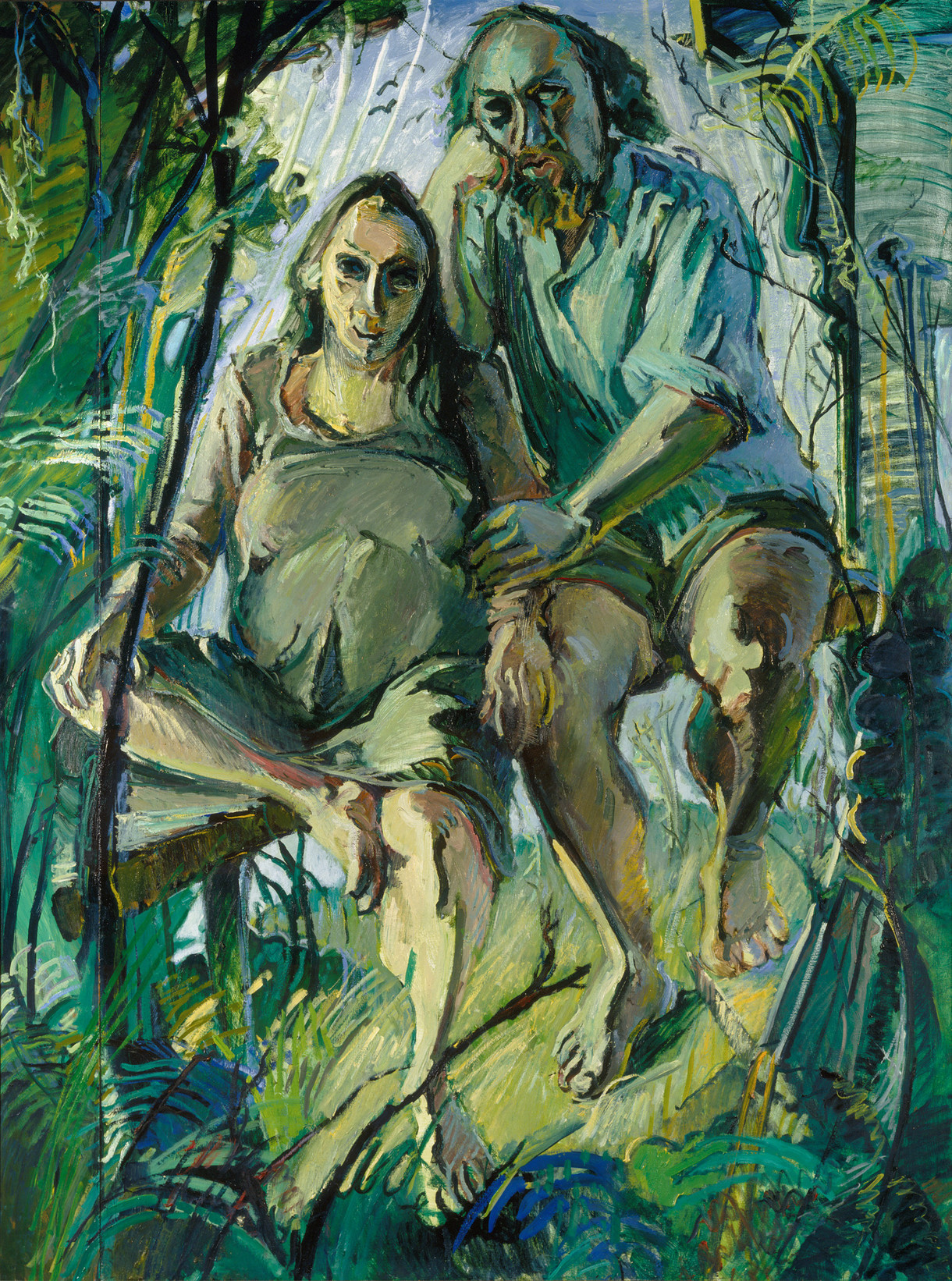
Alan Pearson, 1929–2019
Christchurch Art Gallery was saddened to hear of the recent death of Alan Pearson. Originally from Liverpool in England, Pearson moved to Aotearoa New Zealand as a young man in 1956 and studied at the University of Canterbury School of Fine Arts. Totally committed to his practice, and never one to shy away from confrontation, he painted full-time from 1978 and exhibited extensively throughout New Zealand. He lived and worked mainly in Ōtautahi Christchurch before moving to Australia in the early 2000s.
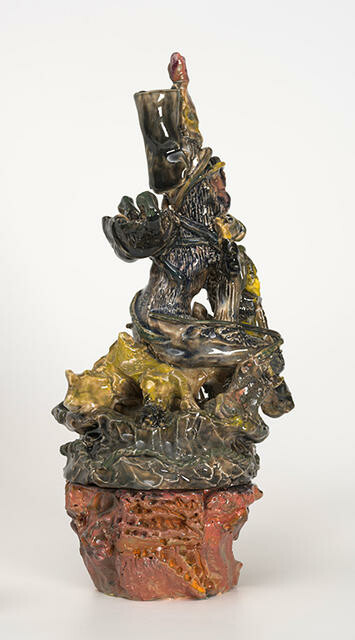
Collection
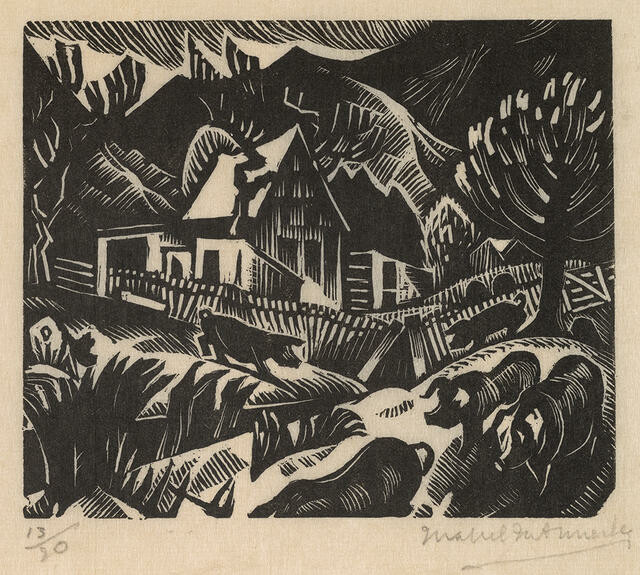
Mabel Annesley Pig Farm
A small number of international printmakers of standing made it to Aotearoa’s shores, among them Mabel Annesley who arrived here in 1941 and settled in Whakatū Nelson. Her large house back in Northern Ireland had recently been commandeered by the British Army, which led to her decision to move halfway around the world. Mabel was part of the British wood-engraving revival during the 1920s and 1930s, working alongside other significant artists including Clare Leighton, Paul Nash, Gwen Raverat and Eric Gill. Although the wood-engraving blocks and other printmaking materials she was accustomed to using were scarce in Aotearoa, she made do with lino-blocks and began making stunning prints of the surrounding landscapes. Her work was admired by many, and several prints were reproduced in the journal Art in New Zealand, which also published her article ‘A Wood-engraver Looks Back’ in 1943.
Ink on Paper: Aotearoa New Zealand Printmakers of the Modern Era, 11 February – 28 May 2023