Kā Kaupapa o te Wā
What’s On
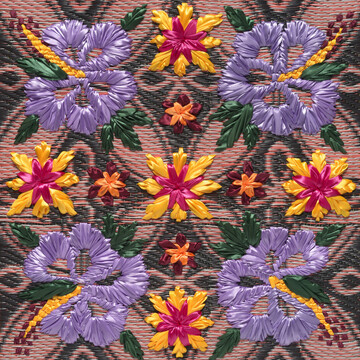
Made in the Pacific: A Collection of Tāoga
A selection of Pacific tāoga from the Canterbury Museum in conversation with contemporary artworks that highlight the continued strength in culture and traditional art forms.
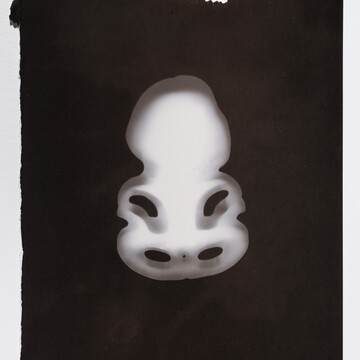
Mark Adams: A Survey | He Kohinga Whakaahua
A comprehensive survey spanning the artist's career.
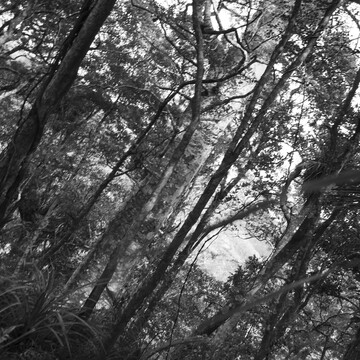
Ana Iti: Ngahere Behind a Pile of Metal
An immersive installation considering the legacies of deforestation and significance of kauri trees.
E tuwhera ana te wharetoi i kā rā e 7 o te wiki, 10am - 5pm
Ka tuwhera ki te 9pm i kā pō Wenerei
Open 7 days, 10am - 5pm
Late night Wednesday until 9pm
Uruka utukore, ahokore utukore
Free entry, free wifi
Collection
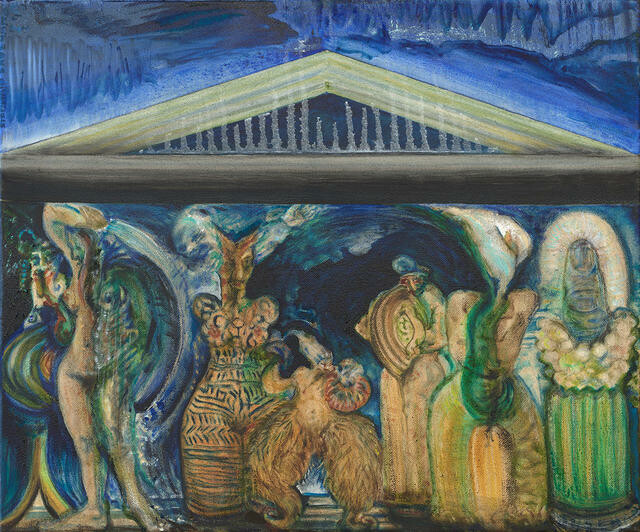
Stephanie Sheehan Metamorphosis
This label was used when the painting was displayed to mark the artist's death in 2023.
The Gallery was saddened by the recent death of painter Stephanie Sheehan. Born in Ōtautahi Christchurch, Stephanie was part of a notable generation of artists who studied at the University of Canterbury School of Fine Arts in the late 1960s and early 1970s, including Mark Adams, Rhondda Bosworth, Philip Clairmont, Allie Eagle, Bill Hammond, Joanne Hardy and Allen Maddox. She completed her Diploma of Fine Arts in 1974. Sheehan’s work was included in the important feminist art exhibition Woman’s Art: An Exhibition of Six Women Artists curated by Allie Eagle for the Robert McDougall Art Gallery in 1975. Her thoughts on being a woman artist in the male dominated arts world of the 1970s were expressed in the accompanying catalogue: It has been generally accepted that woman has been a slave too long; unfortunately a slave mentality is imposed on us at birth and to express oneself truthfully involves throwing off more chains than one was aware of carrying. I have ceased to paint men’s doings. My paintings are an extension of myself, as a woman I think.
Sheehan was one of the few young women artists invited to exhibit with The Group in the early 1970s. She formed a close and enduring friendship with the potter Yvonne Rust, whom she worked with and lived close to in Tokerau Beach, Northland from the mid 1970s. Rust had been her high school art teacher in Christchurch during the 1960s, and remained her mentor through to the 1990s. In the 2000s Sheehan returned to Christchurch and continued exhibiting and painting. Our thoughts go out to her family and friends.
Rest in Peace Steph.
Collection
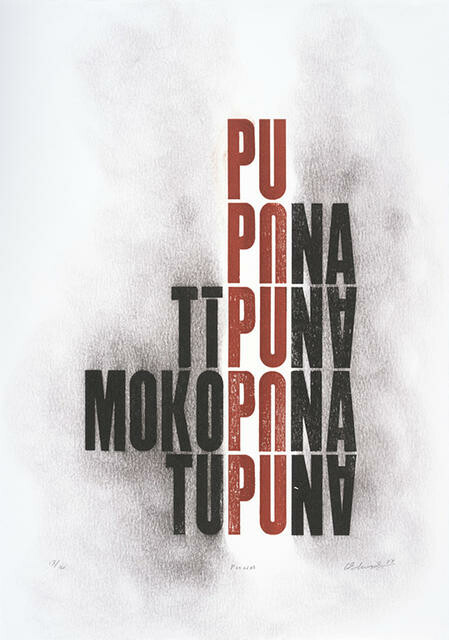
Vanessa Wairata Edwards Puna
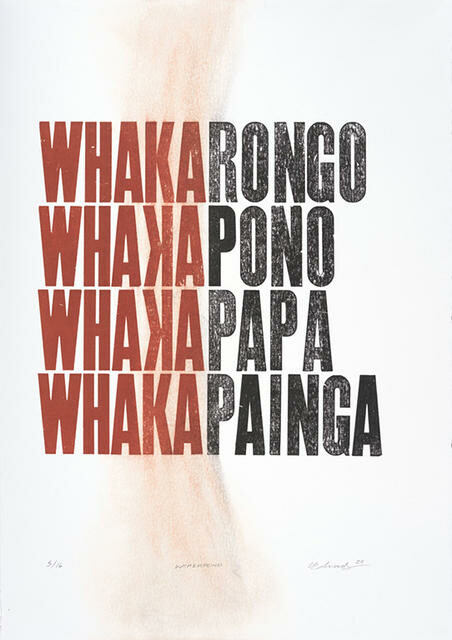
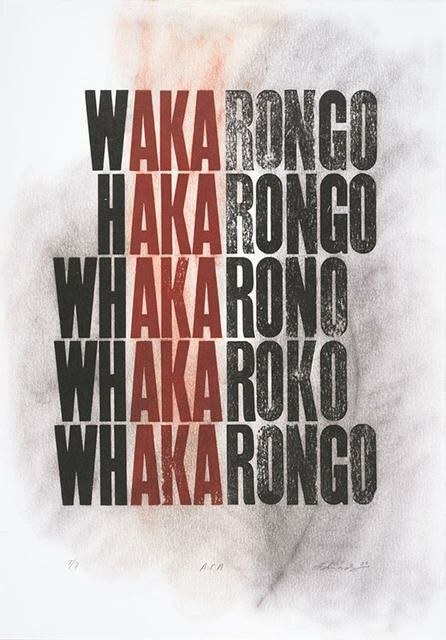
Using wooden letterpress blocks to form the kind of text associated with newspapers and proclamations, Vanessa Wairata Edwards creates kupu papa, or layered words, that explore how culture can be made visible. The suppression of te reo Māori and its transformation to include a written form are key parts of Aotearoa New Zealand’s history of colonisation. Edwards seeks to reconcile this fragmentation of identity in her artmaking. Here, she reveals how the hidden parts of kupu – certain letters, or meanings – can activate and connect with others. She starts with pū (used here without a macron), which has many possible meanings in te reo Māori, including source or origin. A puna is a pool or spring, but it also means to well up or flow. Tīpuna are ancestors or grandparents, while that word’s singular form is tupuna. Nestled between them is mokopuna, a grandchild or descendant. Bringing focus to the human realities of these words, but also to how they can shift and build others, Edwards presents language as a powerful current, changing and adapting, but also leading us back to our beginnings.
te reo Māori ~ the Māori language
kupu ~ word or words
tīpuna / tūpuna ~ ancestors, grandparents (dialect variations of the kupu)
He Kapuka Oneone – A Handful of Soil (from August 2024)
Collection
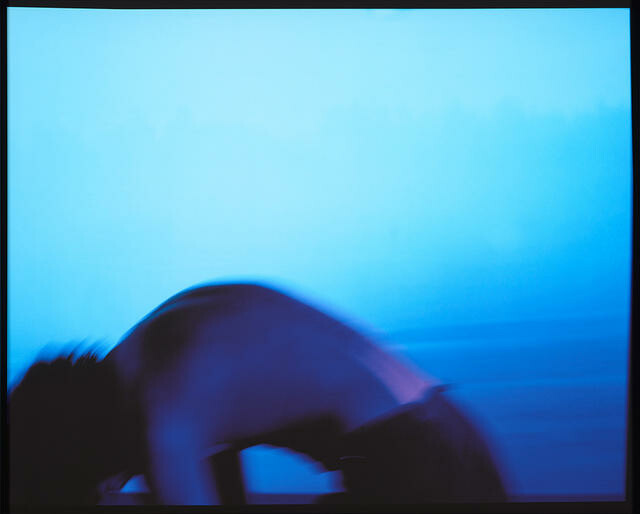
Shannon Te Ao Pūaotanga o te Ao
In this photograph by Shannon Te Ao, a human figure is suspended in motion, their back curved against the soft blue light of the morning. The performer moves before a projected backdrop sourced from the artist’s personal footage. It was filmed in Mōkai, near Taupō, an area close to one of the artist's family urupā, where many of his whānau are buried. A family story tells of his father’s journey, on foot, from Taupō to Mōkai to sleep beside his grandfather, who is laid to rest there. Today, they rest peacefully next to each other. The title of this work, Pūaotanga o te Ao is a play on words, meaning dawn of the world in te reo Māori and also referencing the artist’s family name. It belongs to a series by Te Ao titled Tīwakawaka, one of many Māori names for the native fantail – a messenger that moves between realms of life and death.
urupā ~ burial ground, cemetery
whānau ~ family, extended family, family group
te reo Māori ~ the Māori language
He Kapuka Oneone – A Handful of Soil (from August 2024)