Madison Kelly
Aotearoa New Zealand, b.1994
Kāi Tahu,
Kāti Māmoe,
Māori
Moko speaks the cave
- 2025
- Brass, steel, felt, lead, mallets, brushes
- Purchased 2026
- 2026/043
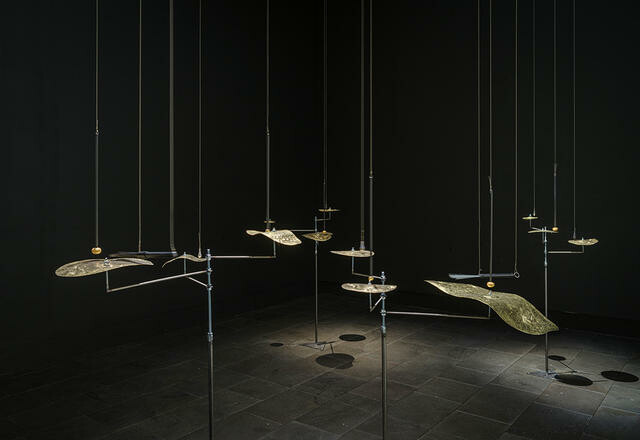
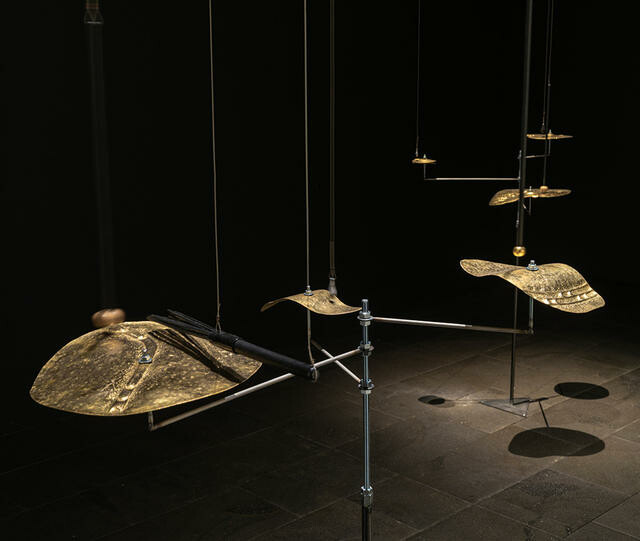
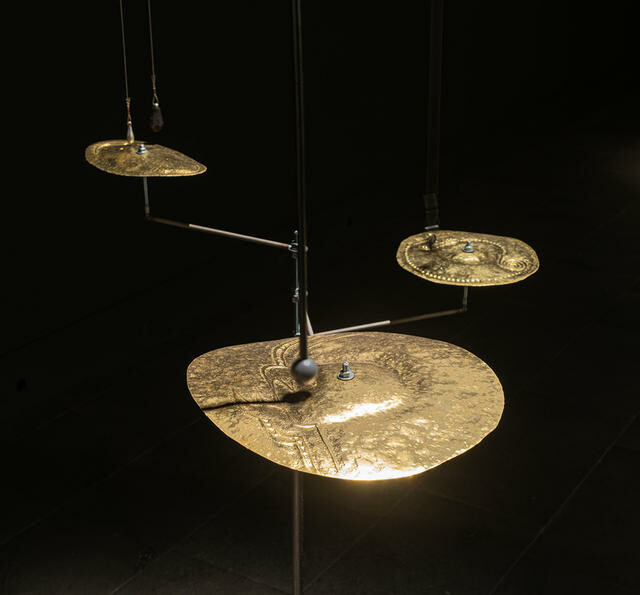
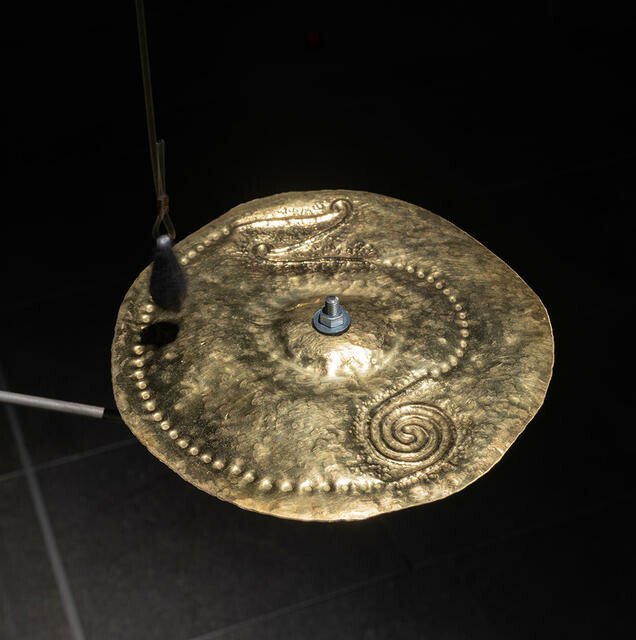
Moko speaks the cave by Ōtepoti Dunedin-based artist Madison Kelly reminds us of the role many taniwha have played in forming the land and waterways around us. According to Kāi Tahu history, the landscape of Ōtepoti was shaped by the movements of Matamata, a taniwha who took the form of a lizard and was kaitiaki for Kāti Māmoe chief Te Rakitauneke. When Te Rakitauneke travelled south for battle, Matamata went in search of him, forming the curves of the Taiari awa, Ōtākou harbour and the surrounding hills with his sharp claws and strong tail. After his long search, the body of Matamata formed two rolling peaks overlooking the Taiari Plain – Pukemakamaka and Turimakamaka, known in English as Saddle Hill. Kelly’s hand-beaten brass references the layers and folds of the land around Ōtākou, built up over time by the movements and shedding skin of Matamata. Here, it is the movement of our bodies through the space that completes this work, triggering suspended sinkers and mallets to make contact with the carefully worked metal surfaces. Like closing your eyes while deep in the kahere or pressing your ear to soft earth, Kelly’s immersive installation invites you to consider the language and rhythms of the taiao, where mātauraka is embedded within the whenua.
taniwha an entity that can take many forms such as logs, reptiles, whales and often live in lakes, rivers or the sea. They are often regarded as guardians by the people who live in their territory Kāi Tahu tribal group of much of Te Waipounamu South Island kaitiaki guardian Kāti Māmoe tribal group that was largely replaced by Kāi Tahu through intermarriage and conquest Taiari awa correct spelling of Taieri River Ōtākou Otago kahere forest, bush taiao the natural world mātauraka knowledge whenua land, ground
Exhibition History