
Kā Kaupapa o te Wā
What’s On
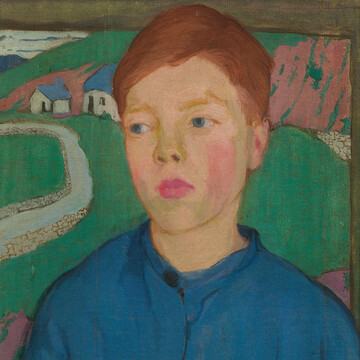
Edith Collier: Early New Zealand Modernist
A rare opportunity to view the work of one of Aotearoa New Zealand’s most adventurous and experimental modernist artists.
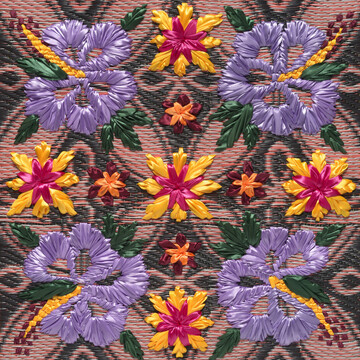
Made in the Pacific: A Collection of Tāoga
A selection of Pacific tāoga from the Canterbury Museum in conversation with contemporary artworks that highlight the continued strength in culture and traditional art forms.
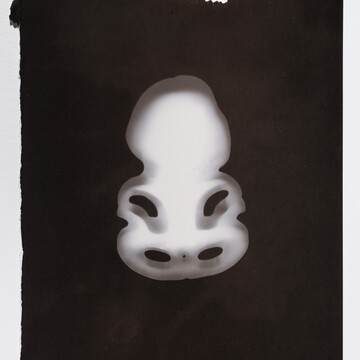
Mark Adams: A Survey | He Kohinga Whakaahua
A comprehensive survey spanning the artist's career.
E tuwhera ana te wharetoi i kā rā e 7 o te wiki, 10am - 5pm
Ka tuwhera ki te 9pm i kā pō Wenerei
Open 7 days, 10am - 5pm
Late night Wednesday until 9pm
Uruka utukore, ahokore utukore
Free entry, free wifi
Collection
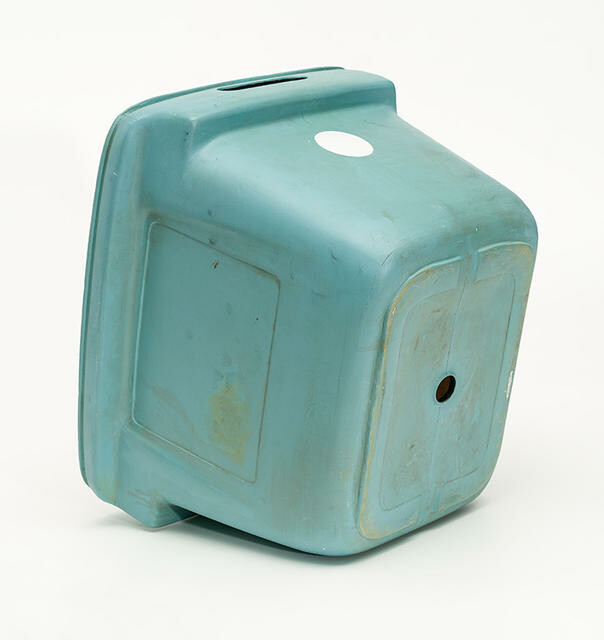
Glen Hayward Shrink wrap
Works of art aren’t as well behaved as they used to be. Once upon a time, they stayed where they were put, hanging obediently off picture rails or perching politely on pedestals. Since the arrival of the Duchampian readymade, however, many require a second glance to distinguish them from the world around them, as everyday objects are pressed into service in new, perspective-tilting contexts. There’s another kind of work too, the type Glen Hayward is known for: the readymade’s stealthier cousin. Meticulously, even obsessively, crafted to resemble objects you wouldn’t give another glance, these unobtrusive double agents aim to blend in, adding a subversive frisson to the gallery experience.
(Unseen: The Changing Collection, 18 December 2015 – 19 June 2016)
Collection
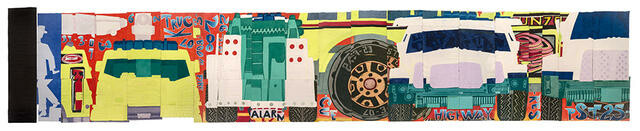
Philip Trusttum Depot
In 2009, renowned Christchurch painter Philip Trusttum surprised us with an exceptionally generous offer: a gift of twenty paintings, selected by the Gallery and with no limitation on scale or value. The first ten works entered the collection the following year, and rumbling in amongst them was Depot, this colossal gas-guzzler of a painting that hums with Trusttum’s trademark physical energy. The audacious scale belies the work’s diminutive origins; the artist found his inspiration in the toy trucks his young grandson William played with in his studio.
Collection
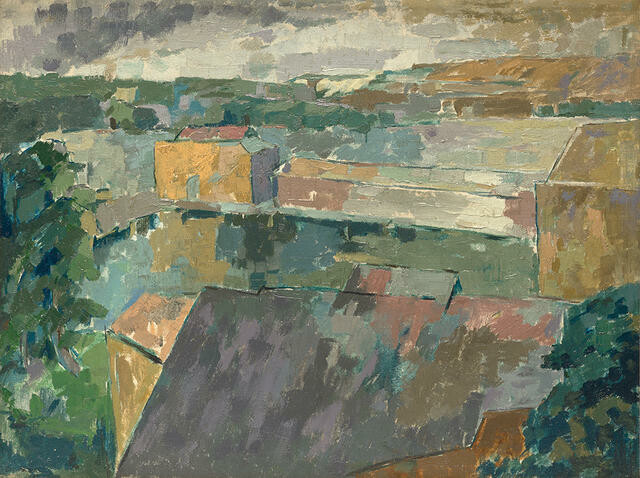
Don Peebles Sydney Harbour
Don Peebles travelled to Sydney in 1950, in search of a more modern art training than was available to him in Wellington. (‘Nothing much was going on in Wellington other than us being taught to draw a foot that looked like a foot,’) he said. His teacher John Passmore (1904–1984) introduced his students to early twentieth-century European modernism: Bonnard and Picasso, Cézanne and cubism. ‘That was modernism to me. That was the latest thing as far as I knew in those days.’ Passmore also encouraged his students to paint around the waterfront, a regular subject for his own work in the early 1950s. Sydney Harbour reveals Peebles moving towards the abstraction that would characterise his mature work, but not yet completely there (he made his first completely abstract work a few years later in London). A Cézanne-esque concern for planes, facets and the structure of forms is evident, even while buildings, water and distant hills remain visible.
(March 2016)
Collection
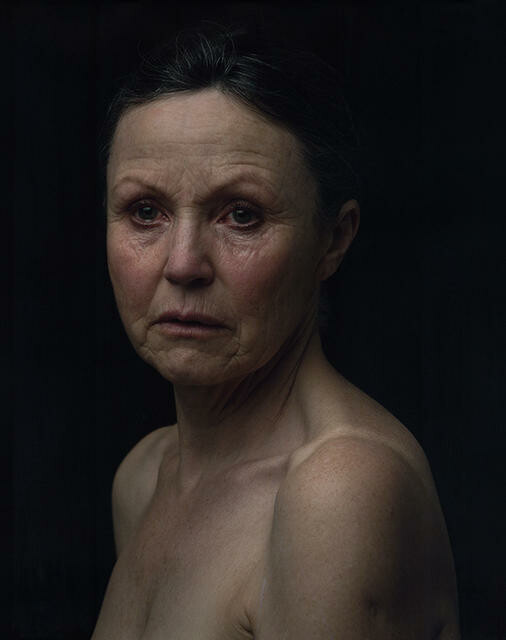
Roberta Thornley Crying my Mother's Tears (Meme)
Roberta Thornley made this portrait of her mother after her youngest sister left home. “A house of five girls suddenly empty. It was the first time I had really noticed her vulnerability. I think she had spent thirty years coming home from work to a house full of us, and this was the end of it.” Photographing her mother with bare shoulders, Thornley avoided any reference to time or place, instead allowing her mother’s body to tell the story. As a child, she had liked to run her fingers along the permanent dent a bra strap had left in her mother’s skin. Now, that same mark made her uneasy. “I noticed her thinning skin, which triggered a memory of her franticly mopping up blood from the shin of my grandmother’s leg after she had caught her ninety-year-old paper-thin skin on a rose thorn in the garden. My mother, with her very black hair, was ageing. Near the end of what seemed to be a very long time making this photograph, she cried. She was carrying generations of tears from my grandmother Meme through to me.”
(We do this, 12 May 2018 - 26 May 2019)
Collection
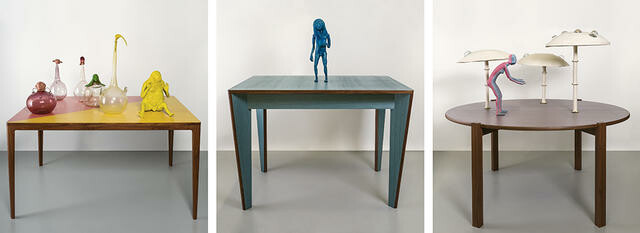
Francis Upritchard rainwob ii
The work on the three tables at the centre of this room is part of a series of sculptures artist Francis Upritchard has described as “an attempt at an unsuccessful utopia”. Like the flipped-back word in its title, it seems to set off in one direction – towards a kind of visionary, psychedelic paradise – but overturns our expectations to arrive somewhere much less certain. Locked away in intensely private reveries, the delicate, marionette-like figures that inhabit it are curiously enigmatic: part-primeval bog people, part-countercultural prophets, they live out their radiant existences somewhere between the ancient unknowable past and the distant unknowable future.
(Unseen: The Changing Collection, 18 December 2015 – 19 June 2016)