Collection
Board Walk, Dean Forest (Tōtara), Western Southland (after Wayne Barrar)

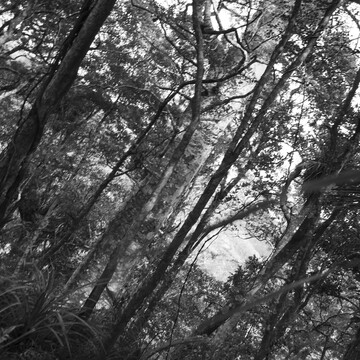
Haruhiko Sameshima Board Walk, Dean Forest (Tōtara), Western Southland (after Wayne Barrar)

This boardwalk leads into the Dean Forest in Murihiku Southland, an unlogged kahere that is home to tall tōtara trees, some over a thousand years old. The image is from eco-Tourism, a project Haruhiko Sameshima began in 1994. It explores cultural display strategies used in Aotearoa New Zealand – such as those used to market it for settlers or tourists – and considers photography’s role in how the country has been seen and represented. Sameshima’s own experience of moving here from Japan as a teenager left him acutely attuned to the nuances of how culture is pictured and transmitted. Here, he also acknowledges the work of fellow photographer Wayne Barrar, who often pictures places where the natural environment and human activity intersect.

kahere ~ forest

(He Kapuka Oneone – A Handful of Soil, 2025)

Collection
Ipu 7

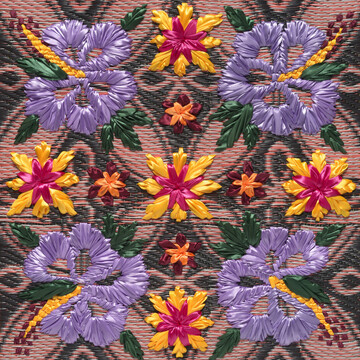
Wi Taepa Ipu 7

Wi Taepa is known for his organic, hand-built vessels, which are adorned with carved patterns. Taepa is acutely aware of the whakapapa of uku and the cultural and spiritual value of the material. In 2007, he said: [While] my work sustains cultural aspects of Aotearoa, there lies within it an even stronger connect to the female elements in Māori genealogy, where Hineukurangi is a descendant of Parawhenuamea, maiden of the rocks. We are all connected and sustained by Papatūānuku, we thrive off her. She is where we begin and where we end. Ipu 7 is particularly significant to Taepa because it is a memorial to a pulpit carved by his uncle Taunu Tai Taepa in the Rangiātea Church in Ōtaki on the Kāpiti Coast, which was destroyed in a fire in 1995. Taepa incorporated charcoal from the charred pulpit into the clays and slips, and the kōwhaiwhai patterns repeat those he used when contributing to the rebuilding of the church in 2003.

whakapapa ~ genealogy, lineage, ancestry uku ~ clay kōwhaiwhai ~ painted scroll ornamentation

(He Kapuka Oneone – A Handful of Soil, 2025)

Collection
The Kaiapohia Monument

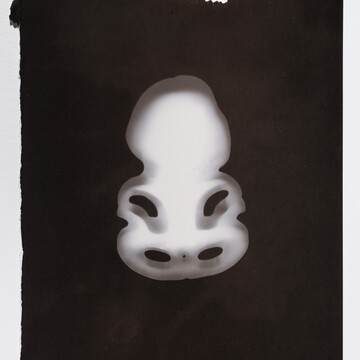
Mark Adams The Kaiapohia Monument

“This stark monument, completed in 1899, stands by the remains of the southern battlements of the great Kaiapoi pa. […] The pa was founded about the year AD1700 by Tuahuriri’s son Turakautahi, who predicted that the natural local food supply of eels and waterfowl could be successfully augmented by food ‘swung in’ from the surrounding countryside. Hence the pa was called Kai-a-poi. The control of West Coast pounamu by Ngai Tuahuriri’s close relatives the Poutini Ngai Tahu soon made Kaiapoi the greatest pounamu-trading centre in the land. The pa was surrounded on three sides by deep swamp, giving canoe access to a hapua (lagoon) on the Rakahuri (Ashley) River. Only the southern defences of the pa faced dry land. […] The pa was destroyed by Te Rauparaha’s forces after a long siege in 1832.” The name Kaiapohia (meaning ‘bodies piled up’) was used by Te Rauparaha’s iwi Ngāti Toa to refer to Kaiapoi. Author and Anglican missioner James Stack, believing this to be the original and proper Ngāi Tahu name for Kaiapoi, used it in his 1893 history ‘Kaiapohia: The Story of a Siege’. “[Stack] urged his readers to adopt Kaiapohia in preference to Kaiapoi, which he said was ‘unmusical’. However, no one before Stack had reported Kaiapohia being used by Ngai Tahu, and the name was ridiculed by Ngai Tahu elders. Teone Taare Tikao in Tikao Talks (1939) said that ‘the name was never Kaiapohia’. It was a purely North Island invention, said Tikao, and ‘no self-respecting South Islander’ would ever use it. […] In 1898 Stack organised the erection of the monument on the old Kaiapoi pa site [and] had the name Kaiapohia engraved in the inscription. Thus the North Island curse coined in 1832 came to rest on the sacred mound of Ngai Tuahuriri.” Quoted text by Harry Evison from ‘Land of Memories—A Contemporary View of Places of Historical Significance in the South Island of New Zealand’, Tandem Press, Tāmaki Makaurau Auckland, 1993.

(He Kapuka Oneone – A Handful of Soil, 2025)

Collection
Bayly's Hill

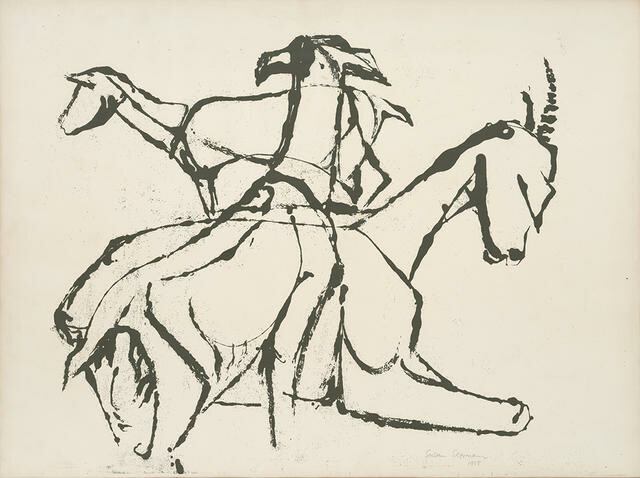
Toss Woollaston Bayly's Hill

Bayly's Hill is optherwise known as Makuri.

In his diary for January to March 1992, Woollaston describes his '32 drawings of Bayly's Hill, map-named Mount Makuri'.

('Toss Woollaston: a life in letters', edited by Jill Trevelyan, Te Papa Press 2004, page 464)

Load more