Collection
Society of Accurately Enough: Glory - Shame

Scott Flanagan Society of Accurately Enough: Glory - Shame

On first approach, the delicate pencil drawings in Scott Flanagan’s series Society of Accurately Enough resemble meticulously observed trees; in fact, the artist has taken his imagery from photographs of the ominous mushroom clouds that rise above atomic explosions. This conflation of the delicate and the violent, and the romantic and the apocalyptic, is further complicated by Flanagan’s choice of ground – the works are drawn on pages cut from Reader’s Digest Condensed books published between c.1960 and c.1980. The original images on each page have been partially obscured by a coat of gesso, but the borders survive, providing a constraining boundary and lending a decorative quality that seems at odds with the threatening nature of the drawn imagery. The titles for Flanagan’s works borrow from another source. They were selected from a list of phrases the writer George Orwell crossed out in an early manuscript of his famous dystopian novel Nineteen Eighty-Four (1949). Flanagan uses these appropriated materials, imagery and text to play with ideas of perception and authenticity, underlining this with his choice of the series title ‘Society of Accurately Enough’.

(Felicity Milburn, August 2021)

Collection
Society of Accurately Enough: A Little Sterner Than Usual

Scott Flanagan Society of Accurately Enough: A Little Sterner Than Usual

On first approach, the delicate pencil drawings in Scott Flanagan’s series Society of Accurately Enough resemble meticulously observed trees; in fact, the artist has taken his imagery from photographs of the ominous mushroom clouds that rise above atomic explosions. This conflation of the delicate and the violent, and the romantic and the apocalyptic, is further complicated by Flanagan’s choice of ground – the works are drawn on pages cut from Reader’s Digest Condensed books published between c.1960 and c.1980. The original images on each page have been partially obscured by a coat of gesso, but the borders survive, providing a constraining boundary and lending a decorative quality that seems at odds with the threatening nature of the drawn imagery. The titles for Flanagan’s works borrow from another source. They were selected from a list of phrases the writer George Orwell crossed out in an early manuscript of his famous dystopian novel Nineteen Eighty-Four (1949). Flanagan uses these appropriated materials, imagery and text to play with ideas of perception and authenticity, underlining this with his choice of the series title ‘Society of Accurately Enough’.

(Felicity Milburn, August 2021)

Collection
Society of Accurately Enough: Humble II

Scott Flanagan Society of Accurately Enough: Humble II

On first approach, the delicate pencil drawings in Scott Flanagan’s series Society of Accurately Enough resemble meticulously observed trees; in fact, the artist has taken his imagery from photographs of the ominous mushroom clouds that rise above atomic explosions. This conflation of the delicate and the violent, and the romantic and the apocalyptic, is further complicated by Flanagan’s choice of ground – the works are drawn on pages cut from Reader’s Digest Condensed books published between c.1960 and c.1980. The original images on each page have been partially obscured by a coat of gesso, but the borders survive, providing a constraining boundary and lending a decorative quality that seems at odds with the threatening nature of the drawn imagery. The titles for Flanagan’s works borrow from another source. They were selected from a list of phrases the writer George Orwell crossed out in an early manuscript of his famous dystopian novel Nineteen Eighty-Four (1949). Flanagan uses these appropriated materials, imagery and text to play with ideas of perception and authenticity, underlining this with his choice of the series title ‘Society of Accurately Enough’.

(Felicity Milburn, August 2021)

Collection
Society of Accurately Enough: An Entity As Society

Scott Flanagan Society of Accurately Enough: An Entity As Society

On first approach, the delicate pencil drawings in Scott Flanagan’s series Society of Accurately Enough resemble meticulously observed trees; in fact, the artist has taken his imagery from photographs of the ominous mushroom clouds that rise above atomic explosions. This conflation of the delicate and the violent, and the romantic and the apocalyptic, is further complicated by Flanagan’s choice of ground – the works are drawn on pages cut from Reader’s Digest Condensed books published between c.1960 and c.1980. The original images on each page have been partially obscured by a coat of gesso, but the borders survive, providing a constraining boundary and lending a decorative quality that seems at odds with the threatening nature of the drawn imagery. The titles for Flanagan’s works borrow from another source. They were selected from a list of phrases the writer George Orwell crossed out in an early manuscript of his famous dystopian novel Nineteen Eighty-Four (1949). Flanagan uses these appropriated materials, imagery and text to play with ideas of perception and authenticity, underlining this with his choice of the series title ‘Society of Accurately Enough’.

(Felicity Milburn, August 2021)

Collection
Society of Accurately Enough: Standing Position IV

Scott Flanagan Society of Accurately Enough: Standing Position IV

On first approach, the delicate pencil drawings in Scott Flanagan’s series Society of Accurately Enough resemble meticulously observed trees; in fact, the artist has taken his imagery from photographs of the ominous mushroom clouds that rise above atomic explosions. This conflation of the delicate and the violent, and the romantic and the apocalyptic, is further complicated by Flanagan’s choice of ground – the works are drawn on pages cut from Reader’s Digest Condensed books published between c.1960 and c.1980. The original images on each page have been partially obscured by a coat of gesso, but the borders survive, providing a constraining boundary and lending a decorative quality that seems at odds with the threatening nature of the drawn imagery. The titles for Flanagan’s works borrow from another source. They were selected from a list of phrases the writer George Orwell crossed out in an early manuscript of his famous dystopian novel Nineteen Eighty-Four (1949). Flanagan uses these appropriated materials, imagery and text to play with ideas of perception and authenticity, underlining this with his choice of the series title ‘Society of Accurately Enough’.

(Felicity Milburn, August 2021)

Collection
Society of Accurately Enough: Basis for Oligarchy

Scott Flanagan Society of Accurately Enough: Basis for Oligarchy

On first approach, the delicate pencil drawings in Scott Flanagan’s series Society of Accurately Enough resemble meticulously observed trees; in fact, the artist has taken his imagery from photographs of the ominous mushroom clouds that rise above atomic explosions. This conflation of the delicate and the violent, and the romantic and the apocalyptic, is further complicated by Flanagan’s choice of ground – the works are drawn on pages cut from Reader’s Digest Condensed books published between c.1960 and c.1980. The original images on each page have been partially obscured by a coat of gesso, but the borders survive, providing a constraining boundary and lending a decorative quality that seems at odds with the threatening nature of the drawn imagery. The titles for Flanagan’s works borrow from another source. They were selected from a list of phrases the writer George Orwell crossed out in an early manuscript of his famous dystopian novel Nineteen Eighty-Four (1949). Flanagan uses these appropriated materials, imagery and text to play with ideas of perception and authenticity, underlining this with his choice of the series title ‘Society of Accurately Enough’.

(Felicity Milburn, August 2021)

Collection
The Head of a New Zealander

Sydney Parkinson, John Barralet The Head of a New Zealander

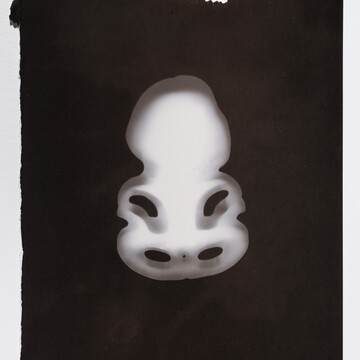
Aged twenty-three, Edinburgh-born botanical illustrator and natural history artist Sydney Parkinson joined Captain James Cook’s ambitious 1768–71 Pacific expedition aboard HMS Endeavour. He worked prodigiously but tragically died on the voyage home. This etching reproduces his study of a chief’s son he met near Rākaumangamanga Cape Brett in November 1769 – recorded as ‘Otegoowgoow’, the sitter was possibly Otekaukau or Te Kuukuu.

(Out of Time, 23 September 2023 – 28 April 2024)

Collection
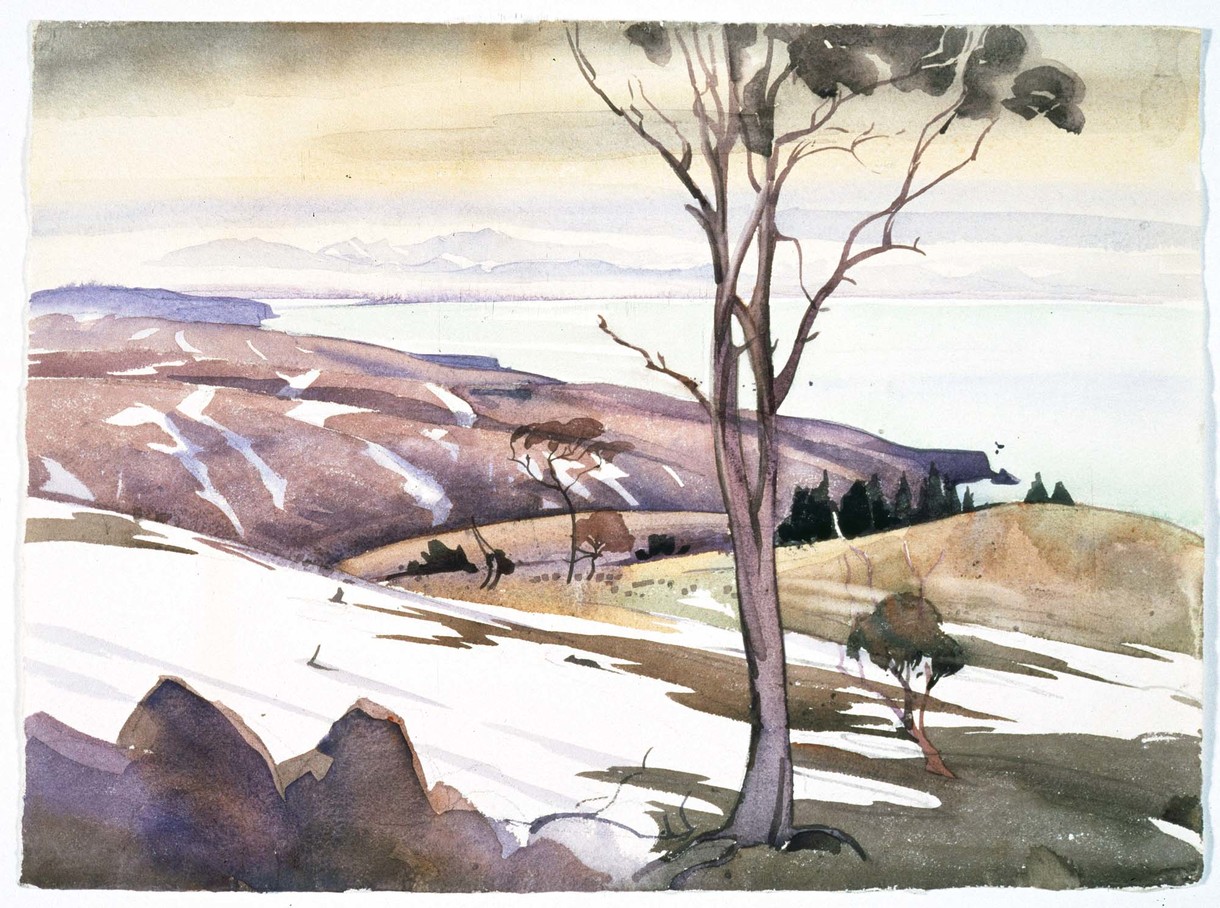
Tekapo Ferry

Edmund Norman Tekapo Ferry

Many of New Zealand’s early artists, including Edmund Norman, were surveyors. It was an occupation that required the ability to draw accurately, something Norman excelled at. He was one of the best draughtspersons to work in Aotearoa New Zealand during the 1850s and 60s, and his drawings are breathtaking in their detail. Unfortunately Norman had a drinking problem and in the early 1850s was arrested for drunkenness in Ōhinehou / Lyttelton. By the 1860s he was living a reclusive life working as a station hand in the Te Manahura / Mackenzie Country inland from Timaru. One winter’s morning he was found dead on the side of the road near the Burkes Pass Hotel. It was thought that, in a drunken state after a session at the hotel, he had collapsed on his walk home and succumbed to exposure in the cold night air. Legend has it that he had a bottle of whiskey in one pocket and sketchbook and pencil in the other. His drawings of both Ōhinehou / Lyttelton and Te Manahura / Mackenzie Country remain some of the most accomplished images of the province from this time.

(Pickaxes and shovels, 17 February – 5 August 2018)

Load more