Commentary
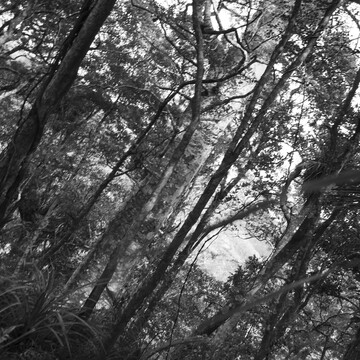
1970年前後の日本について考える、もしくは風景について。 そしてチリについても。

1970年前後の日本について考える、もしくは風景について。 そしてチリについても。

はじめに、さらに20年さかのぼる。1951年、サンフランシスコ平和条約と同時に締結された「日本国とアメリカ合衆国との間の安全保障条約」(旧安保条約)は、米軍の日本駐留を可能にした。 同条約は1960年、当時の岸信介(安倍晋三元首相の祖父)首相とアイゼンハワー米大統領によって日米共同防衛が明文化されたかたちで改定され、月に調印された。

Collection
Roman Catholic Church, Apia (2013)

Yuki Kihara Roman Catholic Church, Apia (2013)

Yuki Kihara has developed a persona called Salome who often appears in her work – named for the biblical figure who, Kihara notes, influenced politics through dance. In these photographs, Salome, dressed in constricting Victorian clothes, gazes out to sea and on the ruined interior of the Roman Catholic Church in Apia following the devastation of Cyclone Evan in 2012. The viewer’s gaze is directed by Salome: through her quiet strength and indelible presence, we are invited to consider the effects of colonialism on Sāmoan culture.Kihara describes herself as Fa’afafine – a person within indigenous Sāmoan society who ‘does in the manner of a woman’; loosely translated as being ‘transgender’ in the Western context. Kihara’s Salome exists in the vā – which can be understood as a realm that transcends space and time, a place in which relationships between people and things are established. As the poet Albert Wendt writes, the vā is ‘not a space that separates but relates, that holds separate entities and things together in the Unity-that-is-All, the space that is context, giving meaning to things.’

(We do this, 12 May 2018 - 26 May 2019)

Collection
After Tsunami Galu Afi, Lalomanu (2013)

Yuki Kihara After Tsunami Galu Afi, Lalomanu (2013)

Yuki Kihara took her alter ego Salome from an 1886 photograph titled Samoan half caste by New Zealand colonial photographer Thomas Andrew. Clad in Victorian ourning black, Salome’s unforgettable spectral presence is informed by Kihara’s own xperiences as a Sāmoan-Japanese person who is also Fa‘afafine, a term used in Indigenous āmoan society to describe someone who lives ‘in the manner of a woman’. Free from binary narratives, Salome occupies the Vā, a realm separated from time and space, in order to critique and reframe the impacts of colonisation. Roman Catholic Church, Apia and After Tsunami Galu Afi, Lalomanu were made in Sāmoa following the devastation of Cyclone Evan. With her back to us, Salome pulls our gaze to the ruined church and out to the open sea. Bearing witness to this recent tragedy, and Sāmoa’s history of loss through colonisation, she looks to the future. In Conveyance of Time (on the wall to your left), Salome is not one, but many. In flowing black crinoline, she moves through history and place like a queen on a chess board. In her arms are objects gathered from across time – an ava bowl, bible, navigational chart, the moon and Jupiter – carried as guides for the days to come.

(Dummies & Doppelgängers, 2 November 2024 – 23 March 2025)

Load more