John Miller
Aotearoa New Zealand, b.1950
Ngāpuhi,
Ngāi Tāwake ki te Tuawhenua,
Te Uri Taniwha,
Te Whiu,
Māori
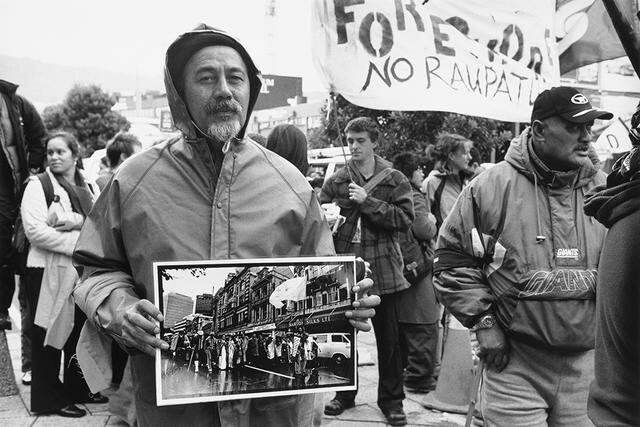
2004 Foreshore and Seabed March, Cyril Chapman holding photograph of himself leading the 1975 Māori Land March in Wellington
- 2004
- Gelatin silver print
- Purchased 2024
- 504 x 607mm
- 2024/107
Tags: kupu, Māori (culture or style), monochrome, people (agents), photographs, protesting, words
For more than fifty years, photographer John Miller has documented protests and important cultural events across Aotearoa New Zealand. His photographs of protests about issues affecting Māori are iconic, including two hīkoi, thirty years apart, that saw thousands march to Parliament.
In April 2004, a hīkoi left Te Tai Tokerau Northland in protest against proposed legislation to transfer ownership of the Aotearoa foreshore and seabed to the Crown. The hīkoi was joined by numerous supporters on the way south and arrived in Te Whanganui-a-Tara Wellington on 5 May 2004. Among them was Cyril Chapman (Ngāpuhi, Ngāi Te Rangi), renowned activist, broadcaster and advocate for te reo Maōri. In 1975, at the age of nineteen, Chapman carried the pouwhenua and flag of Te Rōpū Matakite at the front of the historic Māori land march led by Dame Whina Cooper, a moment also captured on film by Miller. Here, Chapman holds the photograph of his younger self, his weary expression an acknowledgement that, thirty years later, not much has changed. Using the camera as a witness, Miller reveals iconic cultural shifts, walking us backwards through history to our current moment.
hīkoi ~ march
te reo Māori ~ the Māori language
pouwhenua ~ carved wooden post that marks a boundary or place of significance
Te Rōpū Matakite ~ the name given to the group of people involved with the 1975 hīkoi, meaning ‘those with foresight’
Exhibition History